
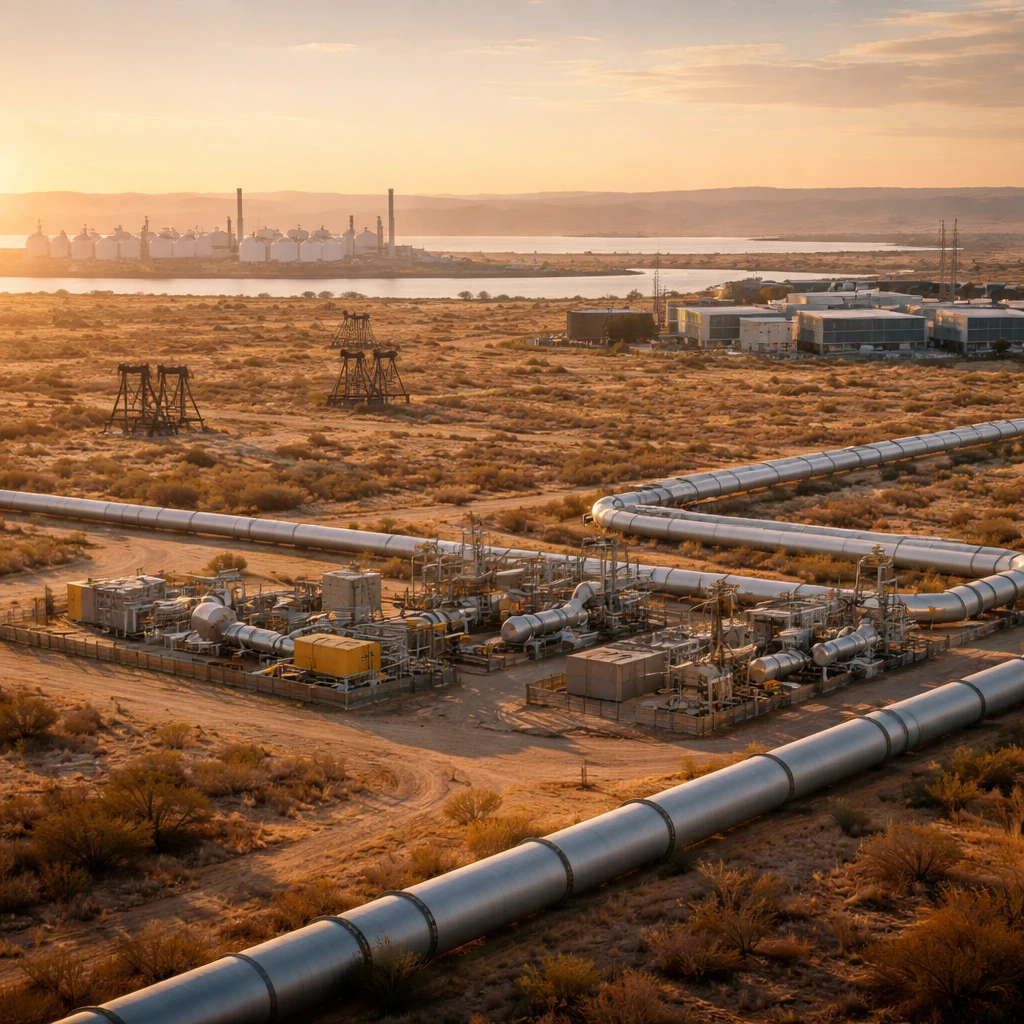
Permian poised for sustained gas growth
Citi analysts describe the Permian Basin as entering a multi-year growth cycle for natural gas that is being driven by infrastructure development. According to the firm, the current expansion differs from previous cycles because fundamentally durable demand - notably from rising U.S. liquefied natural gas exports and load growth tied to AI data centers - is prompting earlier and larger-scale investment across the industry. Citi expects the Permian to evolve into the nation’s largest gas-producing basin while maintaining its position as the top oil-producing region.
Project announcements and market effects
The analysts point to four recent project announcements as an inflection point. When combined with earlier additions and an accelerating build-out of U.S. LNG export capacity, these developments are seen as capable of moderating the Waha Hub price differentials that have plagued producers and of supporting the economics of oil-directed drilling through 2030.
Production, pipeline constraints and pricing
Permian gas production has climbed sharply, from 17.2 billion cubic feet per day (bcf/d) in 2021 to an estimated 27.6 bcf/d in 2025. Pipeline capacity, Citi notes, has not kept pace with that expansion, producing pricing dislocations at the Waha Hub through 2024 and 2025 and with reportedly worse conditions during the first half of 2026.
Demand trajectory and power-sector outlook
Citi highlights material projected growth in U.S. LNG export volumes through 2030 as a durable demand source. The U.S. Energy Information Administration’s August 2026 Short-Term Energy Outlook is cited for its forecast that natural gas consumption by the U.S. power sector will reach a record 46.1 bcf/d in summer 2027, roughly 6% higher than summer 2025 and summer 2026 levels.
Within Texas, ERCOT natural gas-fired generation is projected to increase by about 22% between summer 2025 and summer 2027, a rise the analysts attribute largely to data center-driven load growth. The report also notes that Texas regulators paused approvals for new interconnections earlier this month, which prompted the EIA to trim its 2027 outlook.
Industry responses and market signals
Citi expects Permian exploration and production companies to secure firm takeaway capacity through a mix of pipeline equity ownership and long-term capacity dedications. The firm specifically cited Devon Energy and Diamondback Energy via the Solitude vessel arrangement, along with Exxon Mobil partnering with Targa Resources.
Over the past month, gas exploration and production stocks rose by approximately 4.4%, while forward gas-strip prices remained essentially flat and prompt-month prices stayed depressed. In addition, Citi’s storage supply-and-demand model showed that actual inventory builds ran consistently below forecasts over the past month by about 1.6 bcf/d.
Data and projections referenced in this article are those presented by Citi and the EIA in the materials cited. Observations about recent stock and price movements reflect the period described by Citi.