
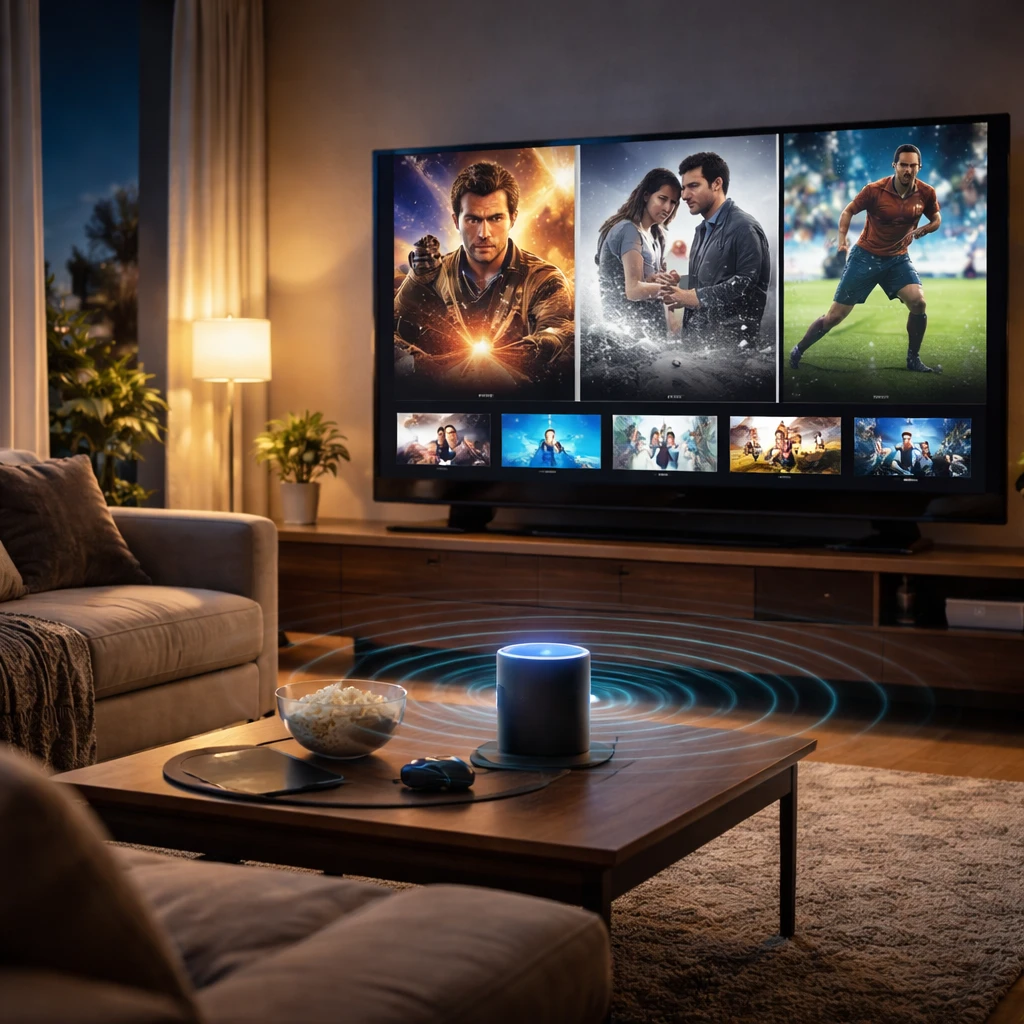
Jeff Bezos has pressed Prime Video leadership to fundamentally reshape the streaming service so its artificial intelligence capabilities are prominent to users, according to people with direct knowledge of the effort. The initiative, known inside Amazon as Lighthouse, is being positioned as a public showcase for the company’s sizable investments in AI and as a way to strengthen Prime Video’s personalization and search experience.
The Lighthouse project emerged after a contentious internal meeting late last year when Prime Video executives presented an initial update plan to Bezos. Those in attendance said Bezos felt the earlier proposal did not sufficiently highlight AI or personalization advances. His reaction prompted a cancellation of the prior roadmap and the launch of the Lighthouse redesign under new direction.
At the center of Lighthouse are new AI-driven features intended to tailor recommendations more closely to individual viewers. One person familiar with the project described functionality that would learn users’ preferences to suggest films and television shows, along with the ability to respond to spoken requests. Prime Video is also reworking the main home page as part of the effort, according to people briefed on the plans.
The final form of the redesign has not been finalized. Prime Video executives have discussed several options, including AI-generated tiles that present pre-populated recommendations with labels such as "action movies from the 1980s" or "Christmas rom-coms," according to three people with knowledge of those discussions. Another person noted that a version being evaluated does not include text-heavy tiles. Traditional search would remain available, and the top portion of the screen would still be reserved for video highlights promoting new releases or live sporting events such as the weekly National Football League broadcast that Amazon holds exclusively, Thursday Night Football.
Amazon has begun testing some iterations of the redesign with a limited set of users, one of the people said. The company’s plans for Lighthouse could change as a result of feedback from early testers, or because of financial or other considerations.
The Lighthouse initiative is linked to wider corporate priorities. Amazon has committed roughly $200 billion to capital expenditures this year, much of it tied to AI development, and made initial combined investments of about $23 billion in OpenAI and Anthropic, with scope for potentially another $40 billion in the future, according to people familiar with the investments. Executives view Lighthouse as one component of an effort to raise Amazon’s profile in artificial intelligence as competitors progress.
Other AI efforts at the company have produced mixed results. People familiar with Amazon’s multiyear overhaul of its Alexa voice assistant said that project has had uneven outcomes and that the unit remains unprofitable. Amazon has also discussed integrating Alexa into Prime Video’s search functions as part of Lighthouse. The company released a new generative AI version of Alexa in early 2025 and later added it to its main shopping site in May 2026.
Kam Keshmiri, who serves as global head of Prime Video design, attended the meeting with Bezos and is leading the Lighthouse redesign, according to people familiar with the matter. Prime Video head Mike Hopkins was directed to make the service’s AI capabilities more prominent after the earlier presentation failed to satisfy Bezos’ expectations.
The stakes are high for Amazon. Lighthouse is intended to highlight the company’s AI investments to the more than 200 million consumers who use Prime Video. Executives believe that clearer personalization driven by AI could increase time spent on the service and enhance the value of Prime membership, given that Prime Video is among the most-used Prime benefits beyond no-cost shipping.
Prime Video is a prominent consumer-facing brand for Amazon and is available in numerous markets, some of which lack substantial Amazon e-commerce activity. The streaming service is one of the company’s best-known consumer products and has delivered notable milestones for Amazon, including being the first streaming service to secure an Academy Award in a major category. Amazon deepened its entertainment holdings in 2022 with the $8.5 billion acquisition of MGM, which brought recognized franchises into its catalog.
Market-share figures show that Prime Video trails several competitors in U.S. television viewing share. April Nielsen data cited by people familiar with the matter put Prime Video at 4.2% of television viewing, behind YouTube at 13.4%, Netflix at 7.8%, and Walt Disney’s Disney+ at 5%. Still, many Prime Video members spend substantial hours each week consuming content on the platform, which supports the company’s emphasis on refining personalization.
Any substantive change to how the home screen allocates placement could influence existing commercial arrangements. Industry observers noted that streaming platforms typically rely on paid placement and algorithmic selection to determine which titles appear prominently, and studio interest in home-screen placement gives that real estate high value. A shift toward greater personalization could disrupt the current balance between studio paid placement and platform-driven recommendations.
Prime Video has experimented with its user interface before. In July 2024 the service rolled out a significant redesign aimed at helping viewers distinguish between content included with Prime and options that carry extra costs, such as add-on subscriptions or rental fees. Amazon has expressed an aim of making Prime Video a central hub for paid subscriptions.
Bezos’ direct involvement is noteworthy because he has stepped back from most day-to-day responsibilities since he relinquished the CEO role in 2021. He remains engaged with other pursuits outside Amazon, including ownership of the Washington Post, leadership of spaceflight company Blue Origin, and the AI startup Prometheus, which has been described by some as having a valuation around $41 billion. His personal attention to Prime Video suggests the company views Lighthouse as strategically important to its efforts to bolster AI capabilities and public perception.
The Lighthouse initiative, while intended to spotlight Amazon’s AI investments for a broad audience, faces a number of open questions. Company executives and product teams continue to refine the design, weigh feedback from user testing, and consider the financial and operational trade-offs tied to altering screen real estate and recommendation dynamics. Until Prime Video settles on a final redesign, the scope and commercial implications of Lighthouse will remain subject to change.
Summary
Jeff Bezos pushed Prime Video leadership to rework the streaming service’s user experience so AI-driven personalization and voice search become central features. The internal project, Lighthouse, is designed to showcase Amazon’s major AI investments to more than 200 million Prime Video users and may include AI-generated recommendation tiles and Alexa integration. The redesign is under active testing and has not been finalized, and could be adjusted based on tester feedback or financial considerations.
Key points
- Amazon founder Jeff Bezos intervened after an internal presentation he found lacking on AI emphasis, prompting Prime Video to scrap previous plans and launch the Lighthouse redesign - impacting consumer tech and media sectors.
- Lighthouse seeks to use AI to improve personalization and voice-driven search for Prime Video’s more than 200 million users and may change the home-screen layout to include AI-driven recommendation tiles - relevant to streaming platforms and advertising revenue models.
- The project is part of broader corporate AI investment efforts, including roughly $200 billion in capital expenditures tied to AI this year and initial combined investments of about $23 billion in OpenAI and Anthropic, with possible additional funding - affecting technology capital markets and AI vendor partnerships.
Risks and uncertainties
- Home-screen real estate carries commercial value for studios; greater personalization could reduce paid placement opportunities and disrupt existing revenue for content partners - a risk for entertainment and advertising sectors.
- Prime Video’s Lighthouse plans remain fluid and could be altered by feedback from limited user testing or by financial constraints, creating uncertainty about the final feature set and rollout timing - a risk for product teams and marketing strategies.
- Other AI initiatives at Amazon, such as the Alexa overhaul, have delivered mixed results and remain unprofitable, suggesting execution risk for large-scale AI-driven product changes - relevant to investor sentiment and the company’s AI credibility.