
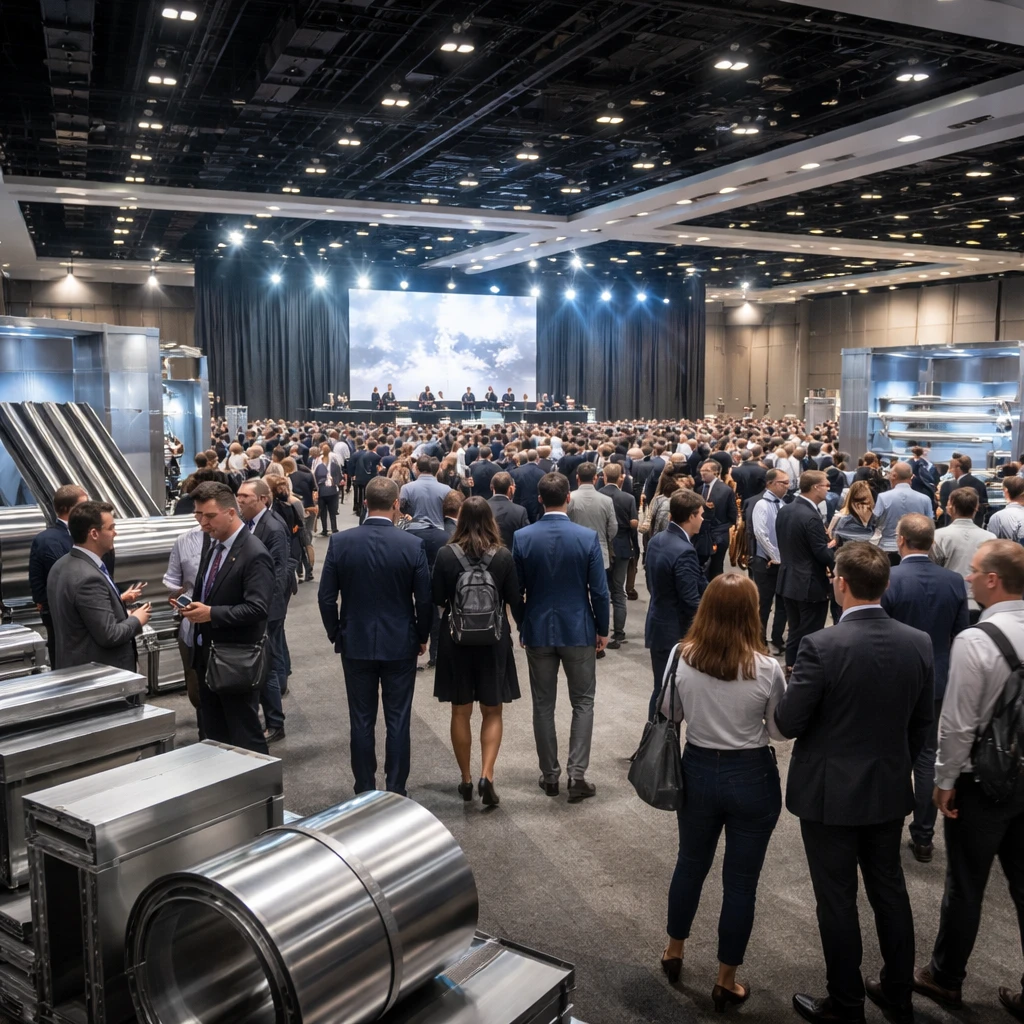
Barclays analysts who participated in the SMU Steel Summit 2026 in Atlanta, Georgia, this week say steel markets continue to be defined by constrained domestic supply. The conference brought together in excess of 1,550 industry participants - including buyers, suppliers, consultants and investors - and Barclays said its meetings at the event corroborated the central concern among buyers: the availability of domestic steel, rather than weakening demand or fundamental pricing pressure.
The bank reiterated a constructive near-term stance on the sector and continues to recommend a buy position on Nucor (NYSE:NUE) and Steel Dynamics (NASDAQ:STLD) following recent pullbacks in their share prices. Barclays' outlook reflects the view that supply tightness, not lack of demand, is the primary driver of current market dynamics.
Attendees reported demand holding up across most industrial end markets. The construction sector stands out as the notable exception - but even there the strength has not been uniform. Within construction-related steel use, robust activity was concentrated in data center builds, energy grid applications and border wall projects. Barclays noted that demand has not meaningfully softened despite the significant run-up in prices over the past year.
Panelists and conference polling offered insight into market expectations. A Barclays-conducted conference poll found that 79% of attendees expect steel prices to be lower in one year relative to the current spot price of $1,200 per ton. The survey breakdown showed 36% of respondents anticipate prices in the $1,000 to $1,099 per ton range, 32% expect $1,100 to $1,199 per ton, and 11% foresee prices of $999 per ton or lower. Only 21% of respondents expect higher prices in a year. Barclays itself currently forecasts hot-rolled coil at $1,150 per ton.
Market participants flagged another layer of uncertainty stemming from escalating trade tensions between the United States and Canada. On August 21, Canada withdrew from trade negotiations with the United States and announced retaliatory tariffs of 50% on roughly $20 billion of goods - a list that includes steel along with dairy, appliances, agricultural equipment, pulp and paper, and electronics - scheduled to begin on September 8. Conference panelists broadly characterized the trade escalation as negative for both countries and noted it could affect steel demand depending on how the tariffs influence flows of specific goods.
Overall, Barclays' message from Atlanta is that the immediate steel supply squeeze remains the dominant factor shaping market behavior. While prices have risen by more than half over the last year, the gradual nature of those increases has limited buyer pushback and supported continued demand across many industrial segments.
Summary
Barclays' meetings at the SMU Steel Summit 2026 indicate persistent domestic supply constraints are the leading concern for steel buyers. Demand remains generally solid except in parts of construction, and mounting US-Canada trade tensions introduce additional near-term uncertainty. The bank retains bullish near-term recommendations on Nucor and Steel Dynamics.
- Key points:
- Domestic steel availability, not demand, is the primary market issue identified at the summit.
- Demand is strong across most industrial end markets; construction shows pockets of demand tied to data centers, energy grid projects and border wall work.
- Barclays recommends buying Nucor (NUE) and Steel Dynamics (STLD) after recent price declines.
- Risks / Uncertainties:
- Escalating US-Canada trade tensions and announced 50% retaliatory tariffs could affect steel-related flows and demand in affected sectors such as manufacturing and agriculture.
- Ongoing domestic supply constraints could sustain price volatility, impacting construction and industrial buyers.