
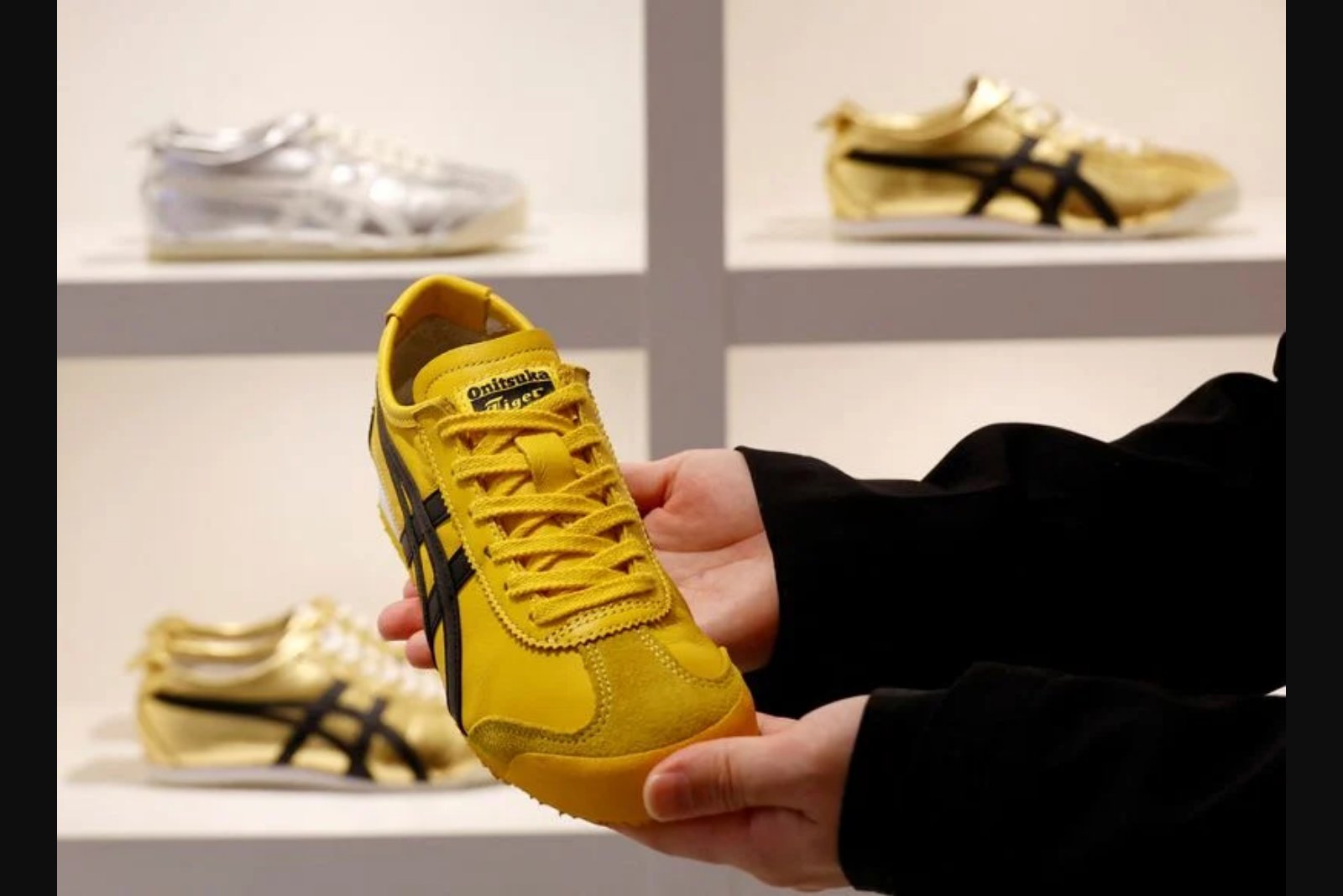
Asics Corp announced on Wednesday that it will spin off its high-end Onitsuka Tiger business into a wholly owned subsidiary, a strategic move the company said is intended to speed up decision-making and enhance competitiveness.
Under the plan, the Onitsuka Tiger operations will be transferred to OT Group Corp via a company split that is scheduled to take effect on January 1. The newly designated unit will remain entirely owned by Asics.
The brand has been instrumental in Asics' recent financial performance. Onitsuka Tiger helped drive four consecutive years of record profit for the company, supported by a sharp rise in sales and notably high margins. For the 12 months ended in December, sales attributed to the Onitsuka Tiger brand climbed 43% year-on-year to 136.5 billion yen, a figure the company said was supported by robust demand in Europe and by inbound tourism to Japan.
Profitability at Onitsuka Tiger is substantial relative to Asics' other lines. The business produced a profit margin of nearly 38%, the highest among Asics' five core categories, according to the company statement.
Market reaction in Tokyo was positive following the announcement. Asics shares were trading up 2.7% in late morning session, while the broader TOPIX index was down 0.7% over the same period.
The move follows Asics' February statement that it expected another year of record profit. Separating the Onitsuka Tiger unit into a distinct corporate entity reflects management's intention to give the brand greater autonomy and speed in decision-making while preserving its relationship with the parent company.
Onitsuka Tiger is known for retro-inspired, minimalistic designs, and its origins are closely tied to the founding of Asics' predecessor. Kihachiro Onitsuka established the predecessor business in 1949 motivated by the belief that promoting healthy young people was essential to rebuilding post-war Japan. He created his first basketball shoe and adopted the name "Tiger" for the brand, drawing inspiration from what he viewed as the strength and agility of Asia's most powerful animal.
The company also provided an exchange rate reference in its reporting of sales figures - $1 equalled 160.3400 yen - when presenting the yen-denominated results.
Context for markets and sectors
- Retail and consumer goods - The split targets a premium consumer segment within athletic footwear and apparel.
- Equities and investor sentiment - The announcement produced an immediate positive move in Asics stock versus the broader index.
- Tourism-linked retail demand - Inbound tourism was cited as a supporting factor for brand sales growth.