
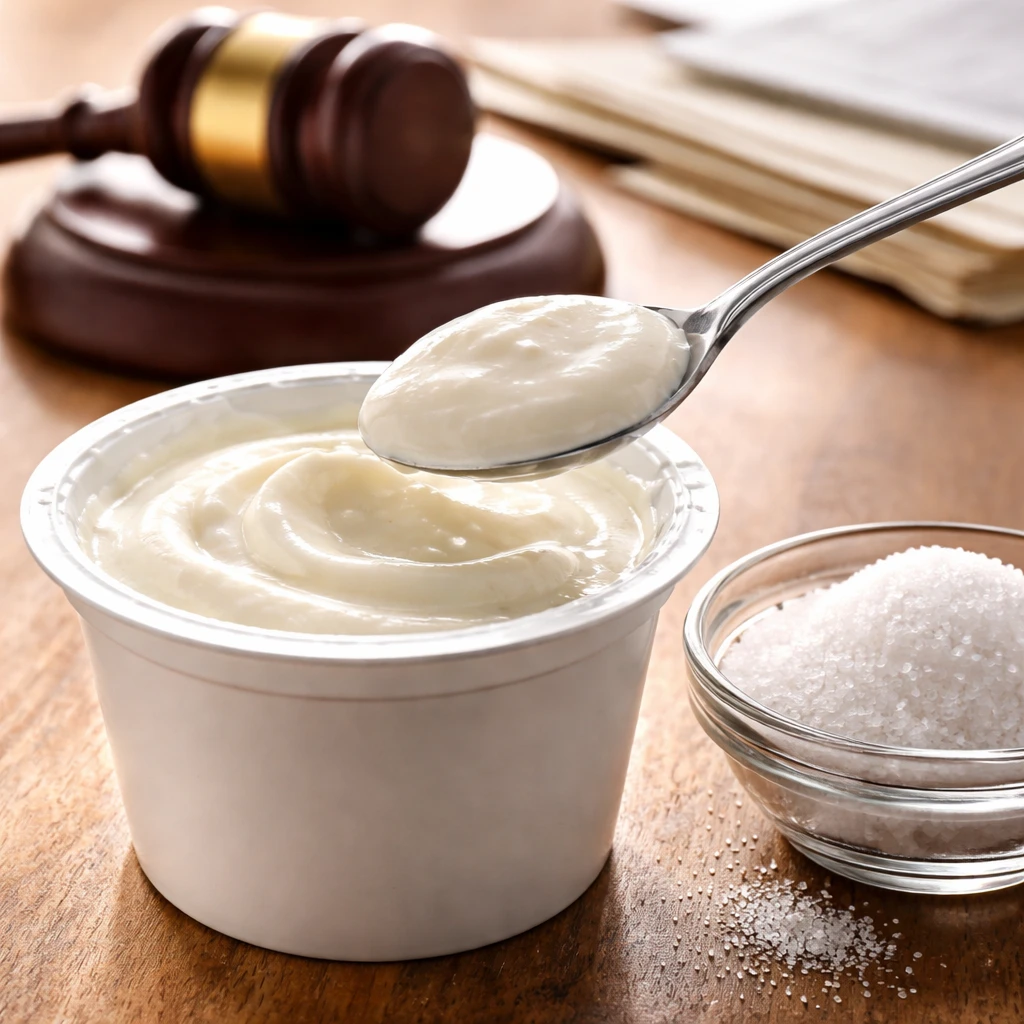
July 28 - A federal appeals court in Chicago has given the green light for consumers to pursue a proposed class-action lawsuit alleging that Chobani misrepresented certain Greek-style yogurt as sugar free despite containing measurable amounts of the sweetener allulose.
The 7th U.S. Circuit Court of Appeals concluded that plaintiffs may attempt to show Chobani violated state consumer protection statutes because its Chobani Zero Sugar yogurt contained four grams per serving of allulose, a naturally occurring sweetener.
Federal rules governing Nutrition Facts labels, enforced by the U.S. Food and Drug Administration, prohibit products from being labelled as "zero sugar" or "sugar free" unless they contain less than 0.5 grams of sugar per serving, the court noted. The FDA submitted a brief arguing that the term total sugars encompasses all monosaccharides, including allulose, and the appeals court found that brief persuasive.
Writing for a three-judge panel, Circuit Judge Thomas Kirsch said the agency’s analysis carried weight and that the FDA’s interpretation aligned with its prior statements about allulose and its regulation. Kirsch also rejected Chobani’s contention that allulose did not fall within the rule because the regulation listed glucose, fructose, lactose and sucrose as examples.
"The agency’s brief is thorough, its reasoning is valid, and its position is consistent with earlier FDA statements about allulose and (its regulation)," Kirsch wrote.
Chobani issued a statement characterizing allulose as a naturally occurring non-sugar sweetener and maintained that the product’s Nutrition Facts panel "accurately shows the yogurt contains 0g total sugar and 0g added sugar."
The named plaintiffs, James Franco and Abigail Franco, say they purchased Chobani Zero Sugar yogurt at a Costco near Chicago in 2023. They allege they would not have bought the product, or would have paid less for it, had they known about its sugar content.
Judge Kirsch addressed the plaintiffs’ claims about consumer deception, noting that whether a reasonable consumer would care about the presence of allulose was not dispositive at this stage. "The Francos have alleged that consumers were fooled by Chobani’s labels, and given the absolute promise on Chobani’s products (sugar free), we do not find that allegation implausible," he wrote.
The appeals court returned the matter to the federal district court in Chicago for further proceedings.
One day earlier, a Manhattan federal judge denied Chobani’s motion to dismiss a separate lawsuit brought by Danone alleging imitation of packaging and a slogan for a line of ready-to-drink cold-brew coffee. The appeals court’s decision in the allulose case is limited to the record and arguments presented in this litigation.
Legal and market context
The ruling underscores the role of FDA interpretive guidance in private consumer protection claims involving food labeling. It also illustrates how regulatory briefs can influence judicial assessment of technical labeling disputes. The case now proceeds back to trial court where plaintiffs will attempt to prove state law claims that the product’s labeling deceived consumers.