
Andreessen Horowitz on Friday disclosed it has raised $1.1 billion for a new fund focused on artificial intelligence infrastructure named the Machine Age Fund. The firm said the fund will focus capital on the physical components and facilities that support AI workloads, explicitly listing chips, memory, networking and storage among target investments.
Beyond core compute components, the firm said the Machine Age Fund will also allocate capital to data centers, robotics and home appliances that integrate advanced compute capabilities. Those additional categories reflect a broader definition of infrastructure that extends past chips and servers to the systems that house and use them.
Technical trends cited by the firm
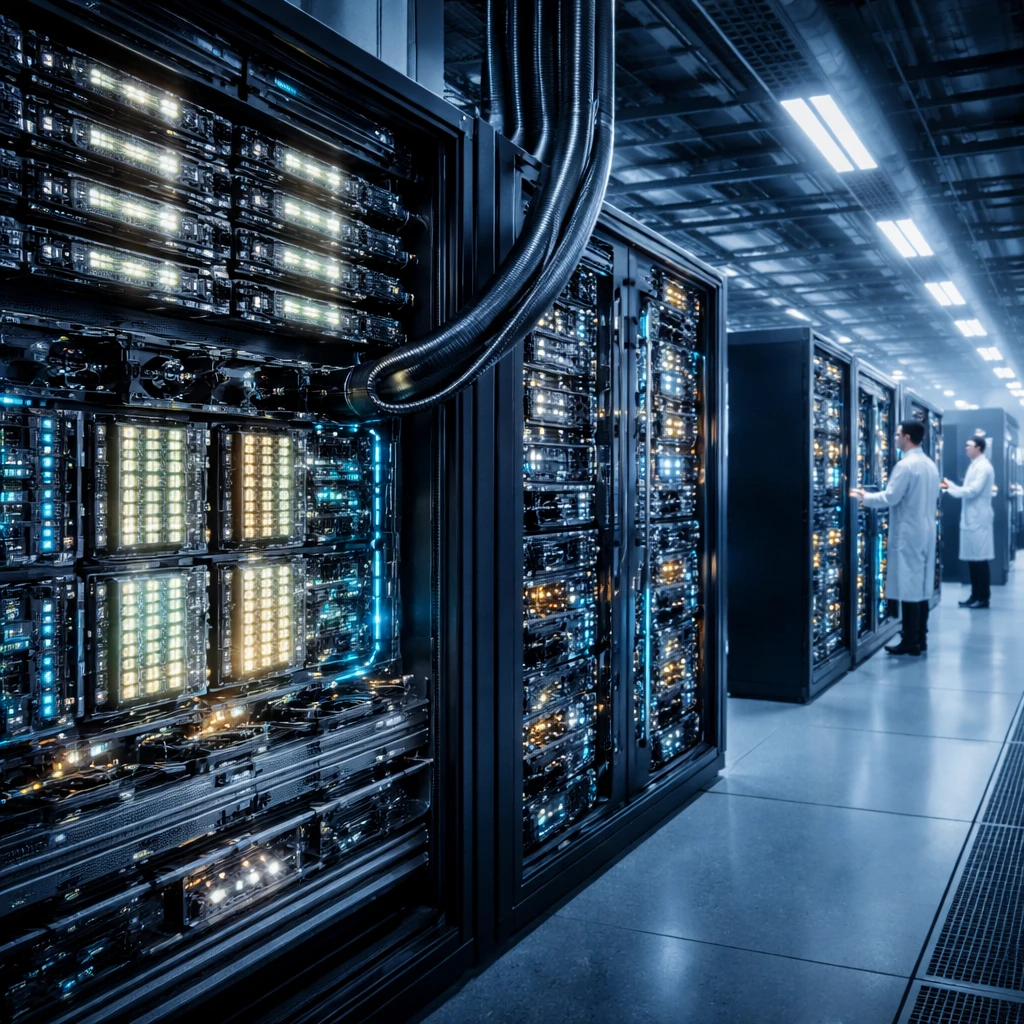
Andreessen Horowitz provided metrics to illustrate the pace of change in AI hardware. The firm said compute density per rack has increased by 28 times when comparing an H100 rack to a Rubin rack. Alongside that density gain, rack power requirements have grown substantially - moving from roughly 5-10 kilowatts historically to 100-250 kilowatts for current systems. The firm forecast that rack power will increase further to 1 megawatt over the next three years.
Investor activity and deal flow
The venture firm reported that hardware startups, which once represented only a small share of its deal flow, now account for over 20% of deals in recent years. Andreessen Horowitz said it has recently backed a number of hardware-oriented companies, naming Unconventional AI, Nexthop, Volta, Atoms, Heron Power and Mind Robotics.
To contextualize its longer-term hardware investing, the firm pointed to earlier technology investments: it led the Series A in Skydio in 2016, invested in SpaceX, made its first investment in Anduril in 2019 and was among the early venture investors in Waymo's 2020 raise, according to the firm.
What this means in practice
The Machine Age Fund represents a concentrated allocation to the physical layers that enable large-scale AI applications. By naming specific categories - chips, memory, networking, storage, data centers, robotics and home appliances - the firm is signaling an investment thesis that spans component manufacturing through to systems integration and end-use devices.
The firm’s numerical comparisons of rack density and power highlight the technical drivers behind that thesis, with materially higher compute density and power needs cited as factors shaping where capital is likely to be deployed.