
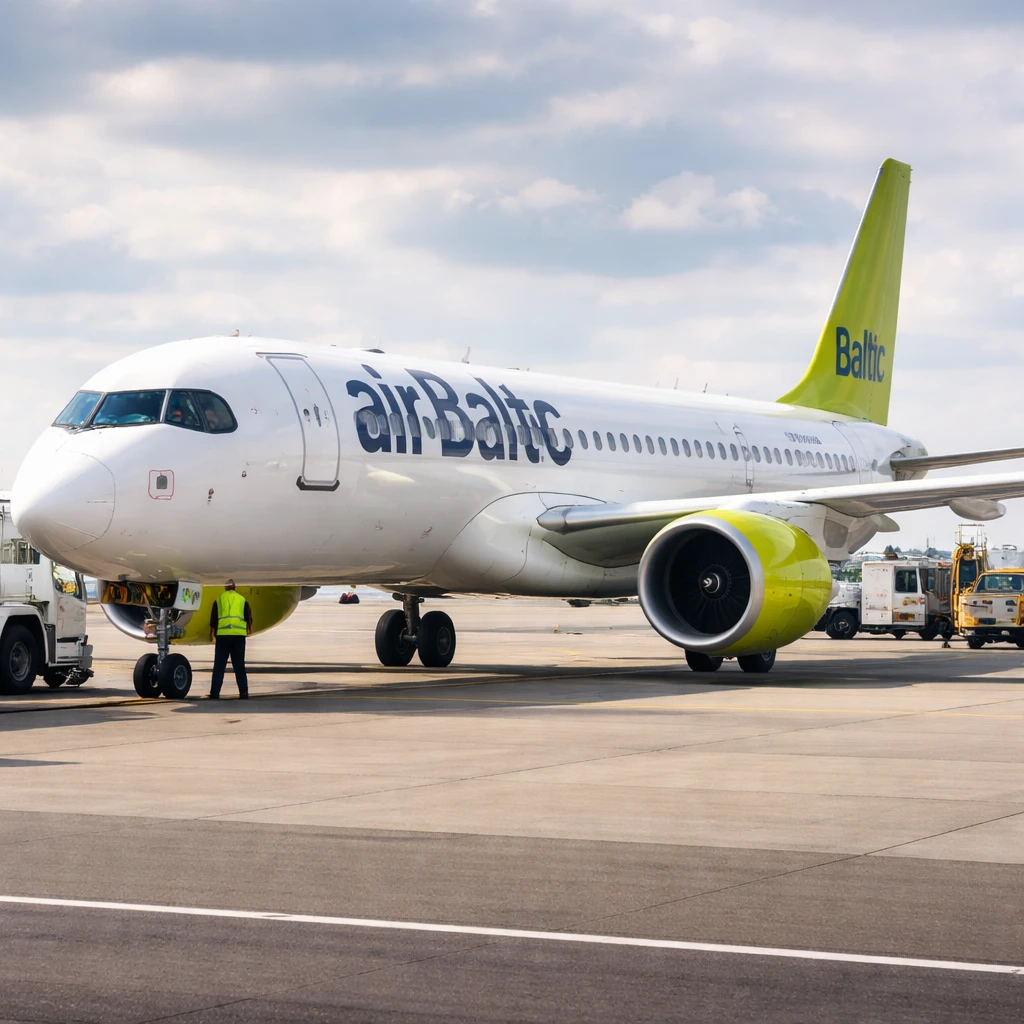
AirBaltic on Tuesday requested bondholder authorization to secure €225 million in interim financing to shore up liquidity and reduce the risk of a default as the state-controlled Latvian airline attempts to stabilise its balance sheet.
In a company statement, the carrier framed the measure as an immediate step to preserve normal flight operations while buying time to implement a comprehensive restructuring intended to strengthen the business for the long term.
The interim financing proposal still needs approval from bondholders and any other required authorisations before it can proceed. Lufthansa (ETR:LHAG) is noted as holding a 10% ownership stake in the airline.
Alongside the short-term facility, AirBaltic outlined a permanent financing package that would convert a portion of the €380 million in outstanding bonds into equity. The portion of bonds not converted would be swapped for new debt of up to €125 million. The company also said that other, unspecified obligations would be converted into equity as part of the broader restructuring.
The airline submitted a revised business plan that scales back fleet ambitions. AirBaltic intends to reduce its Airbus A220-300 fleet from 54 aircraft today to 36 by the end of 2026, with a gradual expansion to 40 aircraft by 2031. This is a notable reduction from the prior target of growing the fleet to 100 aircraft by 2030. AirBaltic said the change in fleet strategy, coupled with more efficient operations, is expected to produce approximately €45 million in annual savings.
For longer-term financial stability, the carrier described a recapitalization package that would include €225 million in new debt and €100 million in fresh equity capital.
AirBaltic attributed part of its current financial strain to higher costs that have emerged since the start of the U.S.-Israeli war with Iran, a dynamic the company said has exposed structural issues at some carriers. The airline initially had planned to present a request for short-term financing to bondholders at a meeting on August 3, but that meeting was postponed because not enough bondholders attended. A follow-up meeting was scheduled for three days after an interest payment that was due on August 14, according to Latvian public broadcaster LSM.
Summary
AirBaltic seeks bondholder approval for a €225 million interim loan to address pressing liquidity needs while proposing a longer-term restructuring that includes bond-to-equity conversions, new debt and equity, and a smaller A220-300 fleet aimed at cutting costs and avoiding a default.
Key Points
- Immediate request for €225 million interim financing to ease liquidity pressure and help avert default - impacts aviation and credit markets.
- Permanent package would convert part of €380 million outstanding bonds into equity and replace remaining bonds with up to €125 million of new debt - affects bondholders and debt markets.
- Revised fleet plan reduces Airbus A220-300 count to 36 by end-2026, with a modest rebound to 40 by 2031, and is expected to yield €45 million in annual savings - affects airline operations and aircraft leasing markets.
Risks and Uncertainties
- Approval risk - bondholder and regulatory approvals are required for the interim financing and the permanent package, creating execution uncertainty for creditors and markets.
- Liquidity pressure - the airline faces immediate cash needs and a missed or delayed financing could increase default risk, with consequences for aviation creditors and lenders.
- External cost pressures - increased costs since the start of the U.S.-Israeli war with Iran have exposed structural weaknesses, introducing ongoing cost volatility for the aviation sector.