
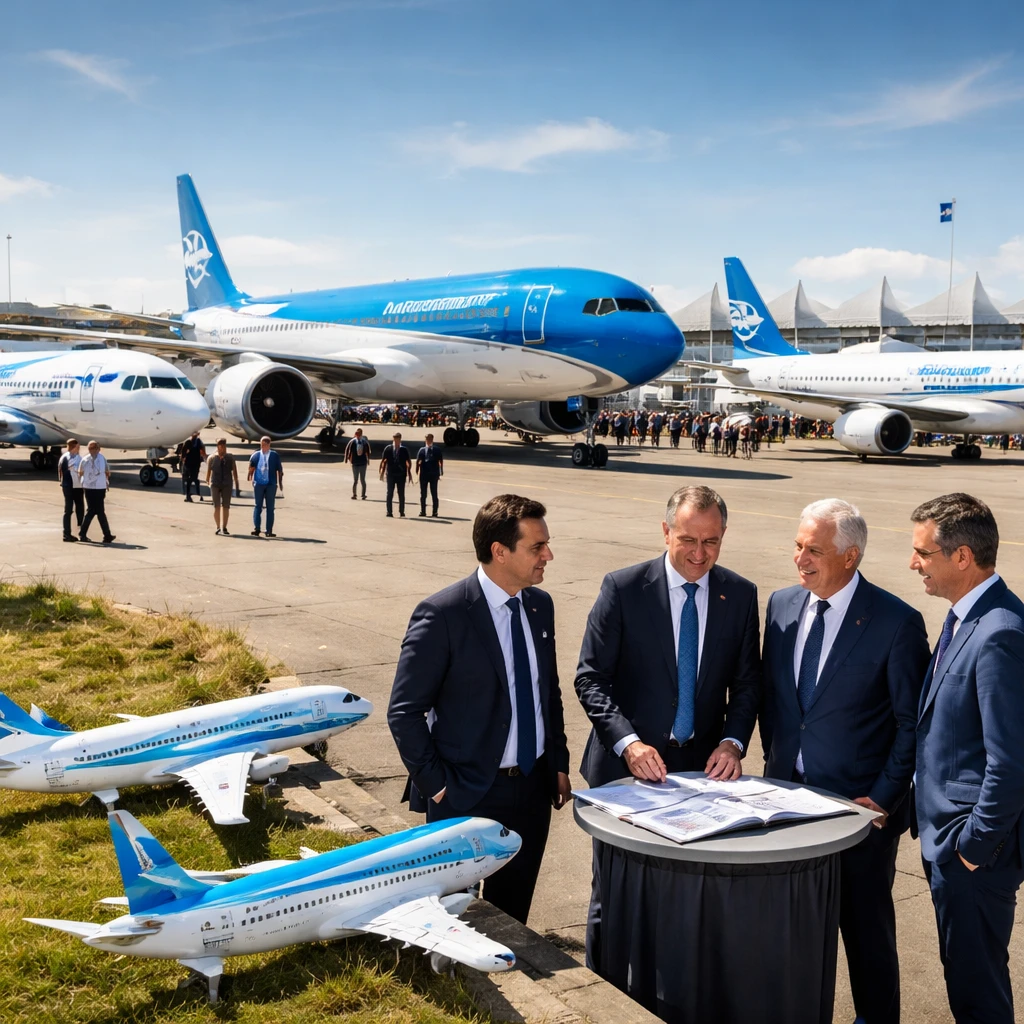
Aerolineas Argentinas said on Thursday it will introduce 20 new aircraft to its fleet in a structured program running from 2027 through 2031, representing the largest renewal effort by the state airline in ten years. The carrier said the initiative targets replacement of about one quarter of its overall fleet and roughly 60% of its long-haul capacity.
The airline stated the entire 2027-2031 plan will be financed with its own resources. At the Farnborough Airshow, Aerolineas Argentinas formalized contracts with lessors covering 14 of the aircraft in the program. Those contracts include six Airbus A330neo widebody jets and eight Boeing 737 MAX 10 narrowbodies.
In addition to the 14 jets contracted at Farnborough, the broader 20-aircraft program will be completed by six Boeing 737 MAX 8 aircraft. Of those MAX 8s, two are already contracted and four are currently in process, the carrier said.
Timing for deliveries was provided by the airline: the first aircraft expected to arrive will be a Boeing 737 MAX 8 in early 2027. The A330neo widebodies are scheduled to enter the fleet beginning in the first half of 2028.
Commenting on the agreements, Aerolineas Argentinas CEO Fabian Lombardo said, "The signing of these agreements at Farnborough is a clear message of confidence from the industry in our company." Lombardo added that the deals reflect long-term planning with a focus on efficiency and profitability.
Program highlights:
- 20 new aircraft planned for delivery between 2027 and 2031.
- Renewal scope: approximately 25% of the total fleet and 60% of long-haul operations.
- Financing: the airline said the program will be covered entirely by its own resources.
Contracts and aircraft mix:
- 14 aircraft contracts formalized at the Farnborough Airshow - six Airbus A330neo and eight Boeing 737 MAX 10.
- Six Boeing 737 MAX 8 jets will complete the 20-aircraft program; two are already contracted and four more are in process.
- First expected delivery: a 737 MAX 8 in early 2027; A330neo deliveries beginning in the first half of 2028.
The carrier framed the transaction as part of a longer-term strategy to boost operational efficiency and strengthen profitability, while signaling industry confidence through the agreements signed at Farnborough.