
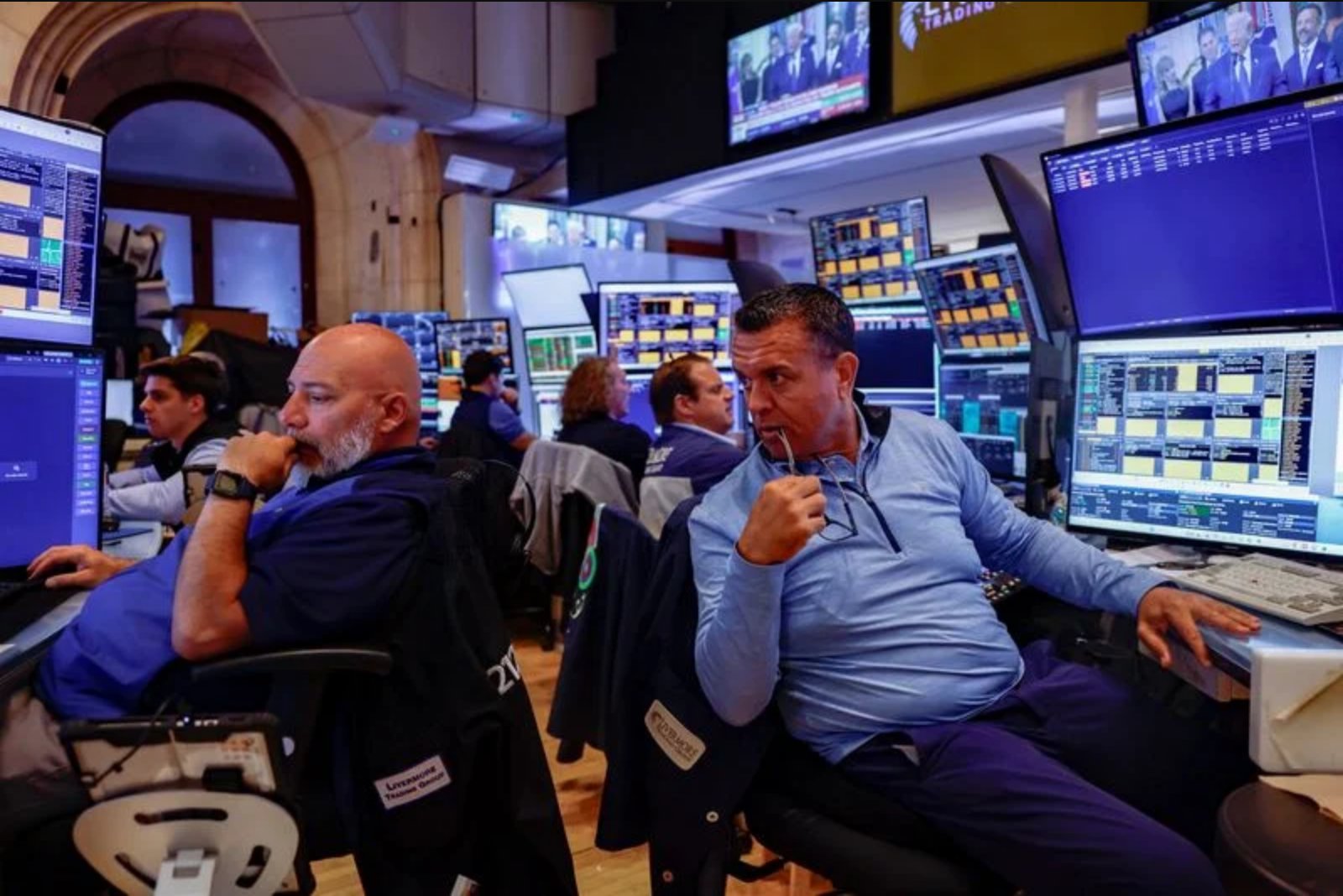
Equity markets posted gains on Monday, driven by a sharp rebound in semiconductor stocks that propelled the tech-heavy Nasdaq to the top of the day's performance. This advance occurred alongside a pullback in crude oil prices, which were weighed down by anticipated supply increases following the conclusion of conflict in the Middle East.
The broader market movement reflects a complex interplay between technology sector strength and geopolitical pressures. While the Nasdaq enjoyed the steepest percentage gain among major indices, Europe's STOXX 600 pulled back from a record high, indicating a divergence in regional market sentiment.
Semiconductor companies were the primary drivers of the equity rally. AMD, Qualcomm, and Taiwan Semiconductor all posted gains exceeding 4%, underscoring investor interest in the sector. This performance stands in contrast to the housing and real estate sectors, where stocks and homebuilders were among the laggards.
Fixed income markets showed stability. U.S. Treasury yields remained largely unchanged, following a soft employment report released on Thursday that reduced expectations for further interest rate hikes. This suggests that bond investors are positioning for a pause in monetary tightening.
In currency markets, the dollar was essentially unchanged. The Japanese yen drifted near the intervention zone, a level that keeps investors wary of potential action by Japanese authorities to stabilize the currency.
Commodity and metal markets saw modest declines. Front-month WTI and Brent crude futures both settled down 0.2%. Gold pulled back from a two-week high, reflecting profit-taking or a shift in safe-haven demand.
Geopolitical developments remain a central theme for market participants. Massive crowds have flooded the streets of Tehran for the funeral procession of slain Supreme Leader Ayatollah Ali Khamenei. Khamenei and several members of his family were killed in an airstrike shortly after the United States and Israel declared war on February 28. The Islamic Republic is staging a week of mass funeral ceremonies.
Iranian President Masoud Pezeshkian was seen walking with mourners on the streets of Tehran. However, there have been no public sightings of Mojtaba Khamenei, the son who succeeded Khamenei and was injured in the attack that killed his father.
The European Stability Mechanism (ESM) has highlighted elevated recession risk for the euro zone, stemming from Middle East tensions and the potential for a U.S. asset selloff. According to the ESM, a renewed Middle East conflict combined with a U.S. asset selloff could tip the euro area into recession and push inflation near 5%.
The ESM report noted that the Iran war and the energy crisis stoked by the closure of the Strait of Hormuz, a vital shipping lane, have had a major impact on the global economy and rattled financial markets.
"Rising political uncertainty, longer-run fiscal sustainability concerns, and stretched equity valuations built on artificial intelligence-related earnings expectations create the potential for a sudden asset price correction emanating from the U.S.," the ESM report stated.
Tensions in the Asia-Pacific region also escalated. China test-fired a missile into the Pacific from a nuclear-powered submarine, according to the official Xinhua news agency. This move drew sharp criticism from Japan, Australia, New Zealand, and Taiwan.
Xinhua did not specify the type of missile launched, but state-controlled newspaper the Global Times, citing a military expert, reported it was likely the JL-3, China's most advanced submarine-launched missile, which debuted at a military parade last year.
The JL-3 is capable of reaching the continental United States from Chinese coastal waters, according to a report from the Pentagon.
Looking ahead, several factors could influence market movements. Developments in the Middle East, including the ongoing conflict and its regional spillover, will remain a key focus. Social media posts from former President Donald Trump may also impact sentiment.
Federal Reserve Chair Kevin Warsh is set to testify before the House Financial Services Committee, which could provide insights into monetary policy direction. Economic data releases will also be closely watched, including the U.S. trade balance for May, France trade balance for May, and industrial output data from Germany, Finland, Norway, and Denmark for May.
Additionally, Consumer Price Index data for June from the Netherlands, Estonia, Hungary, and Czech Republic will be released. The potential for Japanese yen intervention remains a risk factor to monitor.