
Economy August 5, 2026 01:01 PM

Virginia confirms first locally acquired dengue infection in non-traveling resident

State health officials say infection likely came from a mosquito that previously bit a traveler; public risk described as low

By Nina Shah
Share
Twitter Reddit Facebook LinkedIn

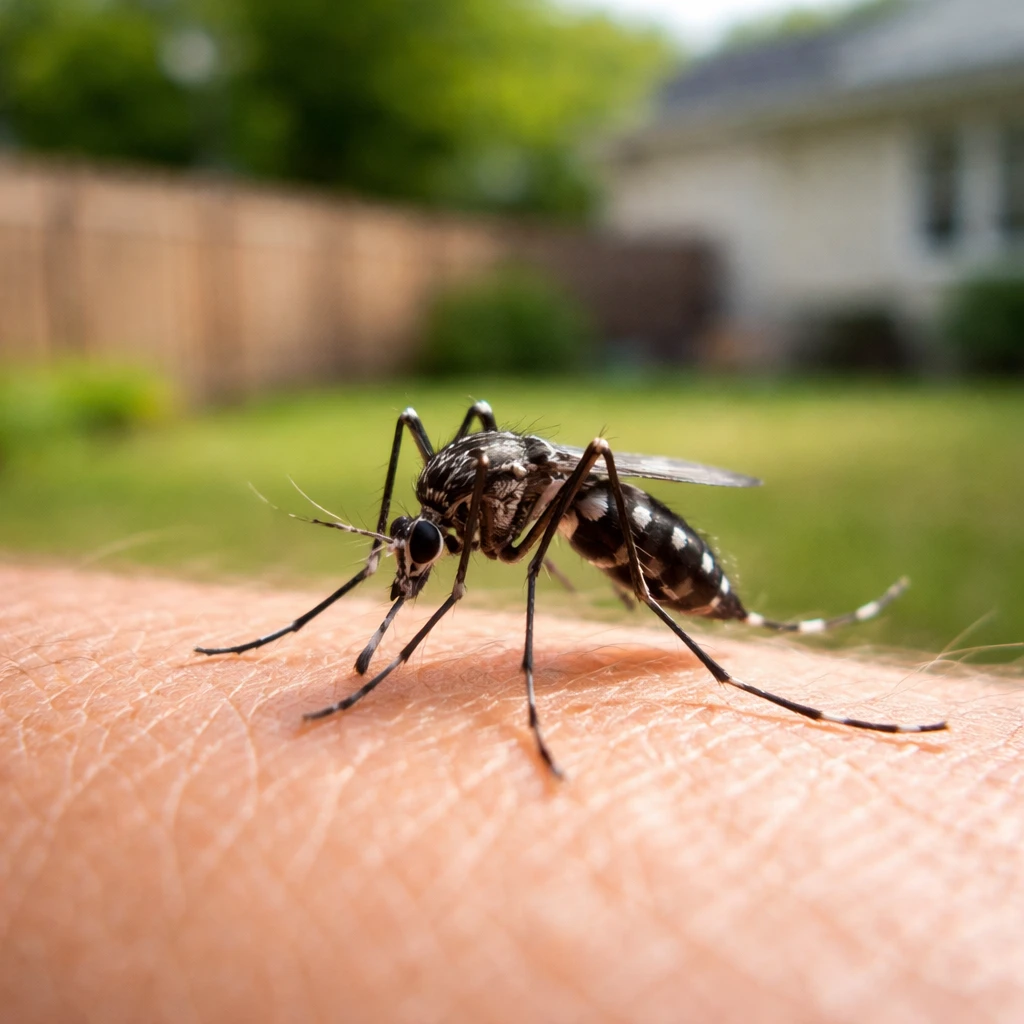
Virginia health authorities reported the state's first dengue infection in a person with no recent travel outside Virginia. Officials said the patient was probably infected by a local mosquito that had bitten an infected traveler. Similar locally acquired cases have been identified in parts of Florida, and experts warn changing conditions are making parts of the U.S. more hospitable to the mosquitoes that spread dengue.

Virginia confirms first locally acquired dengue infection in non-traveling resident
Summarize with
ChatGPT Perplexity Claude Grok Gemini

Key Points

  • Virginia reported its first dengue infection in a resident with no recent travel outside the state, likely transmitted by a local mosquito that had bitten an infected traveler - Public health and regional healthcare systems.
  • Recent locally acquired dengue cases in Miami-Dade and Hillsborough counties show the virus appearing beyond traditional tropical areas - Public health surveillance and vector control efforts.
  • CDC has identified more than 1,400 dengue cases in the U.S. this year, with most linked to travel, underscoring monitoring needs for travel-related and local transmission - Travel and transportation sectors.

Virginia health officials on Tuesday confirmed the state's first case of dengue in an individual with no recent travel history outside Virginia. The Virginia Department of Health indicated the infection was most likely transmitted by a local mosquito that previously fed on a traveler who had contracted dengue abroad.

Authorities emphasized that the risk to the public remains low. The department's notification followed reports of recent locally acquired dengue infections in Florida's Miami-Dade and Hillsborough counties, signaling that the virus has begun to appear in areas outside the traditional tropical range.

James Earnest, an assistant professor at the University of Central Florida who studies immune responses to dengue, said mosquitoes that carry dengue and related viruses are being moved into the United States through travel, airplanes and ships. He added that the U.S. climate has become more suitable for their survival.

Earnest identified southern Florida, Texas, Louisiana and southern California as regions facing the highest risk of continued dengue spread, noting that warmer winters allow the mosquito vectors to persist seasonally in areas where they previously could not survive.

The mosquitoes that transmit dengue are the same species responsible for spreading Zika and chikungunya. According to the U.S. Centers for Disease Control and Prevention, dengue can present with fever, body aches, eye pain, nausea and rash.

The CDC has recorded more than 1,400 dengue cases in the United States this year, with nearly all of those cases linked to travel. Virginia's first locally acquired infection stands out in that the patient had no recent travel outside the state, and health officials said the case likely reflects a local mosquito bite following exposure to an infected traveler.

State and federal health agencies continue to monitor reported cases and vector activity. Officials' public messaging in this instance highlighted a low level of immediate risk while noting the broader pattern of locally acquired infections that has emerged in parts of the country.


Contextual notes

This report is limited to the facts released by state health officials, the expert comment provided by James Earnest and case totals published by the CDC. It does not introduce additional data or conclusions beyond those sources.

Risks

  • Continued local transmission in parts of the U.S. as mosquitoes that carry dengue are transported via travel, airplanes and ships - impacts public health response and regional healthcare demand.
  • Warmer winters enabling mosquito survival in states such as southern Florida, Texas, Louisiana and southern California could increase seasonal transmission - affects vector control and public health resource allocation.
  • Most CDC-noted cases remain travel-linked, leaving uncertainty about the scale of local transmission beyond currently reported clusters.

More from Economy

U.S. Treasury Removes Counter-Terrorism Sanctions From Fly Baghdad and Two Aircraft Aug 5, 2026 Dallas and New York Fed Banks to Pilot Survey of $1.3 Trillion Private Credit Market Aug 5, 2026 Iran and Oman Agree on Coordinates for Strait of Hormuz Shipping Lane Aug 5, 2026 US Services Sector Keeps Expanding in July as Input Costs Surge Aug 5, 2026 U.S.-Canada Energy Trade Value Climbed in 2025 as Gas Prices and Flows Rose Aug 5, 2026