
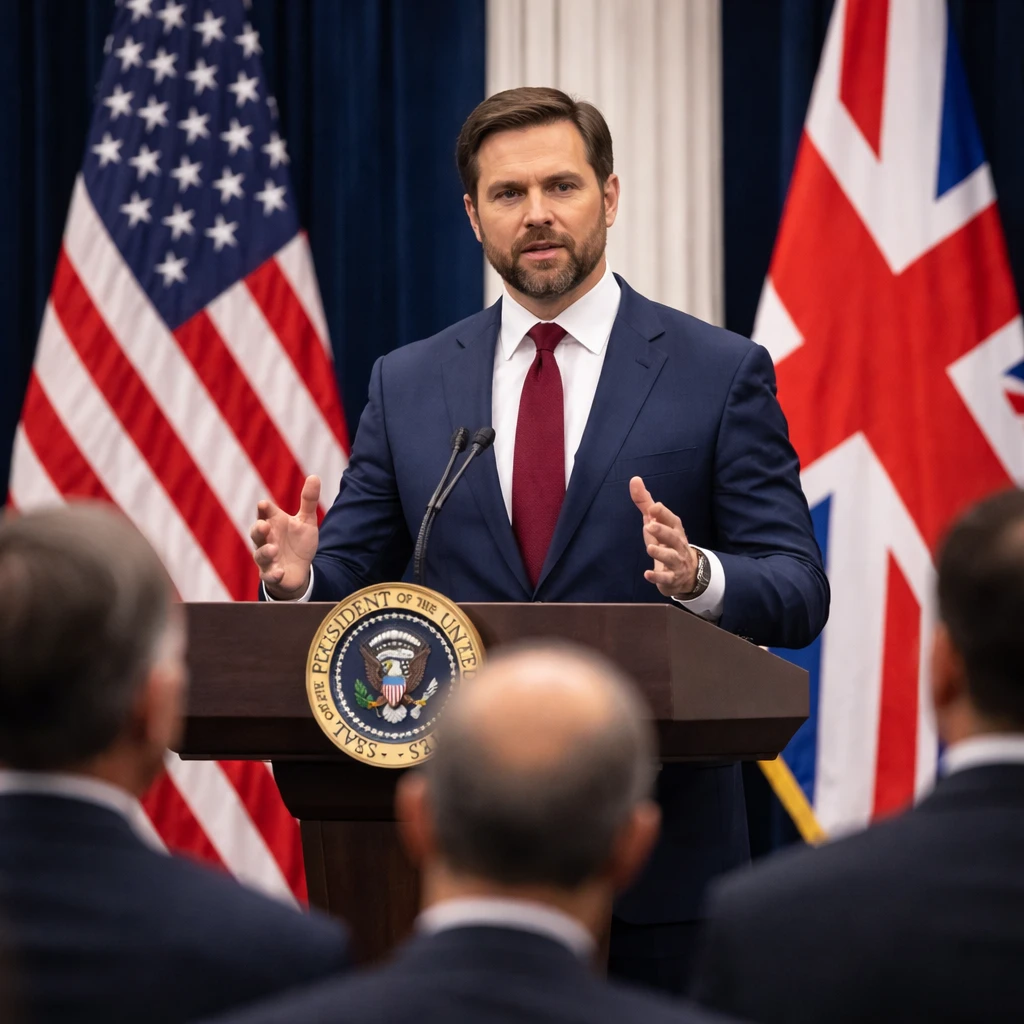
U.S. Vice President JD Vance has directed attention toward the United Kingdom's political landscape, stating that the nation has been let down by its leadership over an extended period. Speaking to the Sunday Times, Vance emphasized his hope that the incoming prime minister will enact the structural changes demanded by the electorate following years of political turbulence, Reuters reported.
Vance cited the swift succession of British leaders as a clear indicator of fundamental flaws within the country's political framework. Prime Minister Keir Starmer revealed his intention to step down last month after a two-year tenure. This development positions Britain for its seventh prime minister in the last decade, highlighting a period of intense instability at the top of the government.
Within the Labour Party, lawmaker Andy Burnham has emerged as the predominant contender to assume the premiership. He is widely viewed as the sole viable candidate to replace the departing leader, setting the stage for a potential transition of power.
"What I see is six prime ministers in the last few years," Vance remarked. "That says to me that something is very broken about British politics and that people are really crying out for significant structural change." The Vice President added that he expects the next leader, whether Burnham or another figure, to successfully restore stability and progress to the country.
Despite the anticipated shifts in London's political hierarchy, Vance stressed the continued importance of the transatlantic alliance. He praised Britain as "an amazing place" and assured that Washington remains dedicated to close cooperation with the country's future administration.
The diplomatic context surrounding these comments reflects a generally collaborative dynamic between Starmer and U.S. President Donald Trump. Their relationship persisted despite policy divergences on critical international matters, including situations in Iran, Gaza, and Ukraine. Furthermore, both governments managed to finalize trade and investment pacts during Starmer's time in office.
Following Starmer's resignation announcement, President Trump characterized the former leader as "a lovely man" and "a friend." However, he also voiced criticism regarding Starmer's approach to immigration and energy policy. The administration's stance on the upcoming leadership transition includes observations about Andy Burnham, whom Trump has described as "extremely liberal." There is also expressed uncertainty regarding whether a future Labour government would maintain support for additional developments in North Sea oil and gas sectors.