
Overview
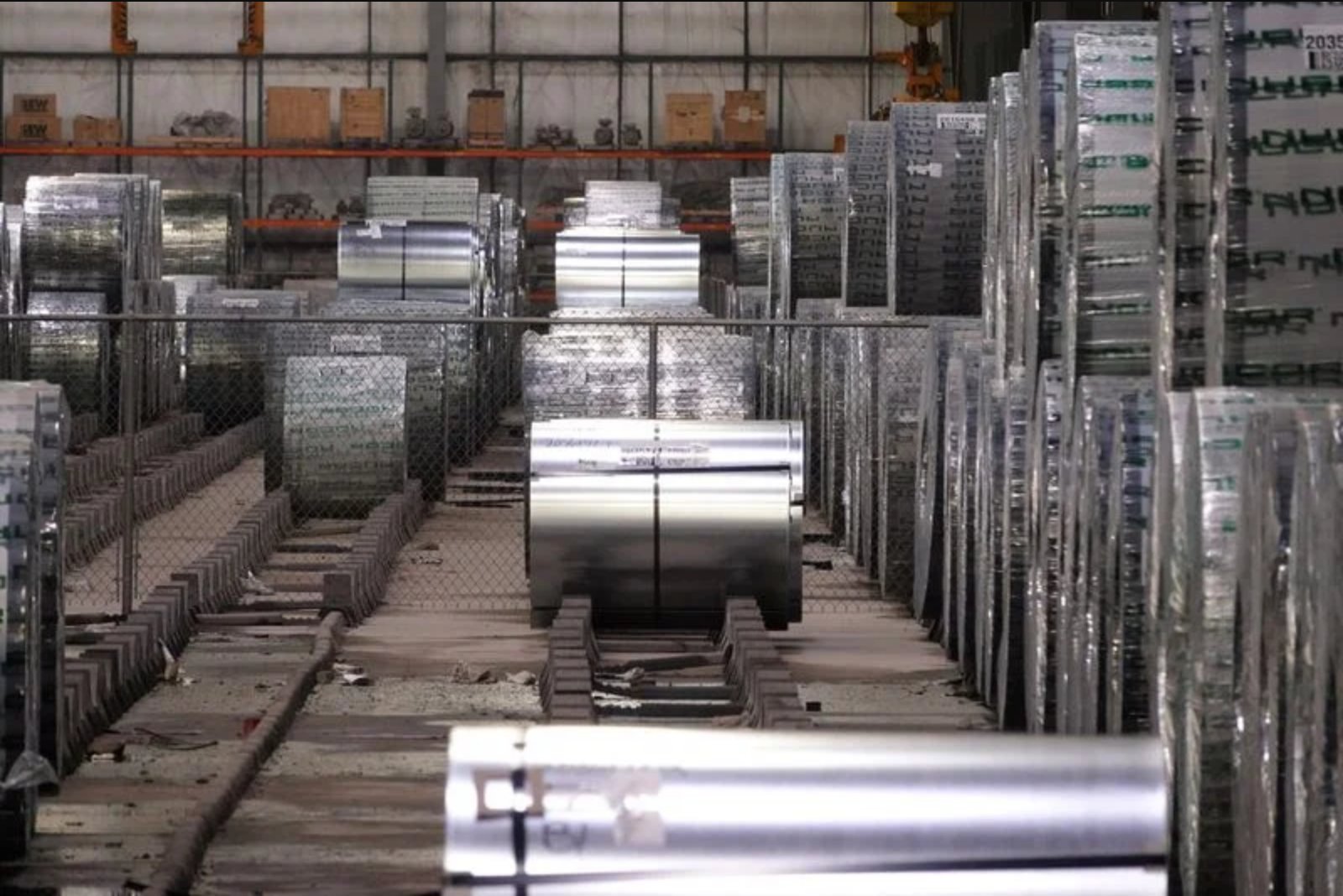
U.S. manufacturing activity showed further expansion in June as companies accelerated purchasing to avoid potential supply disruptions and higher costs, yet the sector's employment measure fell sharply to a six-year low. S&P Global reported its flash manufacturing purchasing managers index (PMI) rose to 55.7 in June, up from 55.1 in May, while a reading above 50 indicates growth. Manufacturing comprises 9.4% of the U.S. economy.
PMI readings and market expectations
The June manufacturing PMI exceeded economists' expectations. Economists polled by Reuters had forecast the PMI slipping to 54.8. At the same time, the flash services PMI increased to 51.3 from 50.7 in May. Together, the manufacturing and services measures lifted S&P Global’s flash U.S. Composite PMI Output Index to 52.2 in June from 51.5 in May.
The rise in the services PMI was in part linked to the FIFA World Cup tournament, which is being jointly hosted by the U.S., Canada and Mexico, according to S&P Global's assessment.
Orders, inventories and supply pressures
S&P Global said the manufacturing PMI has now increased for four consecutive months, with much of the expansion tied to businesses front-loading orders to restock and avoid shortages and rising prices. The survey’s measure of new orders received by factories climbed to a more-than-four-year high in June, a development S&P Global attributed to demand temporarily supported by the front-running of potential supply issues and anticipated price hikes associated with the war.
The survey also showed stock purchases rose to their highest level in 13 months, while supplier delivery times lengthened to levels last seen in August 2022. The report noted that prior to the latest conflict, suppliers had been constrained by President Donald Trump's sweeping tariffs.
Geopolitical backdrop and commodity effects
S&P Global linked some of the supply-chain strain and higher commodity prices to the U.S.-Israeli war with Iran, which it said is now in its fourth month. The conflict has pressured global supply chains and pushed up costs for commodities tied to crude oil as well as aluminum and fertilizers. The report noted an easing in oil prices from multi-year highs at the start of the Middle East conflict helped curb further input-cost rises, but inflation at the factory gate remained elevated.
The article states that the U.S. and Iran last week signed an interim agreement to end the war. It also records that on Monday Vice President JD Vance said talks with Iranian officials in Switzerland had laid a "good foundation" for a final peace deal, despite ongoing tensions over the Strait of Hormuz and Lebanon.
Employment trends in manufacturing and private sector
Despite the uptick in orders and activity, employment within manufacturing weakened markedly. The survey’s measure of manufacturing employment fell to 47.0 in June, down from 51.6 in May, the report said, marking the lowest reading since May 2020. S&P Global attributed the layoffs primarily to concerns about the outlook and rising overheads, notably in raw material prices.
Chris Williamson, chief business economist at S&P Global Market Intelligence, is quoted as saying that factory job cuts are running at the highest level since 2009 if the pandemic period is excluded, reflecting worries over the sustainability of the recent demand upturn and escalating raw-material costs.
More broadly, S&P Global said overall private sector employment was subdued for a second consecutive month. The report contrasted that result with Labor Department data showing private payrolls growth had regained momentum in recent months: nonfarm private payrolls averaged 166,000 jobs per month in the three months through May compared with 62,000 during the same period in 2025. The article notes that private surveys have not been reliable predictors of the official payrolls count.
Prices paid and prices received
The survey recorded continued inflationary pressure at the factory gate. The measure of prices paid by factories for inputs eased to 71.2 in June from 75.3 in May, while the gauge of output prices fell to 61.0 from 63.1. The decline in factory output prices was offset by a rise in the services measure, leaving the overall measure of prices received by private sector businesses unchanged at 58.6. S&P Global’s overall gauge of input prices dipped slightly to 62.1 from 62.5 in May.
These elevated readings were described as consistent with economists' expectations that high inflation will persist for some time and with expectations that the Federal Reserve will raise interest rates this year.
Federal Reserve reaction
The article says the U.S. central bank on Wednesday left its benchmark overnight interest rate in the 3.50%-3.75% range, but that updated quarterly projections showed policymakers expected to raise borrowing costs this year amid growing concerns about inflation.
Implications
In sum, the S&P Global flash PMI results portray a manufacturing sector with strengthening headline activity driven by precautionary restocking, even as employment within factories contracts steeply and input-price inflation remains elevated. The combined picture points to a complex environment for manufacturers weighing demand improvement against rising overheads and supply-chain frictions linked to geopolitical tensions.
Key points
- Manufacturing PMI rose to 55.7 in June from 55.1 in May, the highest since May 2022; a reading above 50 signals expansion.
- Manufacturing employment dropped to 47.0, the weakest since May 2020, amid layoffs tied to rising raw material costs and overheads.
- New orders and inventory buying surged as firms front-loaded purchases to avoid supply shortages and price increases; services activity also improved, helping lift the composite PMI.
Risks and uncertainties
- Escalating input costs - Sectors reliant on commodities such as energy, metals and fertilizer face margin pressure as suppliers pass on higher prices.
- Supply-chain disruption - Continued strain on delivery times and supplier constraints could impede production operations and inventory management across manufacturing industries.
- Persistent inflation and higher interest rates - Elevated factory-gate and overall input-price readings increase the risk of more aggressive monetary tightening, which could weigh on demand-sensitive sectors.