
Overview
Officials from the United States, Iran and Oman are reported to be close to finalizing an interim agreement intended to reopen the Strait of Hormuz, with U.S. officials reportedly targeting a Wednesday announcement. Separate reports from Iranian media, however, indicate Tehran has warned that reopening the waterway could be put off so long as it views U.S. actions as threatening.
Origins and diplomatic contours
According to reporting that cited two regional sources and a U.S. official, the proposed accord has been under negotiation for several weeks. The negotiators are described as aiming to restore a ceasefire between the U.S. and Iran and to restart talks over nuclear matters. The arrangement is being discussed with Oman acting as a mediator.
Contrasting public signals
The public statements from the two sides have diverged in recent days. U.S. President Donald Trump has repeatedly said negotiations with Iran remain active. In an interview on Fox News, he characterized a deal to reopen the Strait of Hormuz and to denuclearize Tehran as "imminent," while also warning Iran it had a "last chance" to accept terms. Iran, in contrast, has largely denied assertions that direct negotiations with the U.S. are taking place and has said its discussions have been limited to mediators in Oman concerning the reopening of Hormuz.
De-escalation signs and recent combat
There have been some signals of de-escalation after President Trump said over the weekend that he had called off a major planned strike. That development followed an episode of intense combat between the U.S. and Iran, described as some of their worst fighting since the onset of the war in February, and came after a June ceasefire between the two sides largely collapsed.
Why Hormuz matters
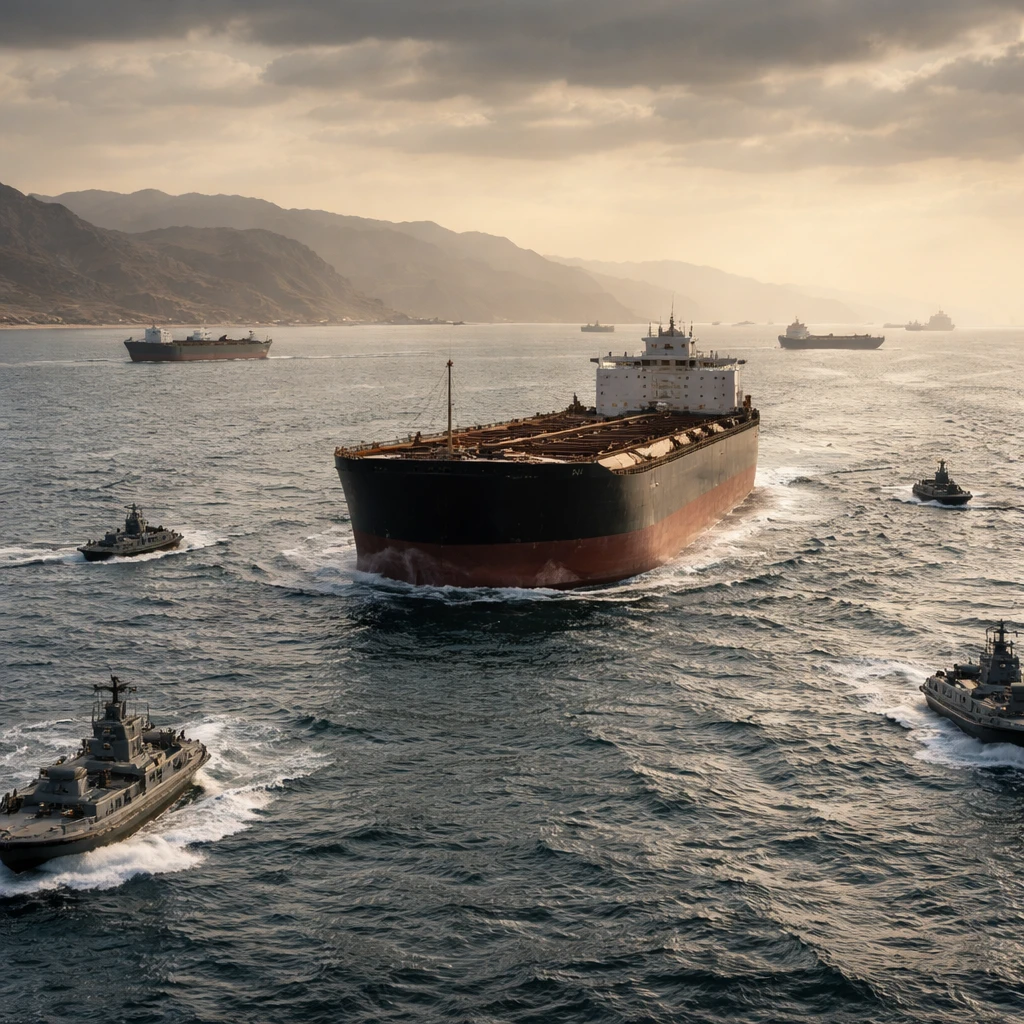
The Strait of Hormuz has been a central flashpoint in the dispute. The most recent spikes in U.S.-Iran hostilities were connected to attacks on commercial vessels transiting the channel. Tehran has repeatedly asserted control over the waterway; the U.S. has objected to any notion of imposed tolls for passage. Prior to the conflict, the strait supplied at least a fifth of the world’s oil. In the course of the confrontation, Iran has effectively restricted transit through a mix of missile and drone strikes, mines and the deployment of gunboats.
Key takeaways
- Negotiations involving the U.S., Iran and Oman are reported to be near an interim deal to reopen the Strait of Hormuz, with a U.S. aim to announce by Wednesday.
- Iranian media have warned that reopening could be delayed while U.S. threats persist, underscoring conflicting signals from the two capitals.
- The talks are said to be designed to reinstate a ceasefire and to resume nuclear negotiations, following weeks of diplomacy.
Economic and market sectors affected
- Energy - given the strait previously carried at least a fifth of global oil supplies, developments have clear implications for oil markets and price volatility.
- Shipping and trade - attacks on commercial vessels and restrictions on transit directly affect maritime transport and insurers covering such voyages.
- Defense and security - military posture and regional naval activity remain central to the dispute and any enforcement of transit control.
Risks and uncertainties
- Delay risk - Iranian statements that reopening will be postponed while U.S. threats continue create uncertainty over timing and implementation of any agreement, affecting energy and shipping markets.
- Mixed signaling - contradictory public comments from U.S. and Iranian leaders add ambiguity to the prospects for a durable ceasefire and for resumed nuclear talks, leaving markets sensitive to sudden shifts.
- Re-escalation potential - recent intense fighting and evidence that Iran has restricted passage using missiles, drones, mines and gunboats mean that the situation could deteriorate again if terms are not accepted or enforced.