
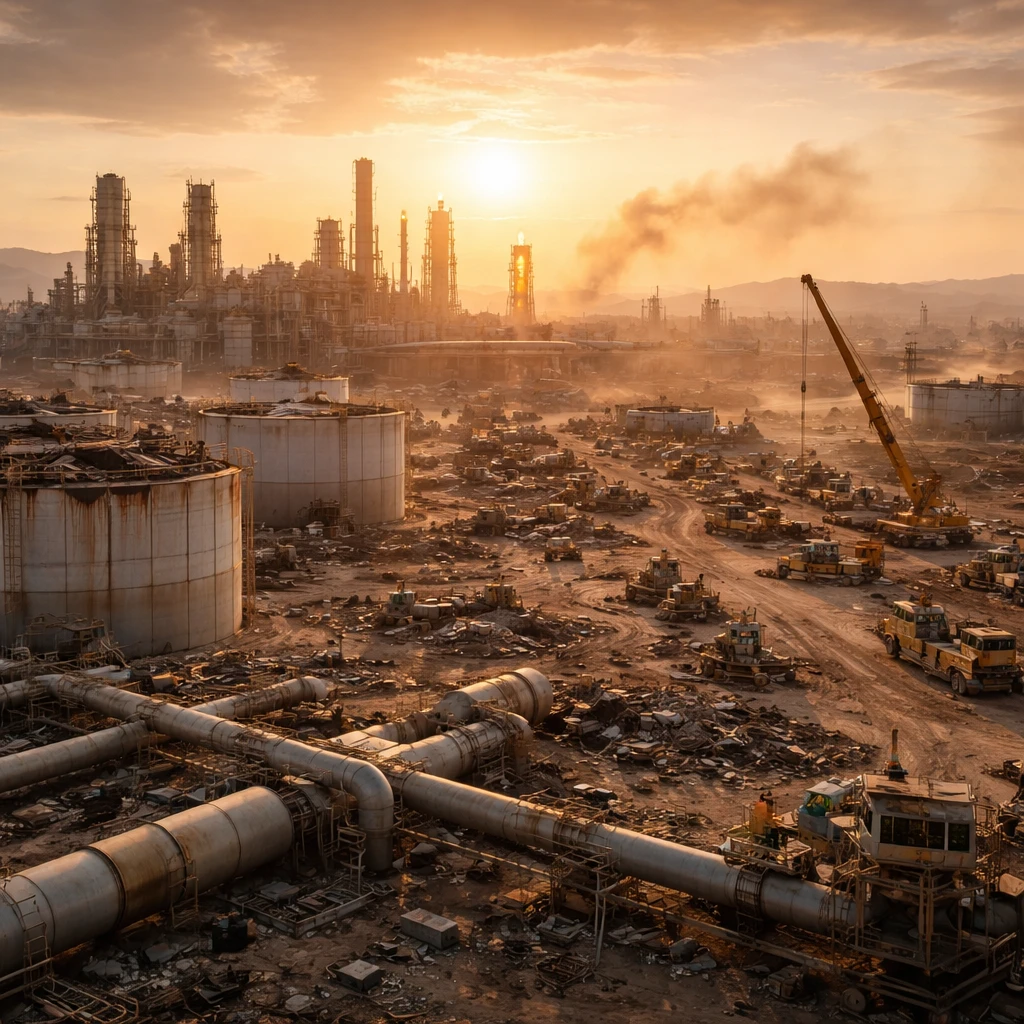
Washington is currently evaluating a plan to deploy seized Iranian assets to assist Gulf Cooperation Council allies that have faced significant devastation due to Middle East conflict. The objective of this potential initiative is to utilize frozen funds to support essential infrastructure repairs and large-scale rebuilding projects throughout the regional landscape.
U.S. Treasury Secretary Scott Bessent has issued directives to his department to conduct a comprehensive evaluation of both the physical and financial status of the impacted Gulf states. This specialized team is tasked with measuring the total economic costs resulting from the widespread damage caused by Tehran during recent multi-nation clashes.
The scope of the Treasury Department's review extends beyond mere future stabilization and protection efforts. Officials are also investigating whether there is a legal pathway to use liquidated Iranian assets to compensate for damages that regional partners have already sustained. This assessment is critical in determining if these funds can be applied retroactively to cover past economic losses.
This proposed financial maneuver follows the 2026 Iran war, a conflict that began after joint precision strikes by the United States and Israel were conducted against Iranian nuclear and military installations. In response, Tehran launched a large-scale bombardment involving thousands of drones and ballistic missiles, which targeted nations hosting U.S. military bases.
The retaliatory actions resulted in heavy damage to infrastructure across several countries, including Kuwait, Bahrain, Jordan, Qatar, the United Arab Emirates, and Saudi Arabia. Critical sites such as the Prince Sultan Air Base and vital segments of the energy sector, most notably Qatari liquefied natural gas facilities, have suffered damages estimated to be in the billions of dollars.
The economic impact has been profound. In April, Secretary Bessent noted that several Gulf allies had requested emergency currency swap lines from the Treasury Department in an effort to stabilize their local markets while facing commercial disruptions and severe energy shocks.
Key Economic Points and Market Impacts
- Infrastructure and Reconstruction: The focus on rebuilding efforts suggests a potential influx of capital into the construction and engineering sectors within the GCC nations as they repair damage to vital facilities.
- Energy Sector Stability: Damage to Qatari liquefied natural gas facilities and other energy assets highlights significant disruption to global energy supplies, impacting commodity markets and regional economic stability.
- Financial Stabilization: The discussion surrounding currency swap lines and the potential use of seized assets points to a concentrated effort to maintain liquidity and market stability in the face of severe energy shocks.
Risks and Uncertainties
- Legal Feasibility: A primary uncertainty involves whether liquidated Iranian assets can legally be utilized to pay for damages that have already occurred, which could impact the timeline and certainty of financial relief.
- Economic Volatility: The ongoing repercussions of energy shocks and commercial disruptions pose risks to local market stability in the affected Gulf states.