
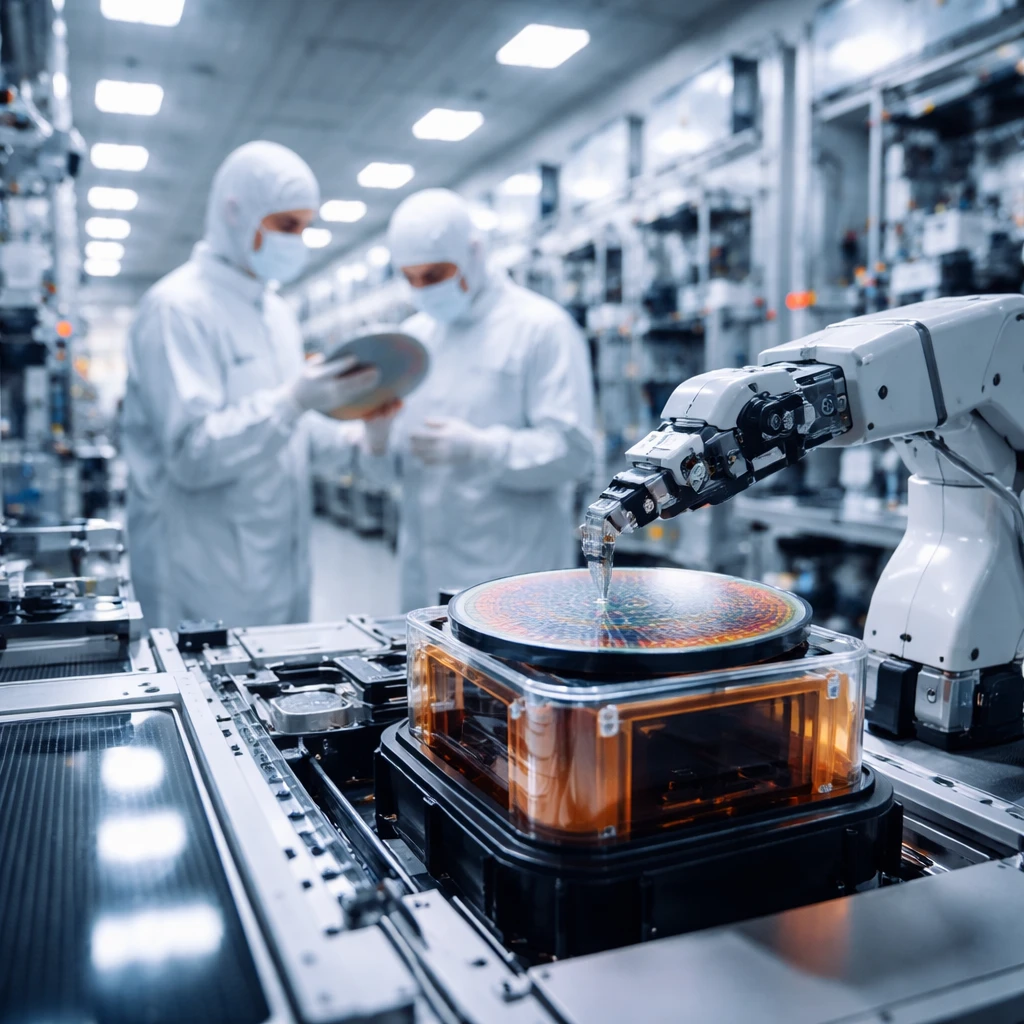
Asian equities extended the momentum from Wall Street’s record finish, with major semiconductor stocks posting notable advances despite mixed corporate headlines for the technology sector. The Kospi climbed 4.0%, driven by gains in SK Hynix and Samsung, as investors continued to rotate into chipmakers amid strong demand for AI-related hardware.
Market attention also focused on reports that global technology majors are assessing chipmaking tools from China’s Advanced Micro-Fabrication Equipment (AMEC) for potential deployment at their Chinese operations. Such evaluations could pose competitive challenges to U.S. suppliers like Applied Materials and Lam Research, which currently supply etching equipment. Those U.S. toolmakers face the prospect of tighter export restrictions as competition from Chinese equipment suppliers grows.
In corporate updates that weighed on sentiment, SpaceX and AMD drew closer scrutiny. SpaceX posted record revenue of $7.8 billion, yet its capital expenditure surged past $18 billion, with nearly $16 billion earmarked for AI initiatives. Analysts are concerned the company’s cash burn at that scale may force it to return to capital markets for additional financing, potentially through equity issuance and/or debt. Market reactions have already been visible: SpaceX’s bonds have weakened in recent weeks, and there are 911.5 million insider and employee shares scheduled to become available for potential sale on Thursday. SpaceX’s stock fell 7.5% in after-hours trading, erasing most of a 9.4% gain recorded during the regular session.
AMD also experienced volatility. Although AMD’s sales and outlook surpassed Street expectations, the stock still dropped 8.8% after hours, suggesting that its results fell short of some investors’ very elevated expectations following a year-to-date share gain of about 142%.
Equity movements included notable daily moves in specific names and indices: Applied Materials (AMAT) was up 5.48%, Lam Research (LRCX) rose 7.85%, and AMD showed a 7.00% move in regular trading. South Korean tickers reflected the broader rally, with 000660 up 7.36% and 005930 higher by 3.65%. Chinese-listed semiconductors represented by 688012 jumped 12.03%. SpaceX’s trading symbol, SPCX, moved 9.43% during the relevant session.
Energy markets contributed to the broader market tone. Brent crude retreated roughly 1.5% to $78.24 a barrel, a substantial drop from June’s peak near $102. The decline in oil prices alleviated some upward pressure on bond yields, nudging the 10-year U.S. Treasury yield down to about 5.60%.
Market pricing of Federal Reserve policy shifted modestly in response. The implied probability of a September rate hike eased to roughly 57% from about 67% previously, reflecting a reassessment of near-term tightening prospects by investors.
On geopolitics and oil flows, Qatar reported progress by mediators working to end the U.S.-Iran conflict, although details remain scarce and Tehran has not confirmed participation in the talks. Analysts pointed to ship-tracking data that indicate oil shipments out of the Gulf are higher than expected. Those observations led some investors to caution that oil markets could swing toward oversupply if the Strait of Hormuz were to open even partially.
Looking ahead, corporate earnings season will continue to supply fresh catalysts. European companies due to report include Siemens Energy, Infineon, Heineken, Novo Nordisk and a slate of banks. In the United States, scheduled results include DoorDash, eBay, Uber, Eli Lilly, Honeywell, Kraft Heinz, SanDisk, Western Digital and Walt Disney.
Key data and events that could influence markets on Wednesday include a speech by Federal Reserve Governor Lisa Cook and a range of economic releases: EU S&P services PMIs for July, EU producer prices for June, the U.S. ISM services index, S&P services PMI for the U.S., and ADP employment figures for July.
Summary
Semiconductor stocks led Asian market gains after Wall Street’s record close, while reports of Chinese equipment evaluations raised competitive concerns for U.S. toolmakers. SpaceX’s record revenue was offset by very large AI capital spending that sparked questions about future funding needs. Falling oil prices reduced pressure on bond yields and lowered the market-implied odds of a September Fed hike.
Key points
- Semiconductor sector outperformance - Major chip names such as SK Hynix, Samsung, Applied Materials and Lam Research saw strong gains, reflecting ongoing AI-driven investment demand.
- SpaceX’s funding profile - Record revenues accompanied by exceptionally large AI capex have raised analyst concern about the company’s need to access capital markets again.
- Energy and rates interplay - Brent crude’s retreat eased upward pressure on Treasury yields and reduced expectations of imminent Fed tightening.
Risks and uncertainties
- Funding risk at SpaceX - Heavy capex increases the likelihood the company could seek additional financing, affecting its equity and bond valuations.
- Export restriction and competition risk for U.S. toolmakers - Evaluation of AMEC equipment by major tech firms could intensify competition and interact with potential export controls, influencing Applied Materials and Lam Research.
- Oil market volatility - Higher-than-expected Gulf outflows and any reopening of the Strait of Hormuz could swing markets toward oversupply, affecting energy prices and related financial conditions.