
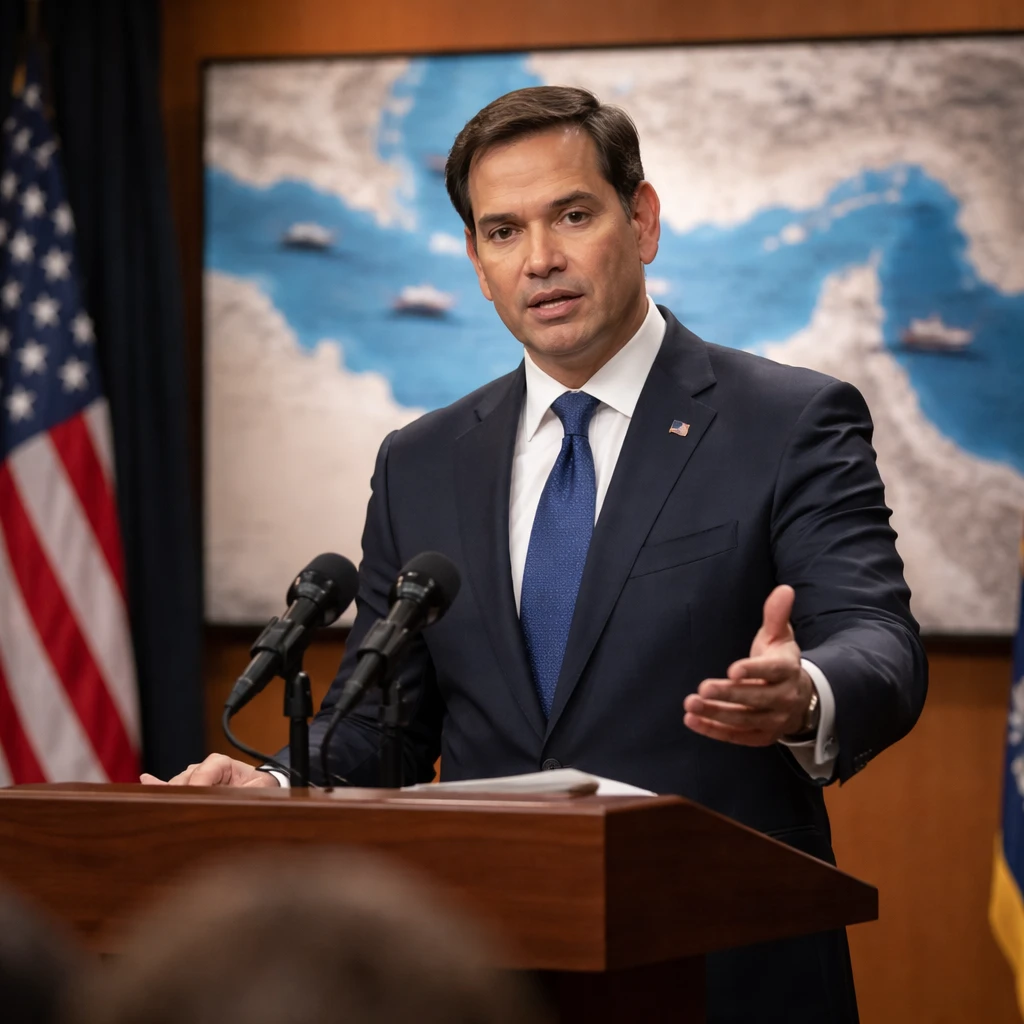
U.S. Secretary of State Marco Rubio delivered a clear rebuke to the idea that Iran could collect payments for passage through the Strait of Hormuz, saying such an arrangement would not be accepted by Washington and would contravene established international law.
Rubio said the United States would reject any agreement allowing Iran to impose tolls on the waterway. He summarized the legal position succinctly, stating:
"No country is allowed to charge tolls or fees on an international waterway, that’s existing international law," Rubio said.
The secretary of state placed the issue in a broader security context, indicating that U.S. policy will include direct engagement with the Lebanese government as part of its regional approach. Rubio emphasized that efforts to halt violence in the area are complicated by continued attacks from groups he described as Iranian proxies.
On the operational timing of further diplomatic steps, Rubio said the matter will be addressed when appropriate, without providing a detailed schedule. His remarks linked three points: the legal prohibition on charging for passage through international waterways, the intention to work directly with Lebanon's authorities, and the difficulty of achieving a cessation of hostilities while proxy forces persist in launching missiles.
The comments outline a firm U.S. stance on navigational rights through a strategically vital maritime corridor and signal parallel diplomatic attention to nearby states affected by regional security dynamics. Rubio's statements left open the precise timing and sequencing of next steps, noting only that they will be taken up at the right moment.
While the secretary of state framed the toll issue as a straightforward legal matter, he framed the broader regional situation as a continuing challenge driven in part by missile activity from elements aligned with Iran. His remarks combine a legal argument about freedom of navigation with a diplomatic posture aimed at addressing security concerns through direct government engagement.
Summary: Marco Rubio said Iran cannot charge tolls on the Strait of Hormuz under any U.S. agreement, calling such charges a breach of international law. He added the U.S. plans to engage directly with Lebanon and noted ending regional hostilities is difficult while Iranian proxies keep launching missiles. Rubio said the issue will be handled at an appropriate time.