
Economy June 25, 2026 11:32 AM

Projectile Strikes Cargo Vessel in Strait of Hormuz, Authorities Urge Caution

UKMTO reports bridge damage to merchant ship southeast of Dahit, Oman; regional transit disruptions follow broadcasts and turnbacks

By Marcus Reed
Share
Twitter Reddit Facebook LinkedIn

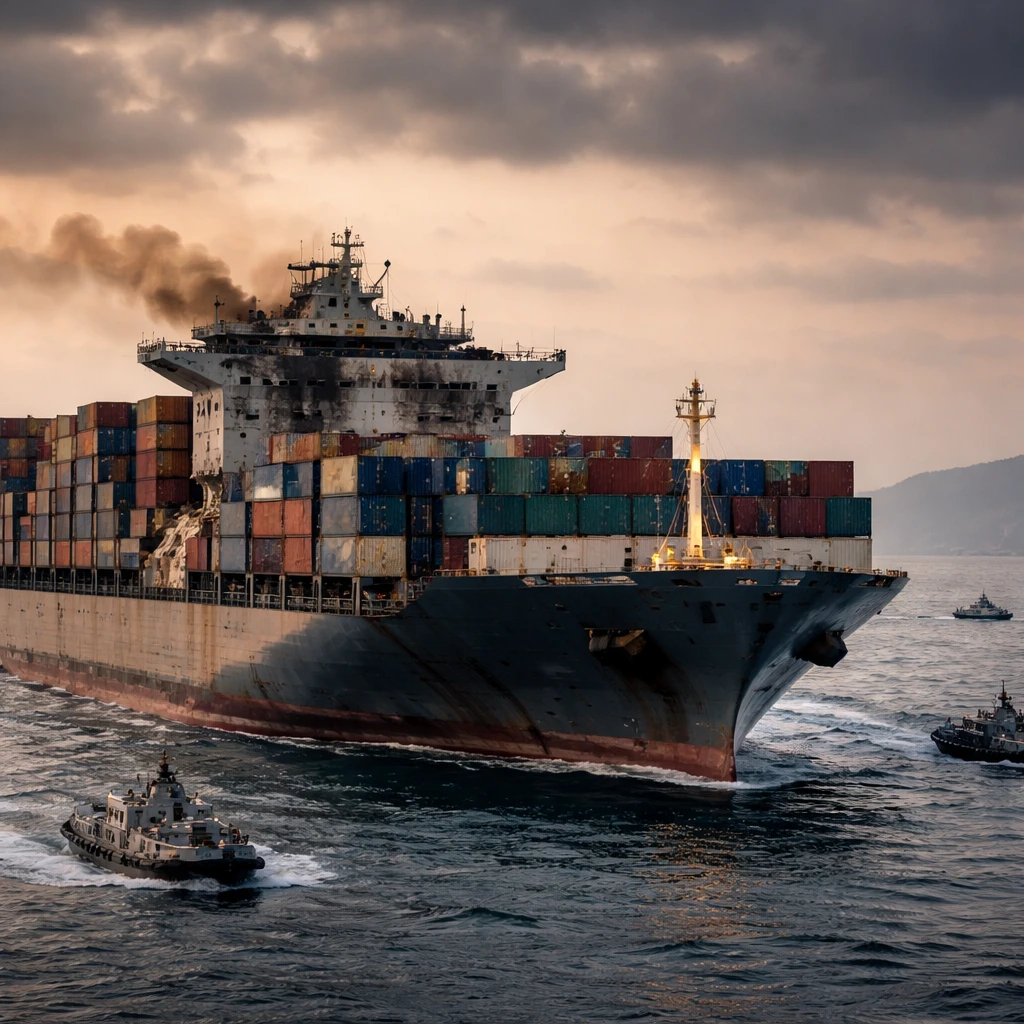
A cargo vessel was struck by an unidentified projectile in the Strait of Hormuz, sustaining damage to its bridge southeast of Dahit, Oman, the UK Maritime Trade Operations reported. There were no reported casualties or environmental consequences. The incident followed multiple commercial ships reversing course and coincided with radio broadcasts allegedly from the Iranian navy warning vessels not to transit the waterway.

Projectile Strikes Cargo Vessel in Strait of Hormuz, Authorities Urge Caution
Summarize with
ChatGPT Perplexity Claude Grok Gemini

Key Points

  • A cargo ship was struck by an unknown projectile southeast of Dahit, Oman, damaging its bridge; no casualties or environmental impact have been reported - sectors affected: shipping, logistics, insurance.
  • Earlier the same day at least three commercial vessels, including two oil supertankers, turned back while attempting to leave the strait using a US-protected route along Oman's coast - sectors affected: energy markets, maritime transport.
  • Radio broadcasts that appeared to come from the Iranian navy warned ships not to cross the waterway, and Iranian media reported Tehran was reasserting control over transits - sectors affected: shipping, geopolitically sensitive trade lanes.

UK Maritime Trade Operations (UKMTO) reported that a cargo ship was hit by an unknown projectile in the Strait of Hormuz on Thursday. The organization said the impact damaged the vessel's bridge while it was located southeast of Dahit, Oman. No injuries or pollution were reported in connection with the strike.

Following the incident, UKMTO advised ships to transit the area with caution. That warning came amid a series of navigational disruptions earlier in the day when at least three commercial vessels - including two oil supertankers - reversed course while attempting an outbound passage of the strait. Those ships had been using a US-protected corridor running along Oman’s coastline.

Two maritime intelligence firms disseminated radio messages that appeared to originate from the Iranian navy, instructing merchant vessels not to cross the waterway. Iranian media outlets conveyed that Tehran was reasserting control over transits through the strait.

Vessel tracking records, reported by Bloomberg, indicated that not all ships in the area turned back; some continued along the Oman-protected route. The data also showed a fourth vessel appearing to reverse course after progressing from the Gulf of Oman toward Hormuz.

The United Nations' International Maritime Organization canceled a scheduled media briefing on Thursday just minutes before it was due to begin. Earlier in the week the IMO had said it received assurances that passage through the strait was safe.

Traffic through the Strait of Hormuz had risen after an interim peace agreement between the US and Iran took effect last week. Despite that uptick, Iranian authorities stated over the weekend that the waterway was closed. Tehran's Persian Gulf Strait Authority last week declared that ships cannot transit the strait without obtaining its permission.


The sequence of events - a projectile strike, radio broadcasts purporting to be from a state naval force, ship turnbacks and mixed vessel movement - underscores continued uncertainty for commercial navigation in one of the world’s primary chokepoints for maritime trade. Authorities have so far reported limited physical damage and no casualties or environmental harm, but the operational picture remains fluid.

Risks

  • Further navigational disruptions - vessel turnbacks and route re-routing could continue to affect shipping schedules and freight costs, impacting shipping and logistics sectors.
  • Conflicting authority claims over passage - statements from Iranian authorities about closure and the Persian Gulf Strait Authority's permission requirement create legal and operational uncertainty for commercial vessels and charterers.
  • Uncertainty in official assurances - the International Maritime Organization canceled a media briefing minutes before it was due to start despite earlier assurances of safe passage, leaving questions about the immediate security and oversight environment for maritime operators.

More from Economy

Brazil Central Bank Denies Widening Policy Horizon After Rate Cut and Market Reaction Jun 25, 2026 IMF: U.S. Growth Momentum Strong; Fed’s Decision to Pause Rates Appropriate Jun 25, 2026 IMF: U.S. Growth Remains Robust; Inflation Expected to Reach 2% by 2027 Jun 25, 2026 Iran Proposes Tolling Regime for Strait of Hormuz Aimed at $40 Billion in Annual Revenue Jun 25, 2026 Central Bank Chief Says Policy Note Fueled Misunderstanding, Not a Shift in Policy Jun 25, 2026