
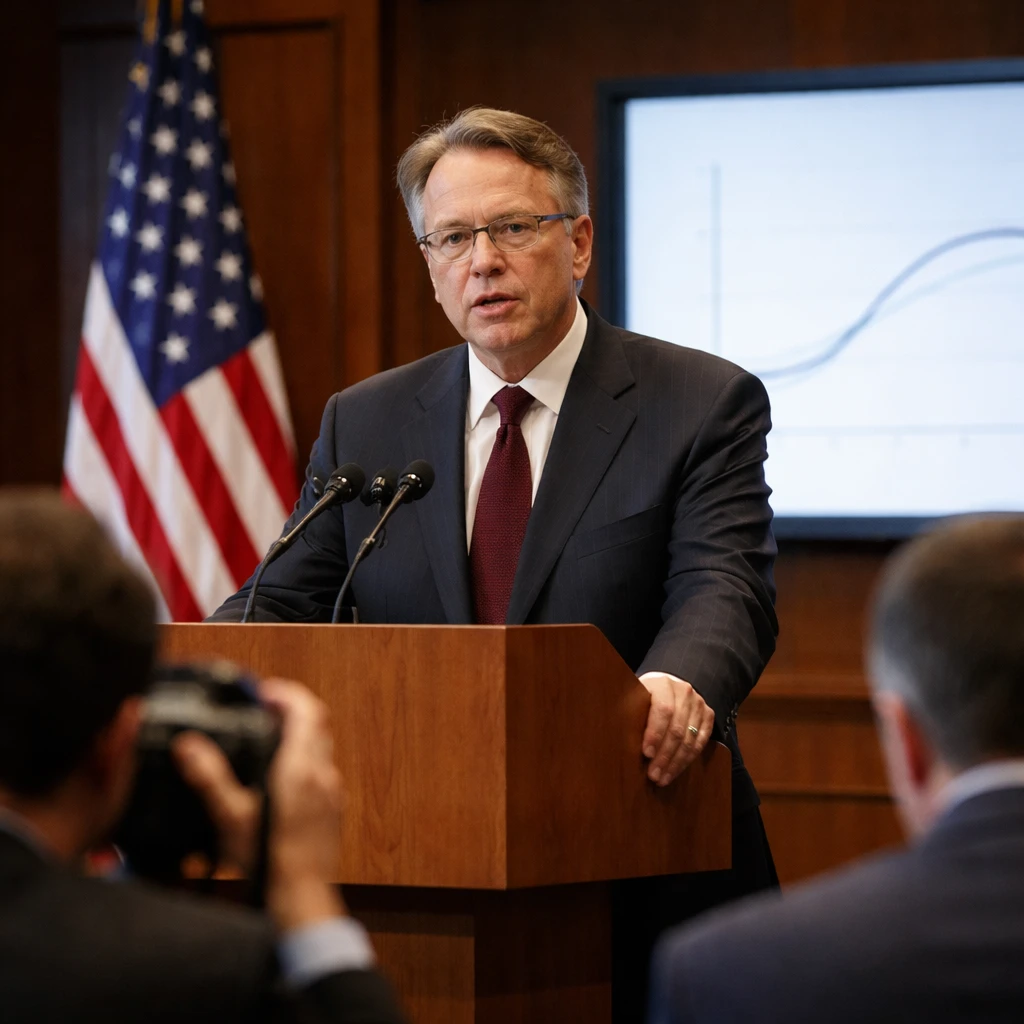
Federal Reserve Bank of New York President John Williams said today that inflation is still higher than the Federal Open Market Committee's longer-run objective and that he now expects the U.S. to reach the Fed's 2% inflation goal in 2028 instead of 2027.
Williams reiterated that inflation remains elevated and is well above the FOMC's longer-run 2% goal. He described it as "imperative" that the central bank return inflation to that 2% level on a sustained basis.
On near-term readings, Williams projected inflation will moderate to 3.5% this year. While he said inflationary pressures are expected to ease, he emphasized they will remain too high relative to the Fed's target.
Williams pointed to the war in the Middle East as a source of ongoing uncertainty. He noted that if disruptions linked to the conflict are resolved quickly, that would ease inflation pressures, but he also stressed that the war continues to add risks and uncertainties. On balance, he said the U.S. economy so far has shown resilience to the economic effects of the conflict.
Discussing the policy stance, Williams described monetary policy as "well positioned" for current conditions. He set out his outlook for the broader economy, forecasting U.S. growth of 2.25% and a decline in unemployment to 4% in 2028. He also characterized the labor market as having proved resilient.
Williams highlighted standing repurchase agreement operations as an important tool to restrain upward pressure on interest rates. He added that the Federal Reserve will adjust reserve management buying as needed, indicating the Fed will use balance-sheet tools to help manage rate dynamics.
Takeaway
Williams' remarks pushed back the expected timing for reaching the Fed's 2% inflation goal by a year, reiterated that inflation remains too high, and outlined a pathway in which inflation moderates but stays above target while growth and employment improve by 2028. He identified geopolitical developments and reserve-management actions as central factors shaping the outlook.