
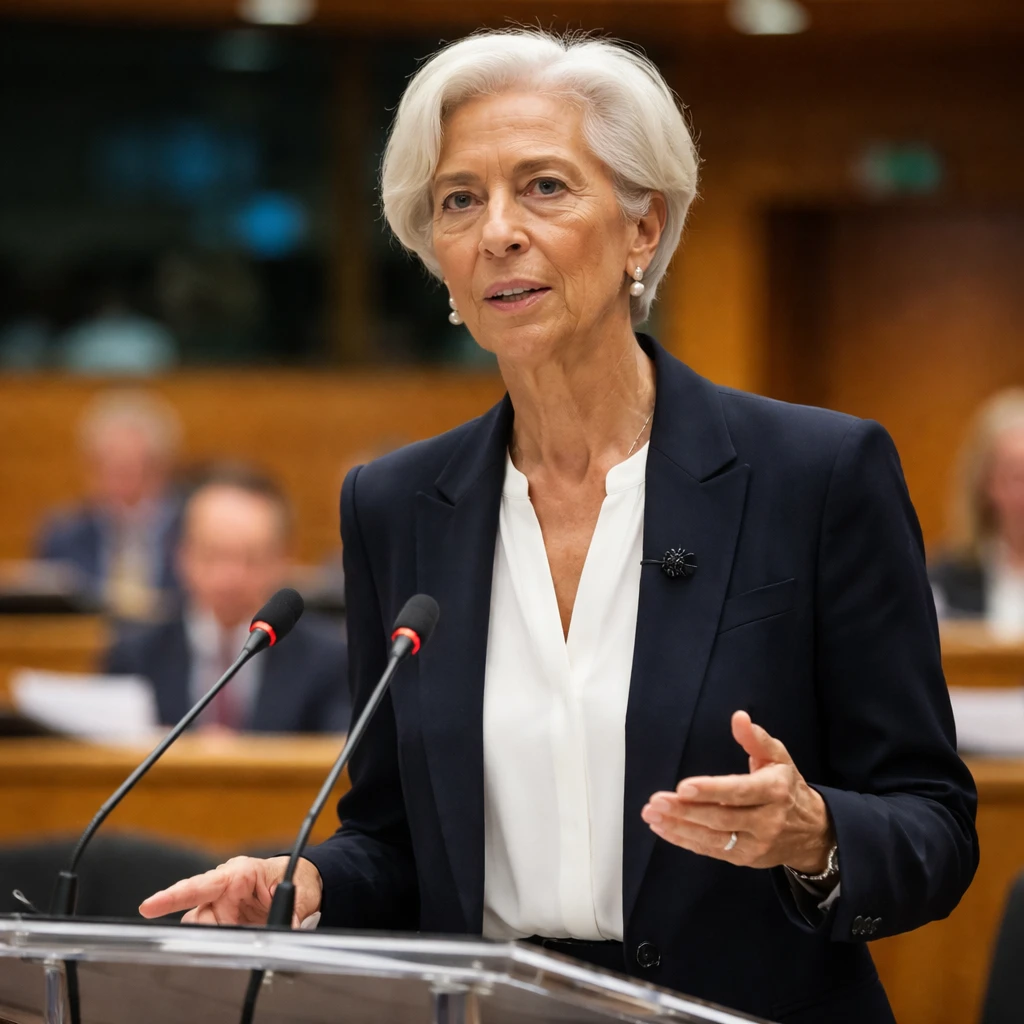
FRANKFURT, June 22 - The euro zone is experiencing an inflation shock that is significant enough that policymakers cannot ignore it, but not yet of a magnitude that, in the view of European Central Bank President Christine Lagarde, has altered longer-term price expectations or produced dangerous second-round consequences.
Speaking to a European Parliament committee on Monday, Lagarde reiterated that the ECB raised interest rates earlier this month after inflation climbed above 3% and noted market speculation about whether the central bank will act again to rein in price pressures and protect its 2% inflation target.
Lagarde said the currency bloc currently fits the middle of three scenarios she has previously outlined: a not-too-persistent overshoot that requires some calibrated policy adjustment rather than an aggressive response. "For now, we are in the second case," she told the committee. "The shock is too large to look through without jeopardising our target."
At the same time, she said there was no clear sign of expectations becoming unanchored or of second-round effects that would justify a more forceful policy response at this time. "But we see no evidence yet of de-anchoring of inflation expectations or second-round effects that would warrant a more forceful policy response at this stage," Lagarde added.
Comparing the current episode with the 2021/22 period, when the ECB had to raise rates at a record pace, Lagarde described the present shock as smaller. She also stressed that the economic backdrop differs from that earlier episode: the labour market is stronger, incomes are higher and some supply disruptions persist in a post-pandemic environment.
Nevertheless, Lagarde cautioned against complacency. She warned that, given the bloc's recent experience with high inflation, wage dynamics could be more sensitive to new shocks and therefore warrant attention from policymakers.
Reiterating the bank's growth outlook, Lagarde said investment - with a particular nod to spending on artificial intelligence - has remained resilient and that households entered this period with relatively strong balance sheets. Those factors provide some buffer for an economy that will nonetheless feel the strain from higher energy costs.
Context and market implications
Markets are watching for signals about whether the ECB will tighten policy further. For now, Lagarde's assessment points to measured action if needed rather than an immediate return to rapid rate hikes. The assessment of inflation expectations and wage formation will be central to future decisions.