
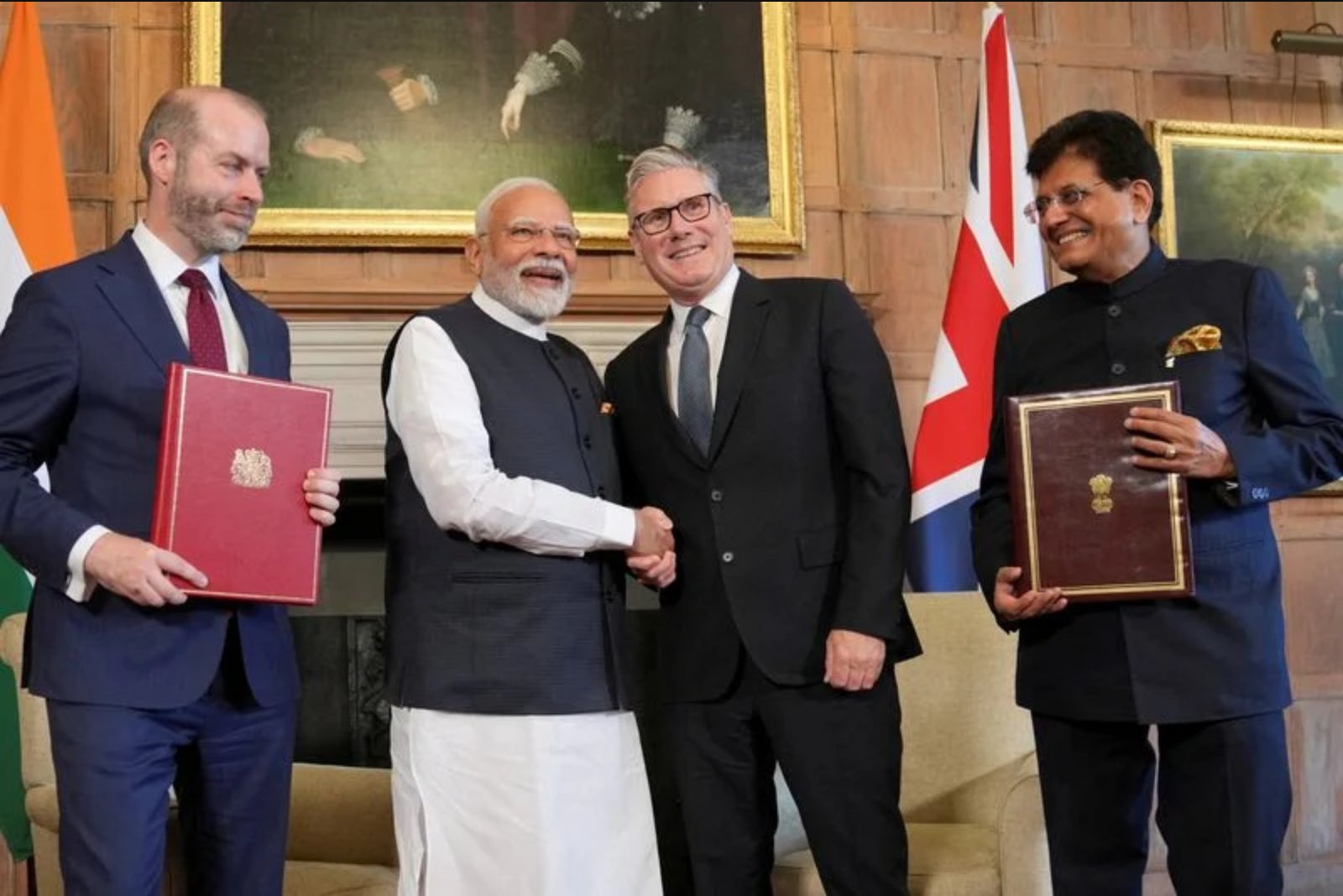
NEW DELHI, July 15 - The India-UK Comprehensive Economic and Trade Agreement entered into force on Wednesday, delivering immediate tariff relief on thousands of goods and broader market openings for services and professional mobility in both countries.
Under the agreement, Indian exporters obtain immediate duty-free access to most British tariff lines. Labour-intensive industries stand to benefit in particular: textiles, leather, footwear, marine products, gems and jewellery, and processed foods will face no tariff barriers on entry into the UK market under the new terms.
Britain, in turn, secures staged tariff reductions and quota arrangements for select sectors, along with greater access in procurement and a suite of services disciplines. The pact provides openings in financial services, education, insurance and professional services, while also creating paths for UK firms to expand in one of the world’s faster-growing major economies.
India’s trade minister, Piyush Goyal, described the agreement as opening "new avenues for trade, investment and innovation," and said it would create opportunities for Indian businesses.
Official Indian trade ministry data show bilateral goods trade levels and services balances that frame the pact’s economic backdrop. India exported $13.44 billion worth of goods to Britain and imported $11.68 billion in 2025-26. Bilateral services trade totalled $35.44 billion in 2024, with India running a services surplus of nearly $7.9 billion.
The tariff architecture under the deal is asymmetrical in timing but broad in coverage. Britain will remove duties immediately on 96.8% of tariff lines, representing 97.7% of trade value. India will eliminate duties at once on 64.1% of its tariff lines and will phase out tariffs on an additional 21%, while excluding products identified as sensitive.
Indian officials highlighted potential gains where UK tariffs had previously ranged from 4% to 20%. Specific eliminations will include duties on marine exports, textiles, leather, footwear, and gems and jewellery—measures expected to improve price competitiveness for Indian suppliers in the British market.
From Britain’s perspective, the agreement captures India’s calibrated liberalisation in areas such as automobiles and alcoholic beverages. Passenger vehicles imported into India will be treated under a phased quota system, with 37,000 completely built units eligible annually for preferential tariff treatment under the pact.
The services component expands market access across 137 sub-sectors, naming information technology, business services, telecommunications, finance and education among those covered. The package also eases temporary entry provisions for business visitors, intra-company transferees, investors, service suppliers and independent professionals.
Complementing movement provisions, a Double Contribution Convention included in the pact will exempt eligible Indian professionals and their employers from paying into Britain’s National Insurance system for stays up to five years. Officials estimate this will benefit about 75,000 workers and roughly 900 employers.
Procurement provisions give Indian suppliers access to Britain’s government purchasing market, estimated at about A390 billion, while India will make reciprocal procurement opportunities available valued at approximately $114 billion.
Key points
- Indian goods gain immediate duty-free entry to most UK tariff lines, aiding labour-intensive sectors such as textiles and marine products.
- The pact expands services market access across 137 sub-sectors and includes temporary entry facilitation for professionals and business travellers.
- Britain gains phased tariff cuts and quotas in areas such as automobiles and sees reciprocal procurement access estimated at A390 billion in UK government purchasing.
Risks and uncertainties
- India’s exclusion of sensitive products and phased tariff removals could limit immediate gains in certain sectors affected by remaining protections.
- The quota system for passenger vehicles - capped at 37,000 completely built units annually at preferential tariffs - constrains the scale of UK autos access compared with unrestricted liberalisation.
- Implementation and take-up of services commitments and the Double Contribution Convention will determine the practical benefits to professionals and employers; estimates of beneficiaries are contingent on eligibility and compliance.