
Economy June 25, 2026 11:17 AM

IMF: Commodity and Energy Prices Retreat After U.S.-Iran Deal, But Normalization Remains Incomplete

Fund sees lower Gulf-linked energy and metals costs after agreement to halt hostilities and reopen Strait of Hormuz; July 8 forecast decision looms

By Marcus Reed
Share
Twitter Reddit Facebook LinkedIn

The International Monetary Fund reported a decline in energy, fertilizer and base metal prices following a U.S.-Iran agreement to halt hostilities and reopen the Strait of Hormuz, while warning that a full return to pre-conflict price levels will take time. The Fund will reassess its April growth scenarios on July 8 and singled out vulnerable net energy importers, particularly in Africa, as most at risk from the disruption.

IMF: Commodity and Energy Prices Retreat After U.S.-Iran Deal, But Normalization Remains Incomplete
Summarize with
ChatGPT Perplexity Claude Grok Gemini

Key Points

  • Following the U.S.-Iran agreement to halt hostilities and reopen the Strait of Hormuz, the IMF reports declines in energy, fertilizer and base metal prices originating from the Gulf.
  • The Fund will decide on July 8 whether to retain the three growth scenarios published in April or to revert to a traditional baseline for its World Economic Outlook.
  • The IMF identifies net energy importers with limited fiscal buffers or oil reserves - notably several African countries - as the primary at-risk group; India shows strong growth momentum.

The International Monetary Fund said Thursday that prices for energy and several commodities have fallen since a U.S.-Iran agreement to halt hostilities and reopen the Strait of Hormuz, but it cautioned that complete price normalization will not be immediate.

IMF spokesperson Julie Kozack told reporters the institution is monitoring developments closely and will make a procedural decision on July 8 about whether to keep the three growth scenarios it issued in April - scenarios that were built around alternative outcomes of the Iran conflict - or to revert to a more conventional baseline in its next World Economic Outlook update.

Kozack noted that the Strait of Hormuz remained closed in May, a period when benchmark crude traded above $100 per barrel. That episode had already shifted the Fund's view away from the more optimistic "reference forecast," which assumed a rapid resolution to the conflict, and toward an "adverse scenario" that projects global growth at 2.5% for 2025.

On Thursday the IMF reported that prices for energy, fertilizer and base metals originating in the Gulf region have decreased since the diplomatic agreement. The institution added that, to date, global inflation expectations have remained anchored and financial conditions have stayed accommodative.

In its assessment the Fund identified net energy importers with weak fiscal buffers or limited oil reserves as the primary concern stemming from the Iran-related disruption. The IMF highlighted nations in Africa as particularly exposed to those strains.

The organization also pointed to strong momentum in India, describing the country as continuing to act as a growth engine for the global economy.


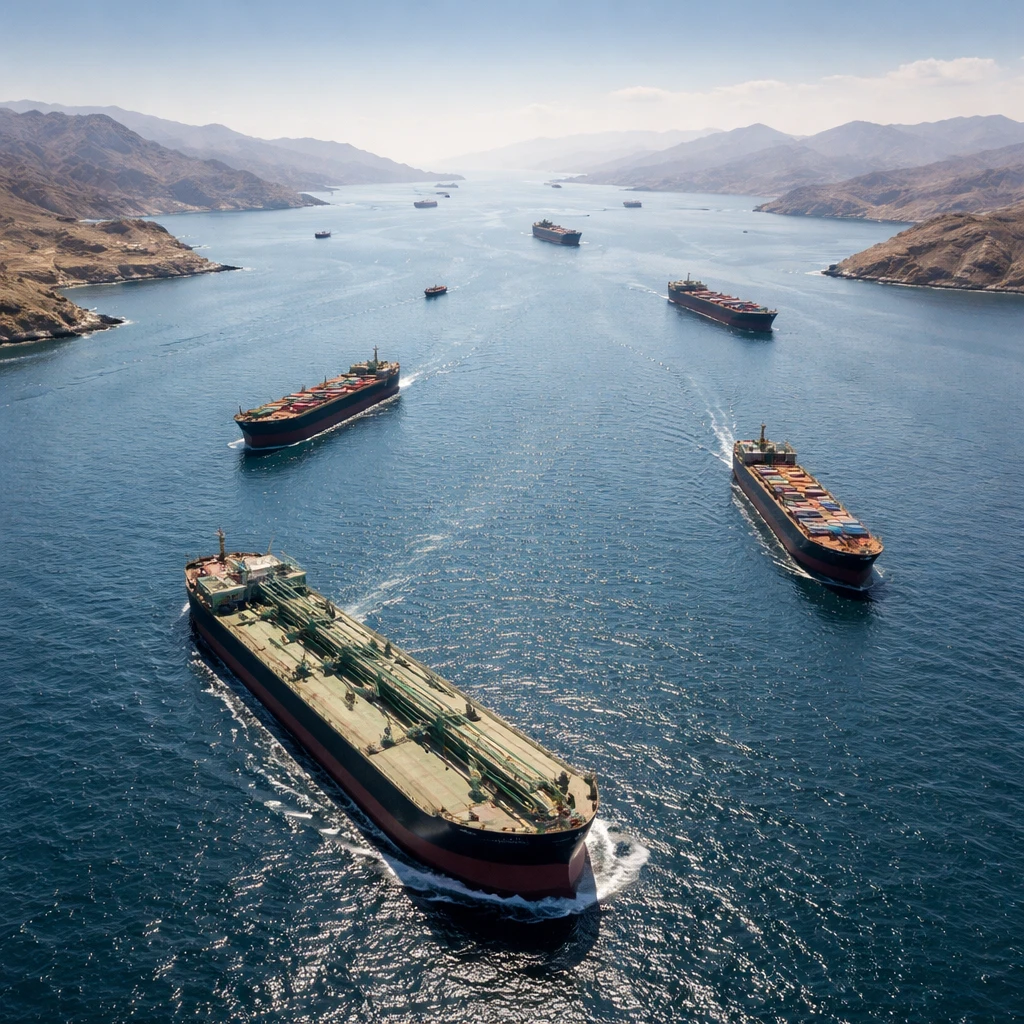
For transportation and commodities markets, the reopening of the Strait of Hormuz and the subsequent easing in Gulf-linked prices reduce some near-term freight and input-cost pressures. Nonetheless, the IMF's caution that full normalization will take more time implies ongoing monitoring of shipping flows and commodity availability — factors that continue to influence freight rates and logistics planning.

With the Fund scheduled to determine its forecasting approach on July 8, market participants and policymakers will be watching for whether those April scenarios remain in place or if the World Economic Outlook returns to a single baseline projection.

Risks

  • Full price normalization will require additional time, implying continued uncertainty for energy, commodities and freight markets.
  • Net energy importers with constrained fiscal space or low oil reserves face greater economic strain from the Iran-related disruptions, affecting demand and fiscal stability in those countries.
  • The Fund's potential shift between scenario-based and baseline forecasting on July 8 introduces planning uncertainty for policymakers and market participants who use IMF projections.

More from Economy

Brazil Central Bank Denies Widening Policy Horizon After Rate Cut and Market Reaction Jun 25, 2026 IMF: U.S. Growth Momentum Strong; Fed’s Decision to Pause Rates Appropriate Jun 25, 2026 IMF: U.S. Growth Remains Robust; Inflation Expected to Reach 2% by 2027 Jun 25, 2026 Projectile Strikes Cargo Vessel in Strait of Hormuz, Authorities Urge Caution Jun 25, 2026 Iran Proposes Tolling Regime for Strait of Hormuz Aimed at $40 Billion in Annual Revenue Jun 25, 2026