
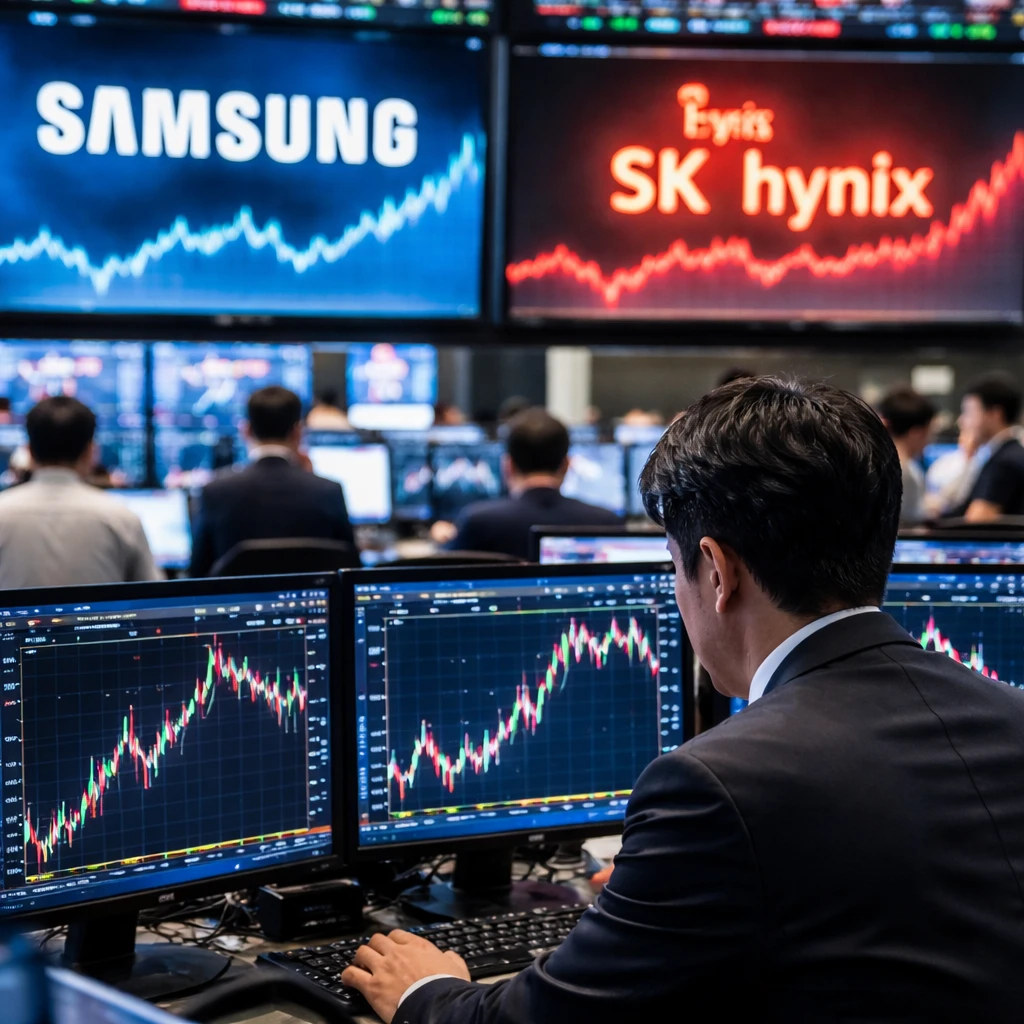
Single-stock leveraged ETFs, designed to multiply short-term returns on an underlying equity, have become a dominant force in trading around South Korea’s largest semiconductor firms. The instruments, which first appeared in the United States in 2022, have gained rapid traction in Asia, particularly among funds tied to Samsung Electronics and SK Hynix.
Leveraged ETFs are built to deliver a multiple of the daily performance of a target, typically using derivatives such as futures or swaps and borrowing to achieve that exposure. Commonly offered at two-, three- or even five-times leverage, these funds amplify both gains and losses on a daily basis. That daily reset is critical: the funds must rebalance each trading day to preserve the intended multiple, buying more of the underlying exposure when prices rise and selling when prices fall.
That rebalancing produces a structural feedback loop. As leveraged ETFs expand holdings on rallies, they add upward pressure on the underlying share. Conversely, in downswings the forced sales can accelerate declines. Those mechanics have been particularly pronounced in the market for semiconductor equities, where the combination of large market cap stocks and concentrated trading flows increases sensitivity to leveraged buying and selling.
Single-stock leveraged ETFs launched in May in South Korea, while two-times leveraged products tracking Samsung and SK Hynix listed in Hong Kong in 2025 and quickly saw assets swell. One Hong Kong-listed twice-leveraged ETF focused on SK Hynix, run by CSOP, grew into the largest fund of its kind worldwide before suffering a dramatic drawdown. Assets in the fund tracking SK Hynix expanded roughly 20-fold to a late-June peak, then collapsed rapidly.
The CSOP product plunged about 83% over the month following its late-June high, yet it still reported HK$31.9 billion in assets, equivalent to about $4 billion on HKEX figures. That fund’s inflows helped SK Hynix’s share price surge at first, but when the flows reversed, selling intensified and by late July the stock had fallen to roughly half of its late-June peak.
Part of what makes the impact severe in South Korea is the sheer scale of the component names. Samsung and SK Hynix each command trillion-dollar market valuations and together make up more than half of the KOSPI benchmark. On some trading days this year, the two stocks accounted for more than 80% of the KOSPI’s turnover. The concentration has pushed the KOSPI’s volatility index sharply higher; the measure spent six weeks above 80 and hit a record 97.99 on June 19, after typically residing below 30 for decades.
Market participants say the levered products have been popular among a mix of professional traders and retail buyers. Asset managers that issue leveraged ETFs emphasize that the instruments serve as lower-cost hedges for sophisticated investors and carry warnings that they are not suitable for buy-and-hold strategies. That caution reflects an important structural reality: the ongoing cost of maintaining a leveraged position - including financing and derivative roll costs - erodes returns over time, often leading the ETF’s longer-run performance to diverge substantially from the underlying stock.
Despite those caveats, retail interest has been strong. Many individual investors have been drawn to the potential for outsized short-term gains, increasing the flow into these funds and intensifying their market footprint. The dynamic of concentrated mega-cap names, heavy retail participation and leveraged rebalancing has produced pronounced single-stock volatility within the semiconductor sector.
Another source of market disturbance came in July with SK Hynix’s Nasdaq listing, which added layers of liquidity and trading venues and coincided with further leveraged ETF listings in the United States. The additional channels for exposure amplified intraday swings as global investors reacted across markets.
Regulators have taken notice. In July, South Korea’s Financial Services Commission announced new restrictions on single-stock leveraged ETFs, including banning promotional events tied to the products and advising against approving new launches. The finance minister apologised in the National Assembly for insufficient oversight prior to the launch of the products, signaling the possibility of tighter controls ahead.
Hong Kong authorities have also moved to reduce levered ETF-driven volatility. Regulators there have instructed managers, including CSOP, to adopt dynamic leverage mechanisms - effectively capping advertised leverage at 2X while allowing managers to reduce leverage below that threshold when markets become disorderly.
The net effect is a market where engineered exposure designed to magnify daily returns is reshaping liquidity and price discovery around a handful of very large semiconductor names. For investors and market operators alike, the phenomenon raises questions about how concentrated flows interact with index composition, trading behavior and the capacity of regulatory tools to dampen acute swings.
Summary: Leveraged single-stock ETFs that multiply daily returns have surged in Asia and concentrated flows into Samsung and SK Hynix have intensified price swings and trading volumes on the KOSPI. The funds’ mandatory daily rebalancing creates feedback loops that magnify moves, and regulators in South Korea and Hong Kong have introduced measures to curb volatility. Asset managers describe the products as tools for experienced traders but many retail investors have participated, increasing market impact.