
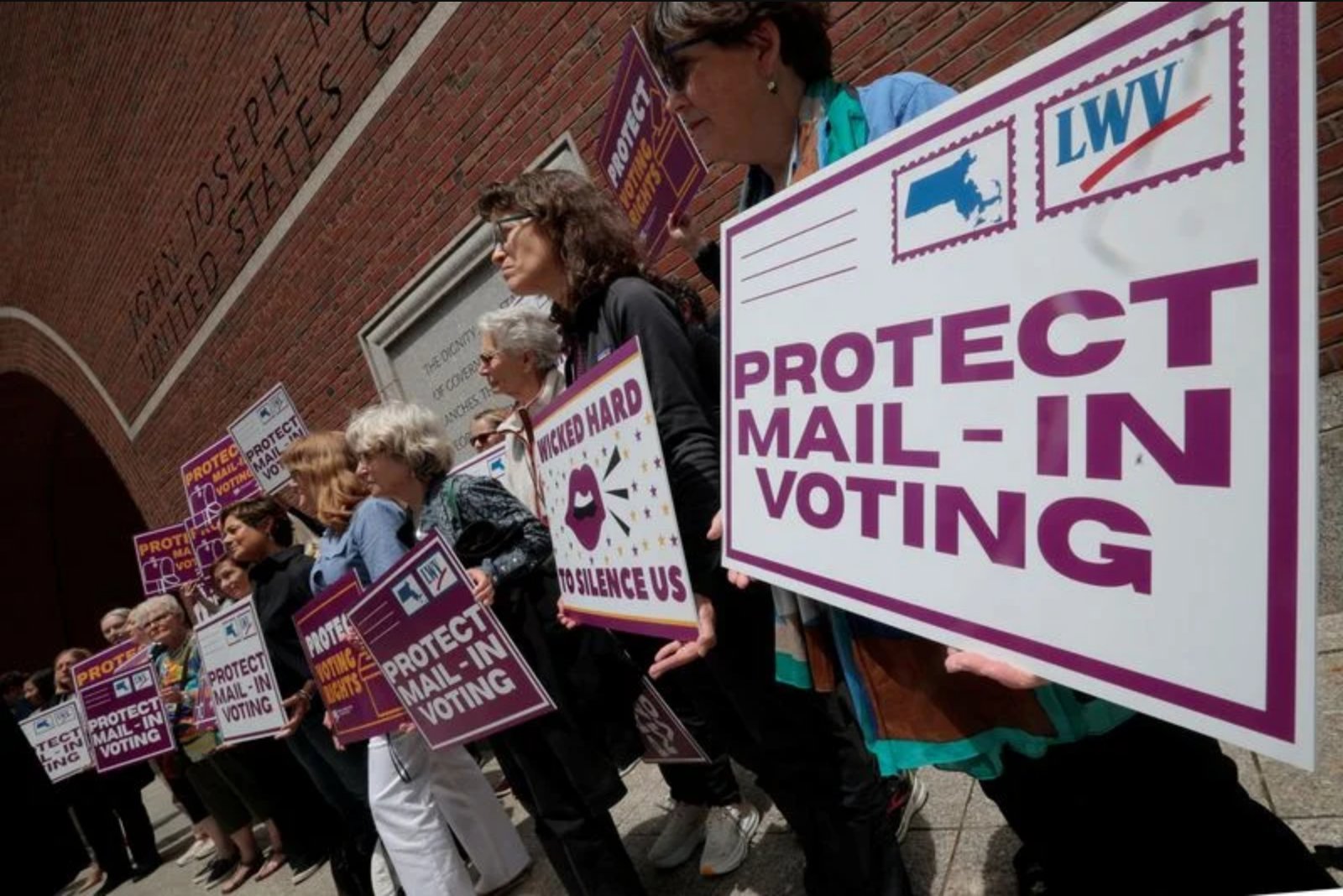
On June 25, a federal judge in Boston issued an order blocking the implementation of President Donald Trump’s executive directive on mail-in voting, preventing those provisions from taking effect before the November elections that will determine control of Congress.
U.S. District Judge Indira Talwani granted the temporary halt after several Democratic-led states challenged the directive, arguing it unlawfully sought to intrude on the states’ constitutionally assigned role in administering federal elections. The plaintiffs contended the president lacked authority to impose the measures and that enforcing the order would force states into a rushed overhaul of election procedures before voters head to the polls.
The contested executive order, which the president signed on March 31, instructs the U.S. Department of Homeland Security to compile and send to individual states a roster of confirmed U.S. citizens eligible to vote in each jurisdiction. That roster would be built from citizenship and naturalization records alongside other federal databases.
In addition, the order requires the U.S. Postal Service to limit delivery of ballots to individuals appearing on each state’s approved mail-in ballot list. The Postal Service moved toward implementing the president’s directive by issuing proposed rule changes that would require states to provide the names and barcodes associated with their mail-in ballots.
Another element of the order directs the U.S. Department of Justice to prioritize investigations and prosecutions of state and local election officials who issue federal ballots to people identified as "not eligible" to vote.
Legal challenges were filed by voting rights organizations and a coalition of 23 states together with the District of Columbia. The plaintiffs argued the directive is unconstitutional and that allowing it to stand would create confusion and likely disenfranchise eligible voters by forcing last-minute changes to state election systems.
Judge Talwani, who was appointed by President Barack Obama, issued her ruling after a separate court matter in Washington, D.C. In that case, U.S. District Judge Carl Nichols, a Trump appointee, declined to grant a preliminary injunction sought by Democrats challenging the same executive order. Judge Nichols reasoned that the request was premature because the order had not yet been implemented. Plaintiffs in that matter are pursuing an appeal.
The Boston ruling prevents the executive order from taking effect in the run-up to the congressional elections in November. The litigation and differing outcomes in multiple federal courts underscore the legal disputes surrounding the scope of presidential authority over procedures that states traditionally manage for federal elections.