
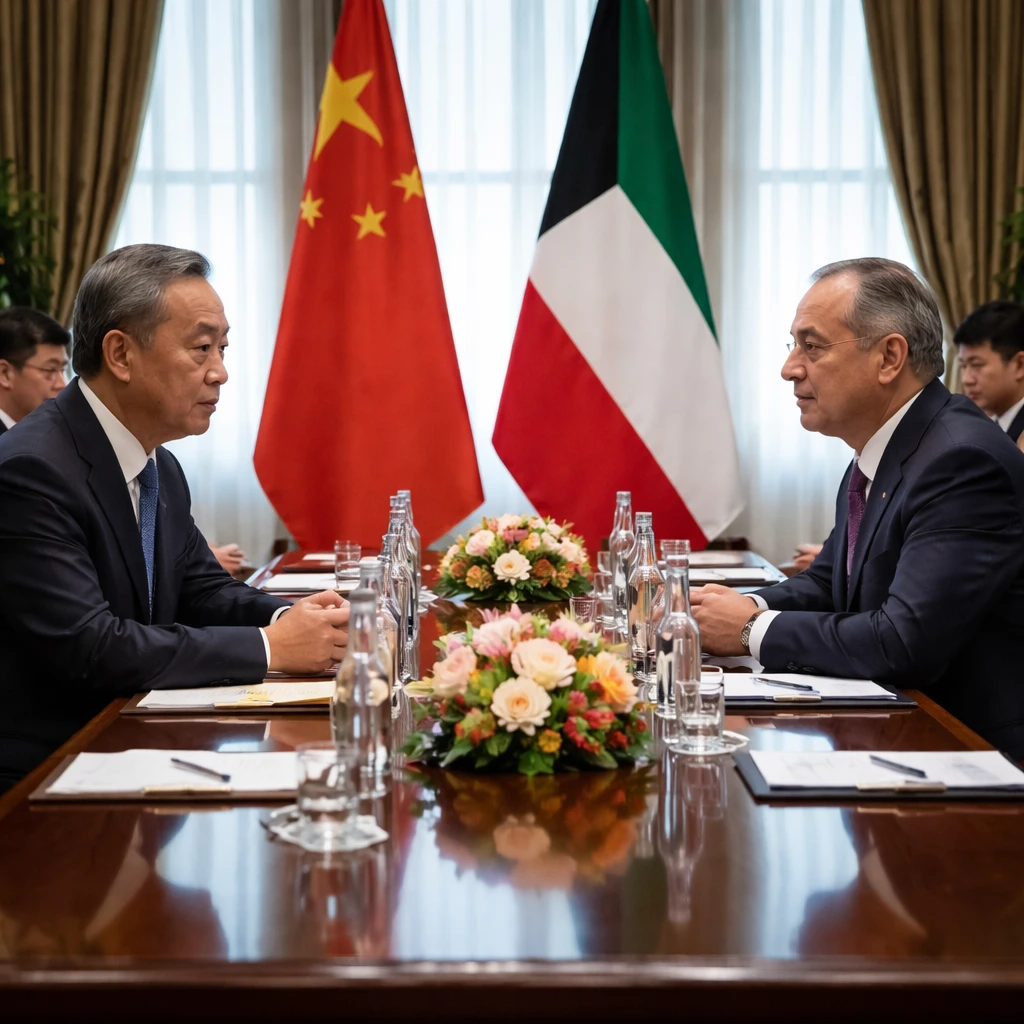
China's top diplomat urged immediate talks on Monday as tensions across the Middle East and the Gulf reached what he called a critical point. The appeal came during a meeting in Beijing with Kuwait's foreign minister, Sheikh Jarrah Jaber Al-Ahmad Al-Sabah, according to a statement from China's foreign ministry.
In remarks reported by the ministry, the Chinese foreign minister said, "the old script of recurring conflict should not be repeated," and identified de-escalation as the top priority. He said China was prepared to step up coordination with Kuwait to help restore peace and stability in the troubled region.
The meeting unfolded as the United States prepared new economic measures directed at countries that trade with Iran. U.S. officials warned Tehran the measures would amount to "the greatest financial offensive ever" aimed at those conducting trade with Iran.
Iran rejected the U.S. threat and issued its own warnings. Tehran said it would shut down all oil exports from the Gulf "if the economic war continues." In addition, Iran told shipping vessels not to pass through the Strait of Hormuz without its permission, a move that would affect a major artery of global energy flows.
Roughly one-fifth of the world’s oil passes through the Strait of Hormuz, a fact cited in reporting of the dispute. The combination of heightened economic pressure and reciprocal threats framed the diplomatic engagements taking place in Beijing.
Context and implications
China's public call for immediate dialogue and its offer to coordinate with Kuwait emphasized de-escalation as Beijing's central goal in this episode. The timing of the meeting - coinciding with announced U.S. economic steps and Iran's subsequent warnings - highlighted the intersecting diplomatic and economic pressures shaping the situation.
The Chinese statement left clear that it sees a role for bilateral coordination with regional partners to pursue peace and stability, while the contemporaneous U.S. and Iranian statements underscored the economic and security tensions now affecting Gulf maritime and energy routes.