
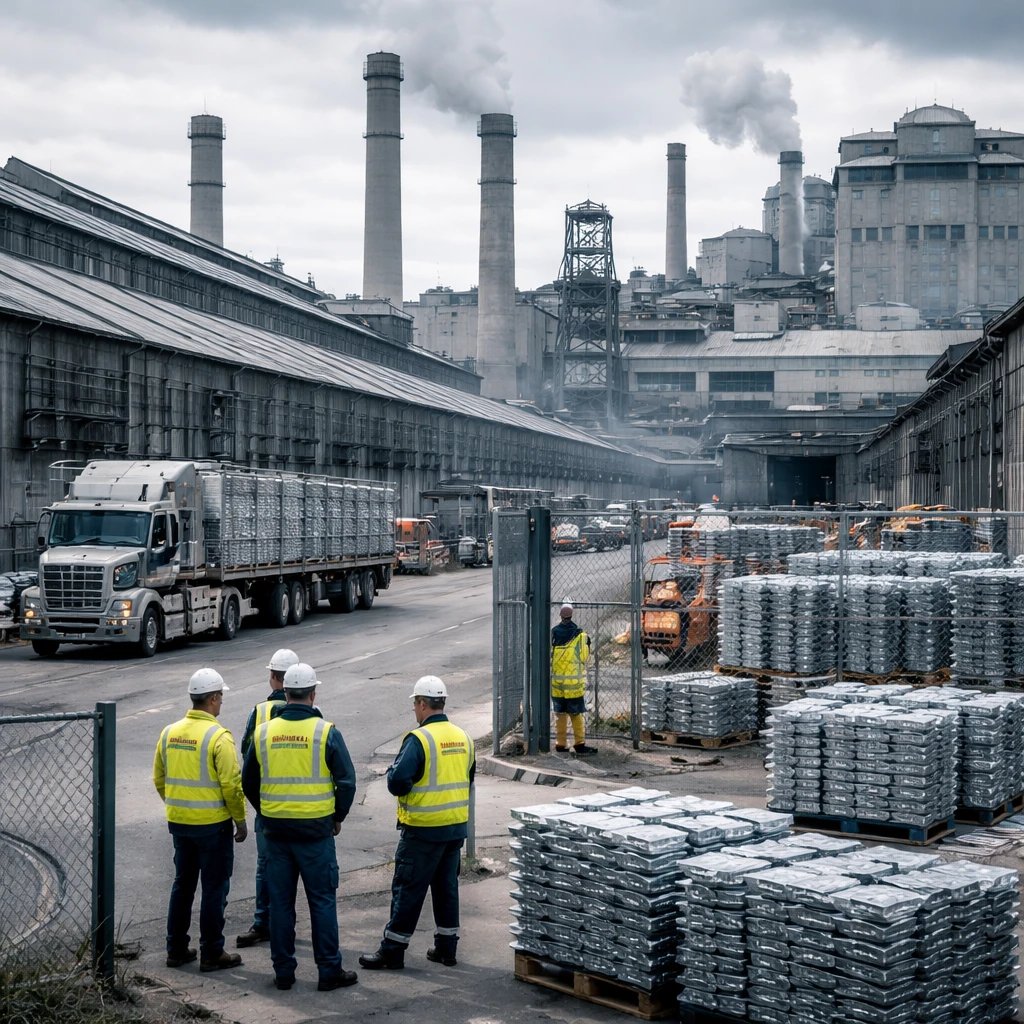
Canadian Prime Minister Mark Carney told reporters Thursday that U.S. tariffs on imported aluminum are largely being borne by American buyers, not foreign producers, and that resolving tensions in the aluminum sector could open the door to a broader bilateral trade pact.
Speaking outside a Rio Tinto Group aluminum facility in Quebec, Carney said U.S. prices for aluminum have climbed sharply since President Donald Trump imposed a 50% tariff on metal imports in June 2025. He cited data showing the aluminum producer price index rose 52% from June 2025 to June 2026.
"Some of that is international prices, but most of that is pass-through of the tariff," Carney said. "That's not a good situation for American companies." He emphasized the distributional effect of the tariff, noting that the United States does not produce enough primary aluminum domestically to meet demand and therefore relies heavily on foreign supply.
Carney pointed to Canada's role in the U.S. market, noting that Canada accounted for 44% of U.S. aluminum imports last year. That trade relationship is central to Ottawa's negotiating stance as Canadian trade officials press for changes they say would benefit both countries across metals, steel and automotive sectors.
Carney said Canada is seeking a comprehensive outcome rather than a narrow, sector-by-sector fix. "Canada is not interested in a narrow deal that does not connect other sectors," he said, indicating Ottawa's preference for a negotiated package that addresses linked industrial issues.
Last month President Trump announced plans to lower aluminum tariffs to 25% for companies that commit to building, expanding or refurbishing aluminum plants in the United States. Meanwhile, Canadian trade officials were scheduled to meet Thursday with U.S. Trade Representative Jamieson Greer to continue talks ahead of an August 19 deadline set by the White House.
Washington has warned that failure to reach sufficient progress by that date could trigger new 50% tariffs on a range of Canadian goods. Ottawa has identified strategic sectors where it seeks to eliminate or reduce U.S. tariffs, including metals, autos and lumber.
U.S. officials, led by Greer, have countered by saying they expect Canada to address several U.S. complaints as part of any deal. Those complaints include Canadian counter-tariffs on U.S.-made autos, trade controls on dairy, and the availability of U.S. alcohol in provincial liquor agency networks.
If negotiations fail, the list of products that could face fresh U.S. duties includes items cited by U.S. officials and Canadian commentators alike - products such as milk, hockey equipment, beer and plywood. The looming deadline and the linkage of aluminum to wider industrial grievances have made the aluminum dispute a potential fulcrum for a larger U.S.-Canada trade settlement.
Key points
- U.S. tariffs on aluminum introduced in June 2025 have coincided with a 52% rise in the aluminum producer price index through June 2026, with Prime Minister Carney saying most of that increase reflects tariff pass-through to American buyers.
- Canada supplied 44% of U.S. aluminum imports last year, making the metal a central bargaining chip as Ottawa seeks broader trade concessions across metals, autos and lumber.
- Negotiations between Canadian officials and U.S. Trade Representative Jamieson Greer are ongoing ahead of an August 19 deadline, with the prospect of additional 50% U.S. tariffs on a range of Canadian goods if talks do not produce sufficient progress.
Risks and uncertainties
- Failure to reach an agreement by the August 19 deadline could lead to new 50% U.S. tariffs on a set of Canadian goods - a risk that affects producers and exporters in sectors such as food and forest products.
- Continued tariff pass-through could raise costs for American companies that rely on aluminum, potentially affecting downstream industries including autos and manufacturing.
- Negotiations link multiple sectors - metals, autos, lumber, dairy and alcohol distribution - increasing the complexity of any settlement and the risk that progress in one area may be contingent on concessions in another.