
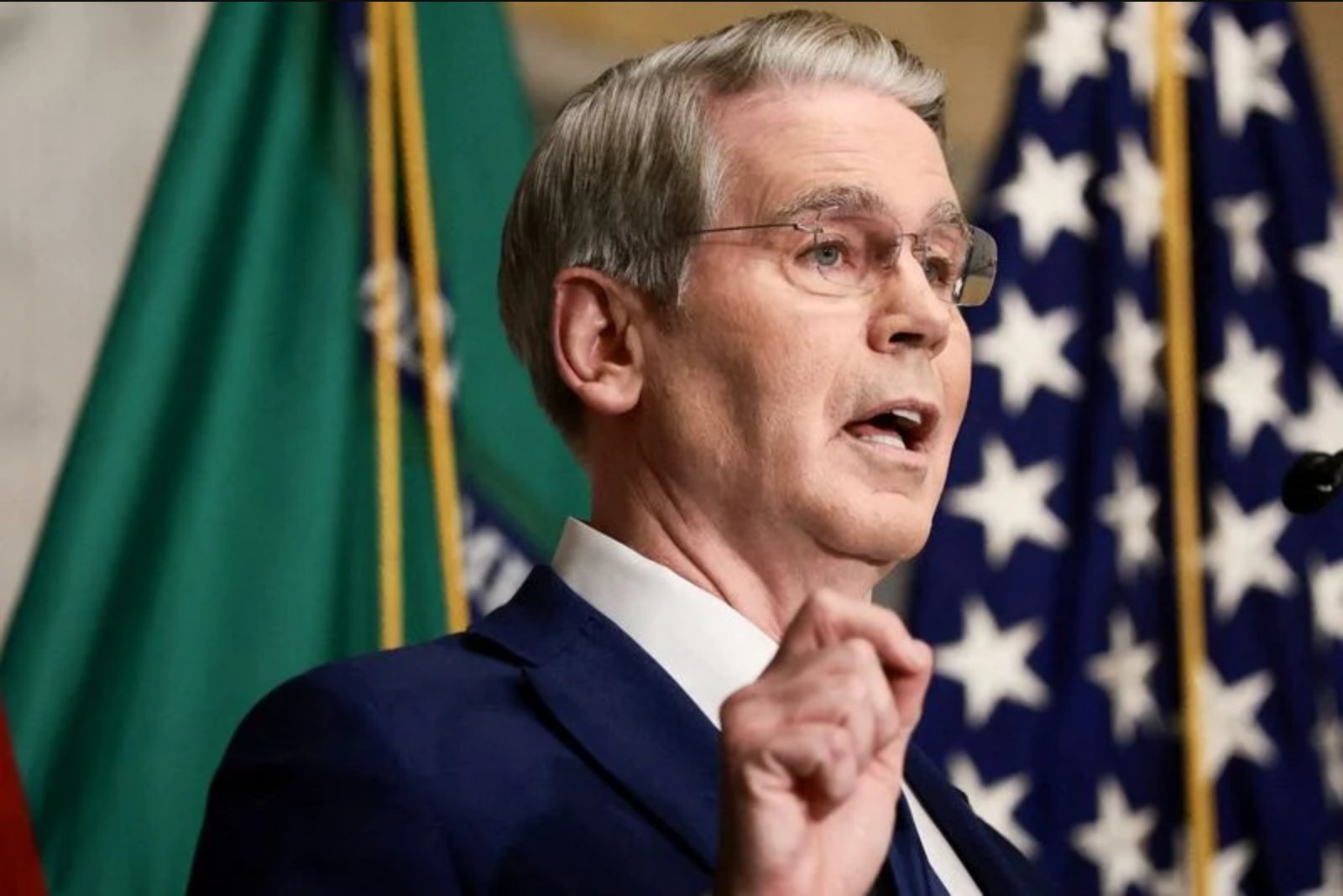
U.S. Treasury Secretary Scott Bessent is under pressure this week as he convenes finance ministers and central bank governors from the G20 in Asheville, North Carolina, with a tightly focused agenda: narrow global trade imbalances, boost growth and press countries to sever commercial ties with Iran. The meeting on Monday and Tuesday comes as a series of domestic and international economic strains complicate any attempt at consensus.
Bessent, who largely bypassed the Group of 20 process during last year’s summit in South Africa, has set out to reshape the forum under U.S. leadership. The effort seeks to advance the current administration’s priorities from the Blue Ridge Mountains conference site, but delegates will be meeting amid a swirl of policy uncertainty ranging from tariff policies to geopolitical conflict and volatile debt markets.
Tariff policy is likely to dominate parts of the agenda. Delegates arrive against a backdrop of legal and trade maneuvers in Washington. After the Supreme Court struck down President Donald Trump’s broad global tariffs in February under a national emergencies law, the administration has rebuilt levies using alternative legal authorities. A wave of measures already in place affected a large swath of economies: in July, 60 economies, including all G20 countries and the European Union, were hit with 10% or 12.5% U.S. tariffs for alleged lax enforcement of forced labor bans. In addition, a separate trade probe has placed 16 top U.S. trading partners - more than half of them G20 members - on a list for potential further tariffs to address alleged excess industrial capacity.
European officials attending the meetings are expected to raise concerns about an influx of Chinese-made goods that threatens domestic industries such as autos. With subdued domestic demand, China has intensified exports of electric vehicles, semiconductors and other manufactured goods; total exports rose 23.9% year-on-year in July. Observers at the summit are likely to press for stricter curbs on Chinese imports into Europe, while Chinese officials have shown limited appetite for longstanding international calls to curb industrial subsidies or pivot away from export-driven expansion.
A senior Treasury official described global trade imbalances as arising from “distortive government economic policies that prevent fair competition,” and indicated those imbalances will be a major topic at the Asheville meetings. The official said the United States will emphasize measures to reduce such disparities, though economists note that the U.S. side has not prioritized significant cuts to fiscal deficits on the agenda - a step that would ease domestic demand and reduce import pressure.
Another core objective for the U.S. delegation is to tighten economic pressure on Iran. The sustained conflict involving Iran has disrupted energy flows and contributed to elevated commodity prices, with the Strait of Hormuz effectively shut and growth dampened across many G20 economies. Bessent has warned that countries continuing to purchase Iranian oil or facilitate transactions with Tehran risk secondary U.S. sanctions. In a concrete move, on Friday the Treasury imposed restrictions on an Egyptian bank with G20 membership links, citing connections to Iran via its branches in the United Arab Emirates.
Analysts believe Bessent will press Iran-related issues heavily, even as other delegates prefer to focus on tariffs and trade. Josh Lipsky, international economics chair at the Atlantic Council, summed up the likely dynamic: “Secretary Bessent will want to put Iran front and center and talk about tightening sanctions on Iran, and many countries around the G20 table will want to talk about anything else. They’ll want to talk about tariffs.”
These competing priorities complicate efforts to craft joint statements or coordinated actions in a forum that includes countries with sharply divergent interests, such as China and Russia. The G20 has historically struggled to find shared ground on collective initiatives when geopolitical tensions are acute, and that pattern may reappear in Asheville.
Financial market stress at home compounds Bessent’s diplomatic challenge. U.S. public debt surpassed the $40 trillion mark on August 19, a level reached after debt doubled since 2017 across the administrations of President Trump and the intervening presidency of Joe Biden. Market unease over the U.S. debt trajectory has been reflected in rising long-term yields: 30-year Treasury yields climbed to their highest levels in 19 years earlier this month.
In response to those pressures, Bessent surprised markets by doubling scheduled buybacks of longer-dated Treasury securities to $4 billion per operation, a move that briefly cooled yields. That step, however, drew criticism from his former Wall Street mentor, Stanley Druckenmiller, and has unsettled some central bankers who fear the Treasury might pursue further interventionist tactics in a market traditionally managed with “regular and predictable” issuance.
When asked how Bessent would address concerns about rising long-term yields with his G20 counterparts, a senior U.S. Treasury official said the long-bond yields had “risen above what we consider fair value,” and reiterated that the Treasury was committed to actions to bring yields lower.
Bessent’s market interventions have not been limited to Treasuries. Currency moves credited to U.S. actions include a joint intervention with Japan on August 1 to support the yen and purchases of Argentine pesos in October 2025, both intended to influence exchange-rate dynamics.
Not all observers are convinced U.S. diplomacy can paper over the real economic consequences many countries are feeling from U.S. policies. Mark Sobel, a former U.S. Treasury official who helped negotiate G20 communiques under both Republican and Democratic administrations and now chairs the OMFIF monetary policy think tank’s U.S. arm, noted that foreign economies are being harmed by U.S. actions in the Iran conflict, which those countries generally do not support. “G20 ministers attending the meeting won’t buy into soothing words,” Sobel said. “Further, their economies are being adversely hit by Trump’s war on Iran, which their countries don’t support. No amount of U.S. diplomacy can change those realities.”
The U.S. push to rekindle global growth - described by a Treasury official as driven by lower regulation, increased energy production and private-sector innovation - is part of an effort to return the G20 to its original focus. The forum was established at leaders level in the wake of the 2008 global financial crisis to drive measures to end the deep recession of that era. In recent years, host countries have steered the agenda toward national priorities - for example, South Africa emphasized the climate crisis in the prior year and Brazil advanced proposals to raise taxes on the wealthy in 2024. The last major G20 collective fiscal action cited by officials came in 2020, when members agreed to inject another $5 trillion into the global economy to counteract job and income losses during the COVID-19 crisis.
As Bessent navigates the competing priorities in Asheville, attendees are likely to test both the coherence of the U.S. agenda and the extent to which the Treasury can reassure markets and partners simultaneously. The mix of tariff tensions, sanctions policy, elevated energy prices stemming from the Iran war and volatile U.S. debt markets creates a challenging backdrop for any broad multilateral agreement.
Meeting details noted in discussions
- G20 finance ministers and central bank governors meet Monday and Tuesday in Asheville, North Carolina.
- Tariffs reconstituted under alternative legal authorities after a February Supreme Court ruling are central to U.S. trade strategy.
- Recent policy steps include July tariffs on 60 economies and potential further tariffs affecting 16 major trading partners; Treasury bond buybacks were doubled to $4 billion per operation.