
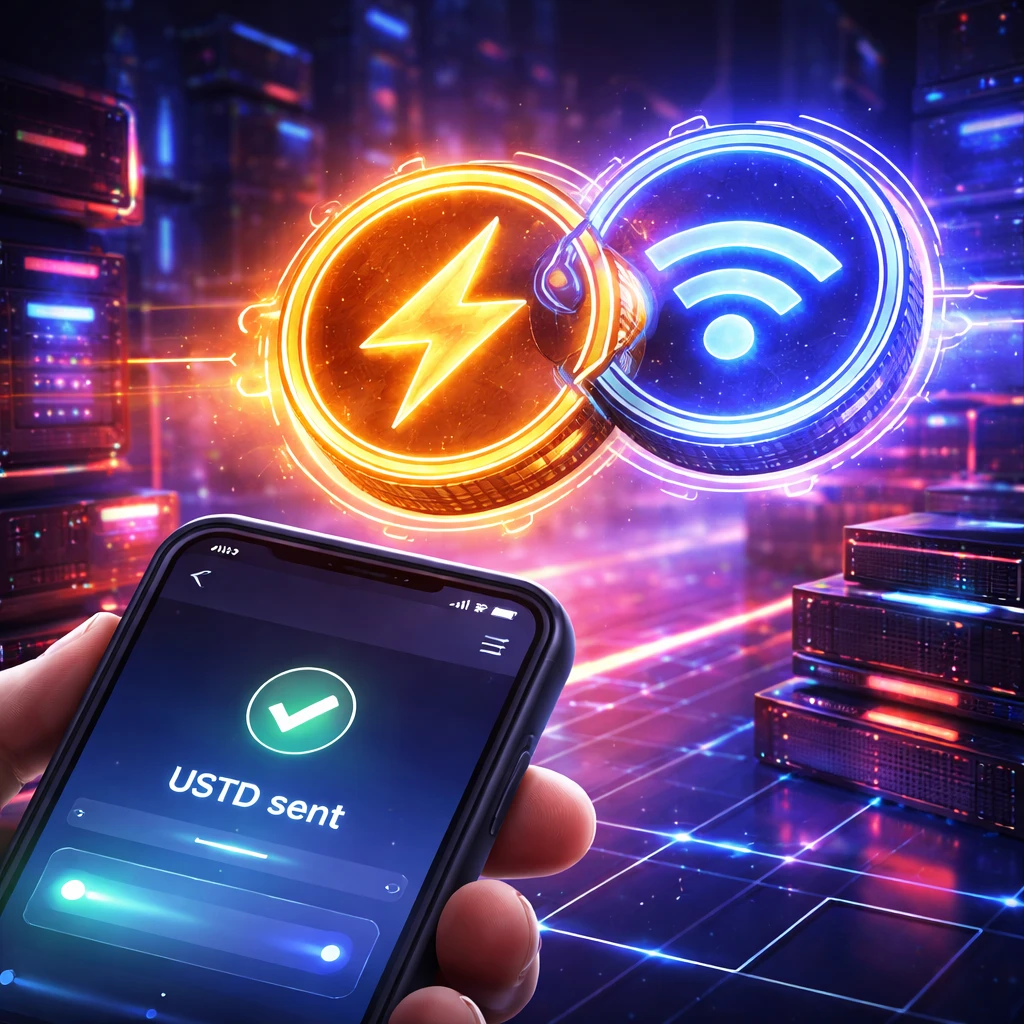
SINGAPORE, Singapore — Automated network utility provider TronZap announced the launch of combined Energy and Bandwidth rental bundles intended to streamline transaction processing on the TRON blockchain. The new packages group the two on-chain resources that drive TRON transactions into a single purchase, avoiding separate procurement and reducing the risk of partial resource shortages during transfers.
On TRON, transaction costs are taken in TRX and can be burned when a sender lacks the necessary resources to complete an operation. Instead of a flat gas model, TRON assigns each transaction consumption from two distinct resources: Bandwidth, which covers the basic data movement and scales with transaction size, and Energy, which powers smart contract execution. A small allocation of Bandwidth is issued to each wallet daily, while Energy is most often required for interactions that call a contract.
That architecture makes token transfers such as USDT (TRC-20) particularly dependent on Energy because USDT is implemented as a smart contract token rather than a native coin. Any call to that contract - transferring USDT, conducting a decentralized exchange swap, approving a token, or depositing into a lending protocol - draws on Energy. When an account does not hold enough Energy, the TRON network will quietly burn TRX from the sender to cover the shortfall, producing the unexpected fees and the "out of energy" errors many users encounter.
TronZap previously provided rentals for Energy and Bandwidth separately. The new offering packages both resources together so a single rental supplies the Energy needed to execute a USDT transfer as well as the Bandwidth that move the transaction data. The company has sized bundles around the most common transaction cases to remove the need for users to calculate resource requirements. For context included in TronZap's release, a typical USDT transfer requires roughly 65,000 Energy and about 345 Bandwidth; sending to an address that has never held USDT can require approximately twice the Energy.
Bundling addresses a practical failure mode on the network. A transaction may have sufficient Energy but still stall or revert because it ran out of Bandwidth, or conversely hold enough Bandwidth but lack Energy. By providing both resources at once, TronZap's single-package approach aims to ensure both sides of the requirement are met before a transfer is initiated, keeping fees predictable and avoiding the need to stake or freeze TRX.
The bundles are available immediately through the TronZap website and via its official Telegram bot, where TronZap says a rental can be completed in under a minute. TronZap also exposes the capability through the TronZap Energy API, allowing teams to integrate rental flows directly into their own products. That integration option is highlighted as particularly suitable for wallets, exchanges, payment tools, and other applications handling large volumes of TRON traffic where reliable and inexpensive USDT transfers are essential to user experience.
Non-Custodial Wallet Integration
TronZap additionally notes a dedicated TRON Energy API designed for non-custodial wallets. The API integration is described as lightweight - no server setup on the integration side and no background processes to operate - enabling the rental flow to execute inside an existing wallet application. TronZap indicates wallet providers receive a share when an application user rents Energy or Bandwidth through this flow. Teams seeking documentation for the non-custodial wallet API are instructed to message the TronZap support team to begin the onboarding process.
Service Characteristics and Access
TronZap is positioned as an automated, non-custodial service on the TRON blockchain that sends rented Energy and Bandwidth directly to users' wallets. Quick rentals do not require an account, and the company states it never has access to private keys. For development teams, an API and SDK are available for integration into wallets, exchanges, payment systems, and other TRON applications. The company also advertises around-the-clock support.
Contact details reported with the announcement include the TronZap website, an email address at [email protected], and a named contact: Marc. The company presents the bundled rental launch as an operational improvement for transactions that commonly encounter unexpected TRX burns or resource-related errors.
Summary of what changed
- TronZap now offers combined Energy and Bandwidth rental bundles on the TRON network.
- Bundles are purchasable via TronZap's website, Telegram bot, and through the TronZap Energy API.
- The packages are sized to common transfer profiles to reduce the need for manual resource calculations.
Context on resource usage
Because USDT (TRC-20) is implemented as a smart contract token on TRON, its transfers consume Energy. Bandwidth and Energy together determine whether a transaction will proceed without triggering TRX burns to cover deficits. The new bundles pack both resources to make it more likely a transfer will have the necessary coverage before submission.
Key points
- Operational: Users can now procure both Energy and Bandwidth in a single rental, simplifying the payment flow for TRON transactions.
- Product impact: Wallets, exchanges, payment tools, and other TRON-facing applications can integrate the TronZap API to automate rentals and reduce unexpected transaction costs for end users.
- Cost and convenience: Renting both resources on demand remains an alternative to staking (freezing) TRX for resource accrual, which some users avoid because renting typically suits occasional transfers more economically.
Risks and uncertainties
- Resource mismatch risk - Even with bundles, transactions may still encounter failures if a transfer's consumption differs substantially from the bundle sizing; the company has sized packages around common cases, but unusually large or complex transactions may require different levels of Energy or Bandwidth.
- Operational reliance - Users and application teams integrating the TronZap API will be dependent on a third-party rental service for on-demand resource provisioning, which introduces operational dependency for wallets and exchanges handling TRON traffic.
- Unexpected TRX burns - If an account still runs short of Energy or Bandwidth, the network's mechanism to burn TRX to complete the operation remains the fallback, producing fees users may not anticipate.
Contact
TronZap
Marc
TronZap.com
[email protected]
Reporter: Derek Hwang