
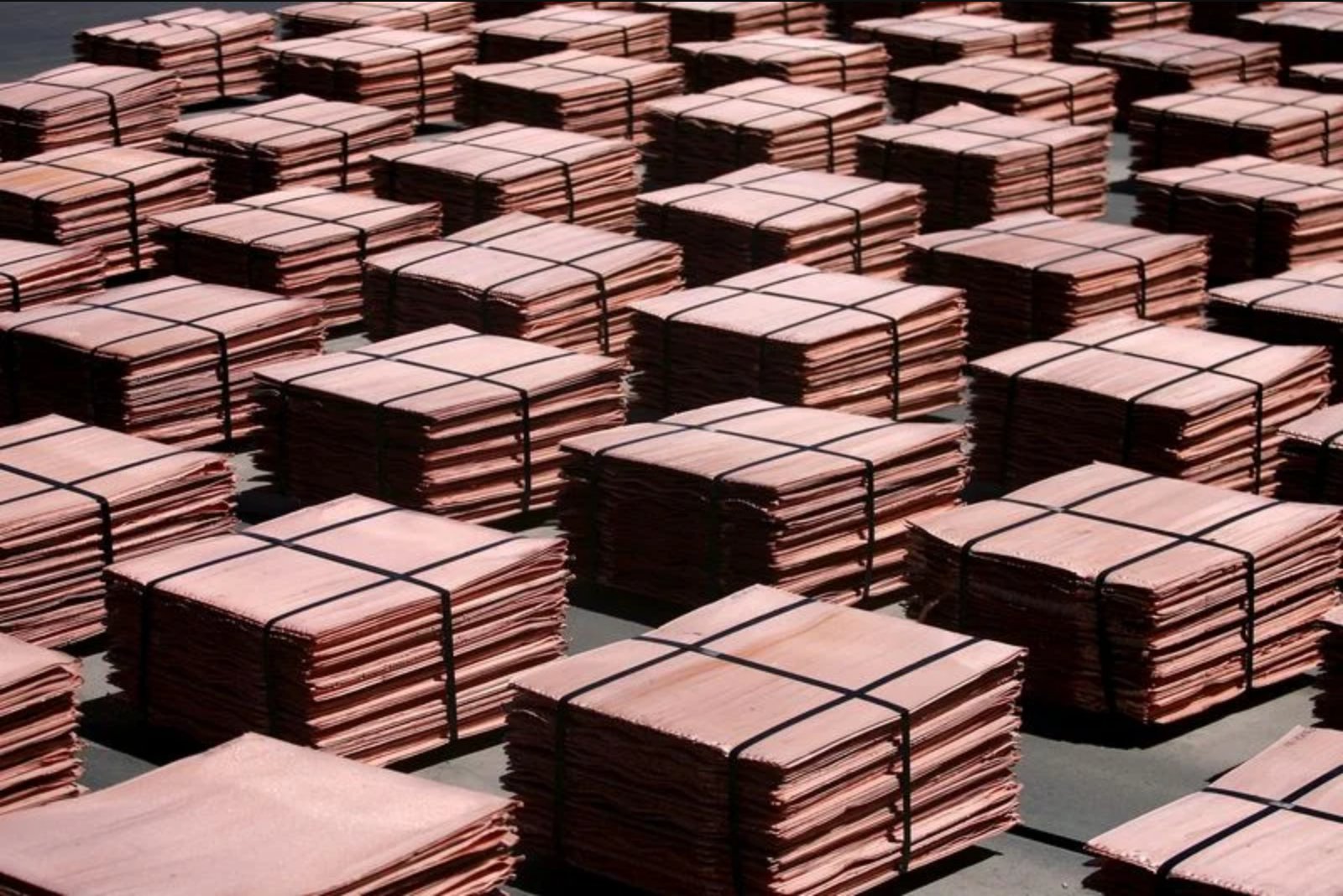
The threat of U.S. import tariffs is changing where copper is held and how tight the market appears in practice, even though analysts still see no global shortage of the metal. Three-month copper on the London Metal Exchange climbed to as high as $14,343 per metric ton on Tuesday, bringing it close to the record of $14,527.50, after orders to remove 65,400 tons of metal from LME warehouses in recent days.
Those large warrant cancellations followed a period in which inventories on the LME and the Shanghai Futures Exchange had risen, a move that initially appeared to ease concerns about supply tightness. Market participants say the subsequent rally reflects a shortage of copper available outside the United States rather than an absolute global deficit of refined metal, which is used broadly in power grids, electric vehicles and AI data centres.
Higher prices in the United States have incentivised traders to ship metal into COMEX storage ahead of a potential tariff on refined copper from 2027, a dynamic that is drawing down inventories in other regions and turning what had been expected to be a surplus market into something much tighter in operational terms.
Tariff expectations reshape physical flows
Robert Edwards, principal copper analyst at CRU, said the possibility that copper stockpiled in the United States would no longer be available internationally has altered the market picture. The threat of tariffs has effectively transformed what should have been a surplus this year into "at best a balanced market", he said.
COMEX inventories have risen for 46 consecutive days to a record 675,185 metric tons, an accumulation driven by an arbitrage that captures the premium of COMEX over other centres. CRU's last projection for 2026 forecast a 639,000 ton global copper surplus.
If imports continue at recent rates, Edwards warned, "it’s going to look like a deficit market in reality."
Flows and historical import patterns
The U.S. imported almost 885,000 tons of refined copper cathodes in the first half of 2026, roughly 3% more than in the same period last year, when a similar tariff threat loomed, and more than double the imports recorded in the first six months of 2024. The United States brought in a record 1.64 million tons for the full year of 2025.
Refined copper had been granted an exemption from the tariff measures last year, a move that initially sent prices lower. However, the U.S. Commerce Department was scheduled to report to the White House by June 30 this year so that the President could decide whether to implement a 15% tariff from January 1, 2027, rising to 30% from 2028.
Market views on further price moves
Macquarie strategist Alice Fox said that current COMEX stock levels imply it would take years for that metal to be consumed at present rates. "Based on our numbers, you’re looking at years for that metal to get consumed," she said, adding that while Macquarie sees greater downside risks for copper overall, prices would "massively spike" if the tariff goes ahead.
By contrast, Glencore's chief executive argued that an announcement on tariffs - whether zero, 15% or 30% - could reduce prices by providing clarity. Gary Nagle said on an earnings call that any formal decision would likely lead to lower prices because markets would then understand the position and because U.S. stockpiles are duty-paid and over time will be drawn down for domestic use rather than re-exported: "You’ll have these high stockpiles in the U.S., which over time will be drawn down for use ... not to be exported again" due to the costs involved.
Regional constraints and additional supply-side pressures
Even if U.S. inventories are significant, other regions may still confront tighter supplies. Amelia Fu, head of commodities market strategy at Bank of China International, noted that China - the world's largest copper-smelting nation - has limited capacity to offset shortages elsewhere because of strong domestic demand. She also cited low stocks, mine disruption and an outage at the Gresik smelter in Indonesia as factors tightening the market. "We could see new record highs in copper prices in coming weeks or months," she said.
Traders and analysts now face a market where physical location and tariff risk have a large influence on price formation. The interplay between inventory accumulation in the United States, rising COMEX balances and withdrawals from other warehouses has pushed short-term price action toward historic peaks, even as headline global balances suggest surplus tonnes in 2026.
Implications
- Policy decisions in Washington may have outsized effects on global physical flows and working-capital positions for traders and consumers.
- Sectors dependent on refined copper - including power infrastructure, electric vehicles and data centres - face uncertainty in input costs driven by inventory location rather than absolute global availability.
- Supply disruptions and regional smelting outages can amplify price moves already influenced by trade-policy arbitrage.