
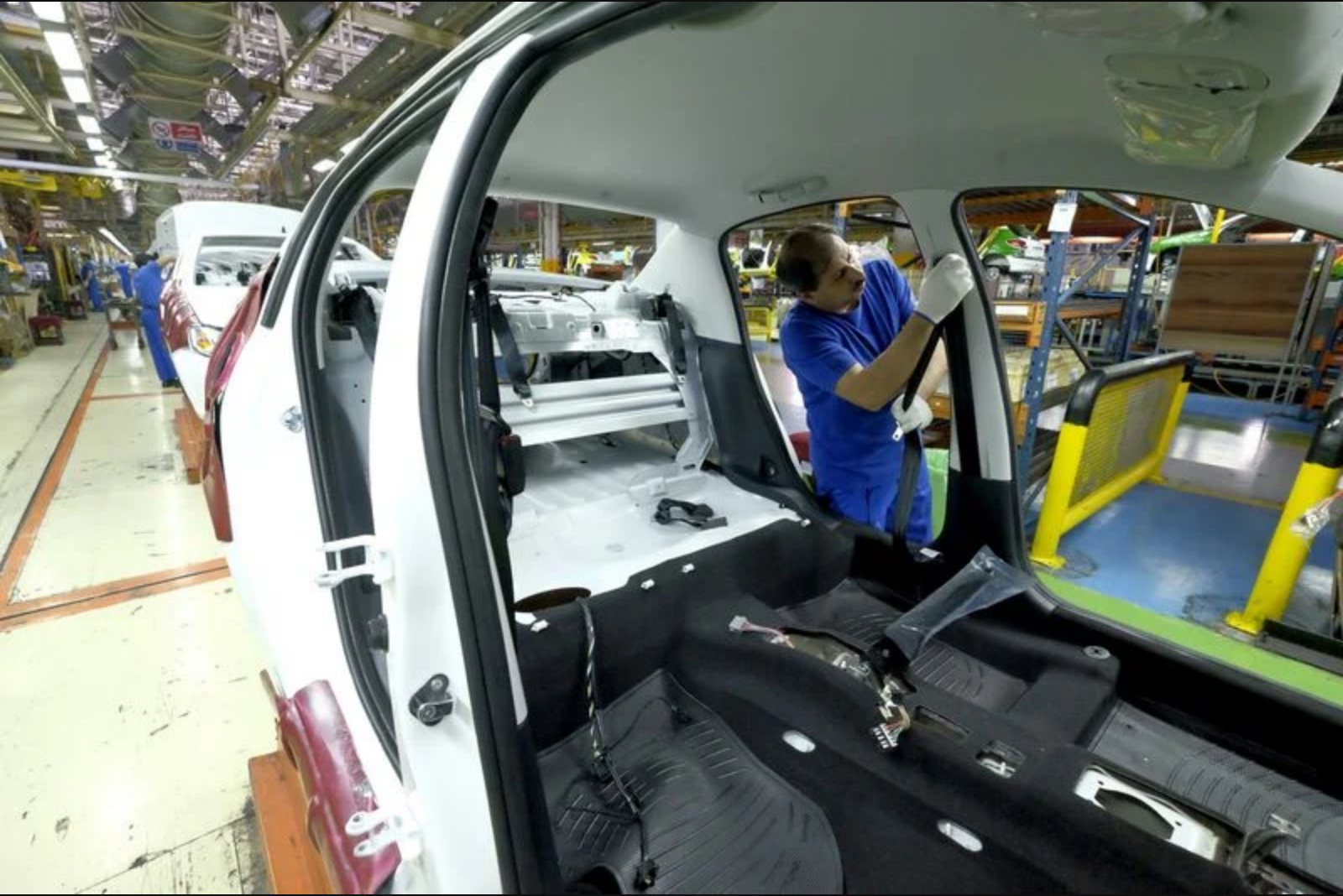
The United States has extended its economic campaign against Iran by imposing sanctions on the country’s auto and rail sectors and some of their overseas suppliers, the Treasury Department announced on Thursday. The actions form part of the department’s Operation Economic Outcast, which was announced on August 24 and is intended to reduce Tehran’s ability to fund conflict, missile projects, cyber operations and activities linked to the Islamic Revolutionary Guard Corps - the IRGC.
Officials described the latest measures as an effort to widen pressure from maritime lanes to land-based transportation networks. U.S. growth in restrictions comes after a U.S. blockade of Iranian ports disrupted seaborne exports, forcing Tehran to increasingly move goods by road and rail.
The Treasury named Iran Khodro Company (IKCO) and SAIPA Iranian Automobile Manufacturing Company (SAIPA) among those designated, noting that together the two firms account for more than 90% of Iran’s domestic auto market. On the rail side, the Treasury designated the state-owned Islamic Republic of Iran Railway Company, as well as the Raja Passenger Trains Company and Sherkat-E Rah Ahan-E Khamle-O-Naghle - identified by the Treasury as a leading private freight operator.
Thursday’s sanctions also singled out foreign suppliers operating in Indonesia, the United Arab Emirates and Turkey that provide parts or services to Iran’s auto industry, expanding the list of entities facing U.S. restrictions beyond Iran’s borders.
Treasury Secretary Scott Bessent framed the action as aimed at the regime’s financial support systems. He said the measures "directly target Iran’s enablers and lay the groundwork for the United States and our partners to drain the regime’s revenue once and for all."
The Treasury explained its rationale by pointing to shifts in Iran’s logistics after the maritime squeeze. With a U.S. blockade of Iranian ports constraining sea access via the Strait of Hormuz, Tehran has relied more heavily on autos and rail for the movement of petroleum, fertilizer, chemicals and other commodities. By designating companies operating in those transport channels, Washington is seeking to cut off alternatives that have helped sustain Iran’s flow of goods and revenues.
Observers cautioned that the extension of sanctions onto land transport risks imposing serious hardship on Iranian civilians. Brett Erickson, a sanctions specialist and managing principal at Obsidian Risk Advisors, said: "The blockade squeezed Iran at sea, sanctions increasingly isolate it by air, and now Washington is constricting its economic arteries on land. You cannot choke an economy like this without choking the livelihoods of the people who depend on it."
The Treasury’s latest designations underscore a strategy of targeting entire sectors and their international supply chains rather than only individual financial or military entities. The move places additional pressure on the infrastructures that have become central to Iran’s distribution of key goods following disruptions to maritime shipping.
Key implications
- The sanctions extend U.S. pressure from maritime routes to land-based transport, focusing on sectors used to move petroleum and other commodities.
- Leading domestic automakers and both state-owned and private rail companies in Iran were designated, with associated foreign suppliers in Indonesia, the UAE and Turkey also targeted.
- U.S. officials describe the measures as part of a campaign to drain regime revenue linked to military and cyber programs.