
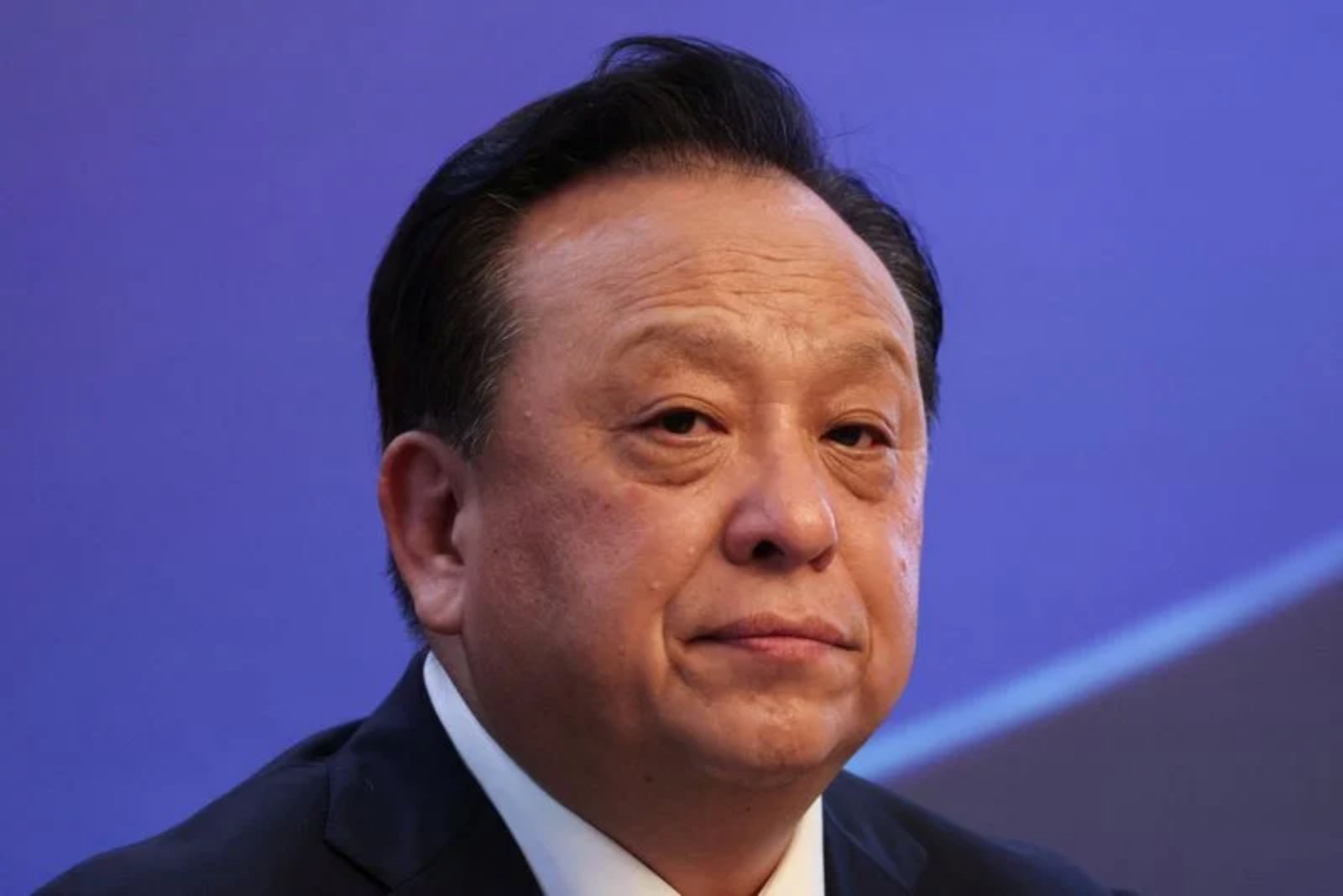
Hou Qijun is steering Sinopec through a fundamental strategic reset as the company confronts declining transport fuel demand, persistent petrochemical overcapacity and the fallout from the global oil shock. Appointed chairman a year ago, Hou has restructured the business into four distinct profit centres and pushed a visible shift of capital toward new energy and higher-value materials as he tries to reorient the state-controlled refinery for a lower-carbon future.
In a candid discussion published in July in a government-owned supervisory magazine, Hou framed the company’s challenge in institutional rather than technological terms. He argued that the chief barriers to change are "the system and institutional inertia," and warned that the firm’s growth in scale has left it with diminished agility to react to market shifts and entrenched "big company syndrome."
To tackle those constraints, Hou reorganised Sinopec into four business units operating as profit centres: oil, gas and new energy; refining and chemicals; finance and strategic new business; and a combined segment for global trading plus the company’s extensive fuel, natural gas and chemicals marketing operations. The move is intended to devolve authority and sharpen commercial focus across parts of a sprawling state enterprise.
The internal assessment published alongside Hou’s remarks highlighted the operational pressure driving the reorganisation. Sinopec’s fuel sales have fallen to levels last seen in 2017, and the firm faces what the report described as an "uphill battle" to maintain domestic market share. One institutional investor holding Sinopec shares said Hou, at 60, appears determined to "salvage Sinopec" and that he is among a small number of state executives willing to press for change despite nearing customary retirement age.
Executives at Chinese state firms commonly retire at 63. Those familiar with Hou’s approach describe him as energetic and intent on action rather than complacent as he approaches that threshold. A company official characterised him as decisive, quick to act and able to speak at length with conviction and logic, while an investor noted Hou’s urgency in confronting the company’s tight spot.
Financially, Sinopec reported a 19 percent increase in net profit for the first half of 2026, despite exposure to supply shocks tied to the Iran war and constraints placed on passing higher oil costs on to consumers by regulators. Still, the company’s scale in transport fuels is a growing liability: Sinopec sold roughly 3.6 million barrels per day of gasoline and diesel last year, mostly within China, at a time when electrification of new vehicles is reducing the addressable market for liquid fuels.
"Gasoline was made for cars, yet half of new cars no longer need fuel ... Under these circumstances, how can producing more gasoline and diesel continue to generate revenue?" Hou asked at an earnings briefing in Hong Kong. "We need to produce more chemical materials instead. In the long run, upstream oil and gas will likewise be replaced by new energy, from high-carbon, to low-carbon, to zero-carbon. Therefore, we must prepare early and develop new energy."
To operationalise that view, Hou said Sinopec will allocate about 20 percent of its capital expenditure through 2026 to 2030 - which he quantified as more than 30 billion yuan a year - toward new energy and new materials. Within the supervisory report, he set targets to complete over 30 projects by 2030. Those projects range from boosting reserves and initiating shale oil production to developing sustainable aviation fuel and cutting refining costs. The emphasis on converting technology into productivity was explicit, with the company urging an acceleration of execution.
Part of the technical push includes commercial development of shale resources at the Jiyang trough within the Shengli oilfield, where conventional reserves are maturing. Hou, a geologist by training, said earlier this year that he serves as the project commander. His background includes a career at the Daqing oilfield, leadership at China National Petroleum Corp as general manager, and the 2019-2021 leadership of PipeChina, a state firm formed by combining pipeline assets from the country’s three major oil companies.
Hou’s prior experience gives him visibility across the energy value chain, and that may help Sinopec pursue government-supported but commercially demanding investments such as hydrogen and carbon capture. At the same time, the company’s strategy to shift more production toward petrochemicals - a route to higher margins relative to fuels - faces steep competition from both local government-backed firms and private players. Competitors named in the public assessment include Wanhua Chemical and Satellite Chemical, while market dynamics include an acknowledged overcapacity in ethylene, a core feedstock for plastics and fibres.
Questions remain about Sinopec’s ability to outcompete non-state actors in the new energy domain. "The question is how will Sinopec (and its peers) compete with the non-state actors in the new energy space," said an energy programme director commenting on the company’s plans. That uncertainty underscores a broader competitive tension: state-backed scale and access to policy support versus the speed and commercial focus of private and local-government-backed rivals.
Hou’s plan represents a deliberate repositioning of capital and organisational authority at a company that remains critically exposed to shifts in mobility, petrochemical demand and the global oil cycle. The company’s near-term profitability gains have come against a backdrop of structural challenges that the chairman is addressing through organisational change, targeted capital allocation and an explicit project pipeline set to 2030.
How Sinopec executes on that pipeline, navigates competitive pressures in petrochemicals and new energy, and converts technical projects into scalable cash flow will determine whether the reset produces sustainable commercial advantage or simply reconfigures an ageing business model under pressure from electrification and shifting global oil markets.
(Currency conversion cited by the company: $1 = 6.7238 Chinese yuan renminbi)