
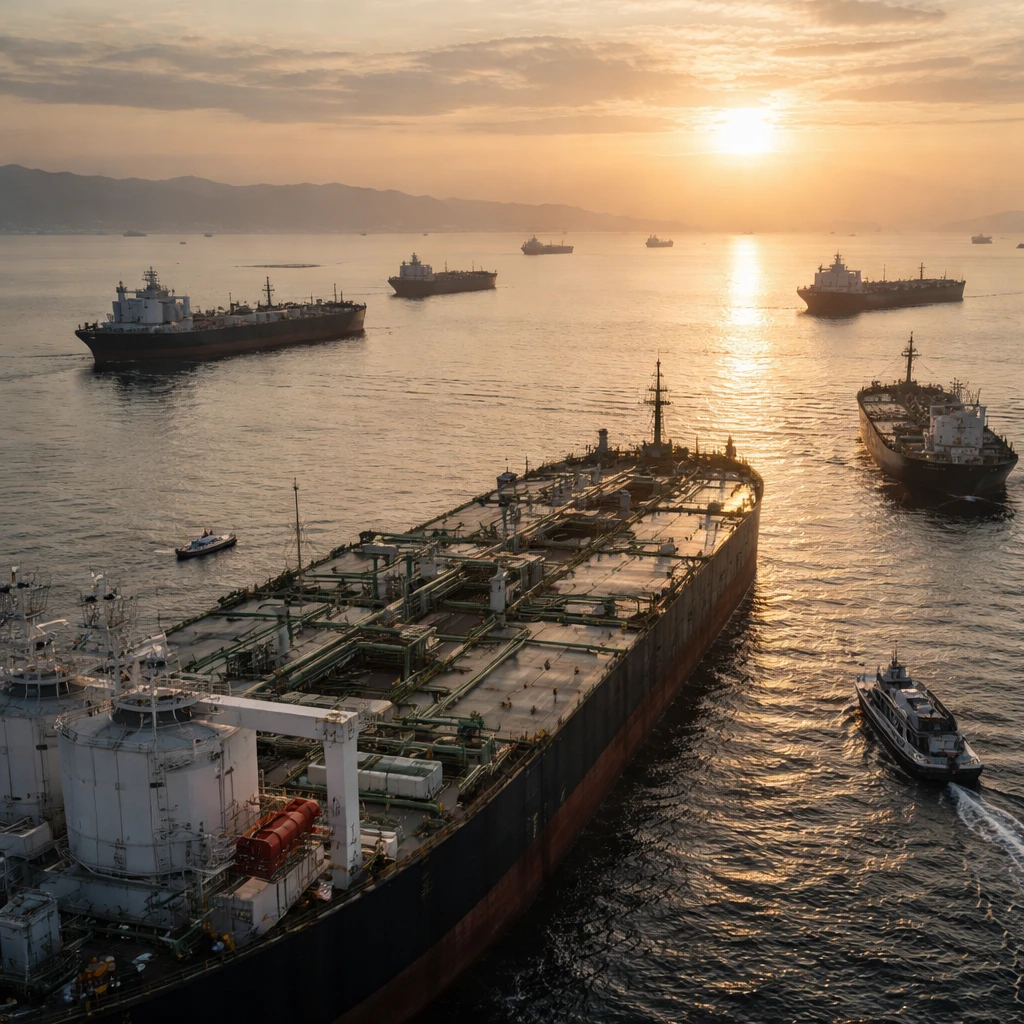
Oil markets posted another week of gains as tensions between Washington and Tehran remained unresolved, prolonging disruptions to a critical conduit for seaborne crude. Traders cited the impasse over the Strait of Hormuz and heightened U.S. rhetoric on sanctions as factors keeping prices elevated.
On Friday, Brent crude futures for October delivery rose 0.2% to settle at $93.93 a barrel, while October U.S. West Texas Intermediate futures edged down 0.2% to finish at $86.64 a barrel. Over the past two weeks Brent has climbed more than 12%, and WTI has advanced in excess of 10%.
Sanctions rhetoric and market anticipation
Officials in Washington signaled plans for a fresh round of punitive measures aimed at Tehran. President Donald Trump stated he would significantly escalate economic pressure on Iran, and U.S. Treasury Secretary Scott Bessent described upcoming measures as exceptionally severe. Bessent told CNBC that "This is going to be the greatest coordinated economic isolation in the history of the world...It is a one-two punch - we have a blockade and we are going to have the toughest sanctions in history." Traders said they were awaiting more specifics on Monday regarding what Bessent characterized as the "toughest sanctions in history."
Despite the U.S. warnings, Iran publicly minimized the threat of additional sanctions, and China - identified in reporting as a major buyer of Iranian crude - also dismissed the U.S. threats. State media quoted Major General Ali Abdollahi, the chief of staff of the Iranian Armed Forces, saying Tehran’s response to any new U.S. threats would be "devastating."
Shipping patterns and supply disruption
Shipping data cited in market reports indicated that commercial traffic through the Strait of Hormuz remains a fraction of levels seen before the conflict escalated. The waterway has become a flashpoint, and those data points suggest continued constraints on regional flows. Iran signaled it would keep the chokepoint effectively closed until the United States complied with terms of an interim peace deal that has since expired; meanwhile the U.S. maintained a naval blockade that was put in place earlier in the year.
Analysts noted that the ongoing friction is supporting concerns around energy availability. In a note shared with clients, Deutsche Bank analysts said "worries of an energy shock are continuing to permeate markets," reflecting how geopolitical risks are factoring into price formation.
U.S. domestic response
On the domestic front, the U.S. administration moved to ease upward pressure on retail fuel prices. The Environmental Protection Agency, in consultation with the Department of Energy, announced the issuance of a temporary emergency fuel waiver intended to help lower gasoline pump prices at home.
Market context and outlook
With both benchmarks showing notable two-week gains, market participants are focused on any additional details about planned sanctions, the trajectory of shipping through the Strait of Hormuz, and official responses from Tehran and other major crude buyers. The combination of stronger prices, constrained tanker traffic, and aggressive sanctions rhetoric has kept energy markets on alert.
Given the limited public information about the precise scope of any new U.S. measures, it was not immediately clear what additional restrictions would include beyond existing limits on Iran’s oil exports. Market participants said that until more concrete policy steps are disclosed, the balance between supply and demand will remain sensitive to developments in the region and to further government announcements.