
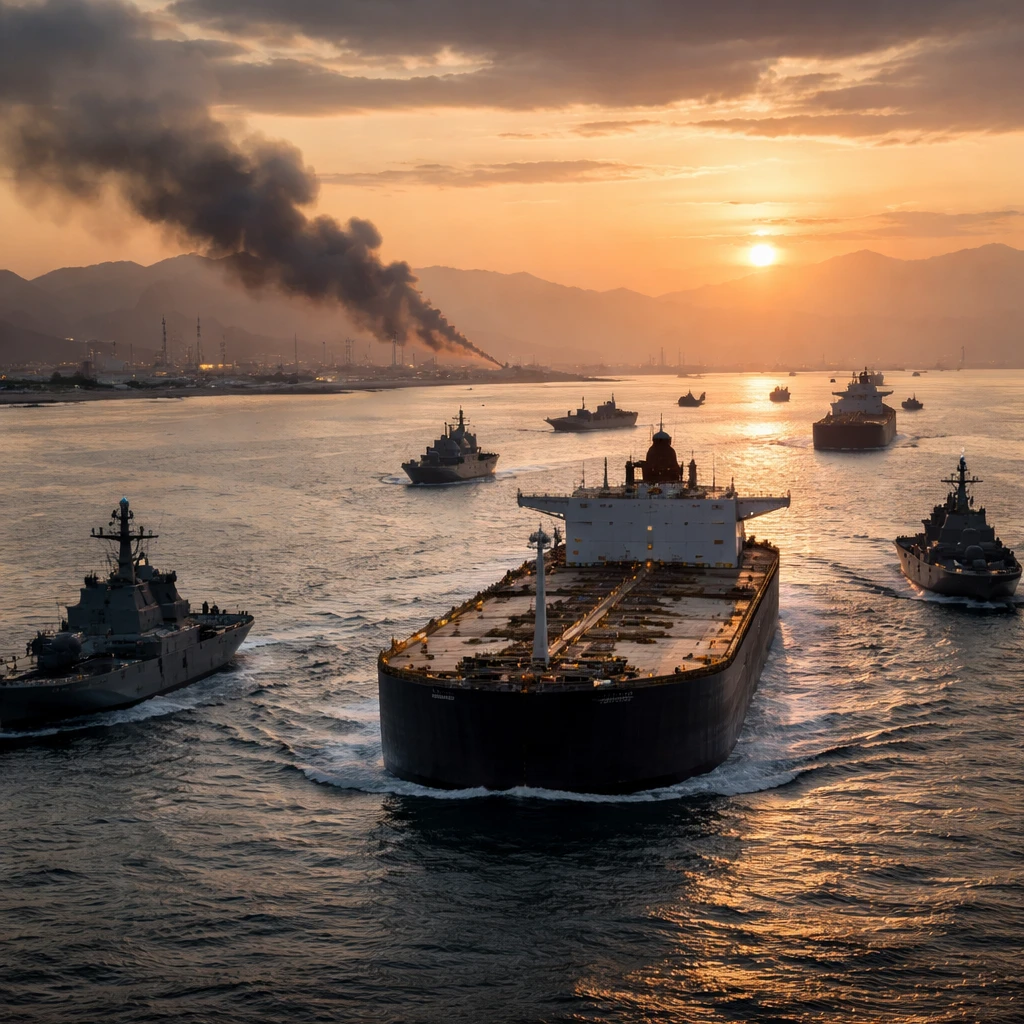
Oil prices pulled back on Friday, interrupting a short-lived rally, after media reports indicated negotiators from the U.S. and Iran were exploring a phased plan to reopen the Strait of Hormuz. Market participants largely focused on those reports despite the absence of any confirmed diplomatic breakthrough between Washington and Tehran during the week.
Concerns over supply were not eased by the diplomatic signals. Traders remained attentive to an escalating confrontation between Iran-backed Houthi forces and the Saudi Arabia-backed government in Yemen, where attacks on Saudi energy infrastructure have heightened worries about disruptions to crude flows.
At 15:15 ET (19:15 GMT), Brent crude futures for November delivery had fallen 1.8% to $104.67 a barrel, while U.S. West Texas Intermediate crude futures for November were down 2.2% at $92.51 a barrel.
The two main crude benchmarks were on track for a mixed weekly outcome: Brent was modestly higher for the week while WTI was down about 4.1%. The week has seen volatile swings, including a five-day losing streak for Brent that gave way to a two-day rebound.
Expectations for any movement on U.S.-Iran diplomacy had been elevated as delegations from both countries attended the United Nations General Assembly in New York. That prospect, however, was tempered after strongly worded speeches from both leaders at the U.N.
President Donald Trump delivered hardline remarks in which he said he faced a choice - threatening to "annihilate" Iran and "drive them into hell" or to strike a deal. He added that any deal would be reached after the November U.S. midterm elections. Iran's counterpart Masoud Pezeshkian answered with defiant language of his own, saying Iran would "never bow" its head or "bend at the knee," while also stating it remained open to "dialogue and diplomacy and negotiations."
Despite those confrontational tones, Mr. Trump confirmed on Tuesday that indirect discussions between U.S. representatives and Iranian delegates had taken place on the sidelines of the U.N. meetings. Yet, U.S. Secretary of State Marco Rubio on Wednesday moved to temper expectations, describing the exchanges not as a "major breakthrough" but rather as a "continuation of conversations that have occurred in the past."
Iran's foreign ministry spokesperson Esmaeil Baqaei said on Thursday that Tehran and Washington had exchanged a round of messages via Qatari mediation, with Iran setting out conditions for returning to formal negotiations. Baqaei listed those conditions as including the cessation of aggressive U.S. actions - citing the naval blockade and what he termed "economic terrorism" - an end to war on all fronts, the release of Iran's frozen or restricted assets, and the acceptance of a safe shipping route "in the manner agreed upon between the two coastal governments."
Reuters reported on Thursday that negotiators for the U.S. and Iran had discussed in New York a phased path out of hostilities that could involve Tehran reopening the Strait of Hormuz in return for Washington lifting its economic blockade, according to people close to the talks. That report appeared to be a key influence on trader sentiment on Friday.
Market commentators cautioned, however, that considerable obstacles remain before any such arrangement could be realized. David Morrison, senior market analyst at Trade Nation, said if the reported steps were to come to pass, traders would expect a material decline in oil prices. He also warned that serious impediments stand in the way, including the continued threat from Houthi attacks on Saudi shipping and energy assets and the inflammatory rhetoric displayed publicly at the U.N. General Assembly.
Morrison pointed to the fragility of past accords, noting that a previous 60-day ceasefire based on a memorandum of understanding signed in June had lasted less than a week. He added commentary on the political dynamics behind the negotiations - saying the Iranian regime may prioritize domestic standing while the Trump administration appears eager to see an end to the conflict despite public statements about delaying any resolution until after the mid-term elections.
Operationally, the security threat to Saudi oil infrastructure was underscored on Thursday when Riyadh said it had intercepted six ballistic missiles launched by Yemen's Iran-backed Houthis toward areas that included Taif and the Yanbu region on the Red Sea. Those attacks revived concerns about the safety of Saudi export routes, particularly after earlier damage to the kingdom's East-West Pipeline caused disruptions to crude shipments to Yanbu, a major Red Sea export hub.
Saudi officials said the pipeline had been restarted earlier in the week, but tanker loadings from Yanbu had not yet returned to full levels.
Another diplomatic development drawing market attention this week was President Xi Jinping's state visit to the U.S., his first since 2015. China is a major trading partner of Iran and a significant buyer of Iranian crude, so observers had looked for any discussion of Tehran during Xi's talks in Washington. President Trump on Friday said Xi had departed and described their meeting as "one of Friendship, Strength, and Success, for both China and the U.S.A." He added that they would meet again in November in China and later at the G20 in December in Miami, Florida, without providing further detail on the substance of the exchanges.
U.S. Ambassador to China David Perdue told CNBC on Friday that the U.S. had made clear to China weeks earlier that any assistance to Iran - whether direct or indirect, including intelligence, parts, or military equipment - was unacceptable, and that President Trump reiterated that message in the recent talks.
Meanwhile, attention in fuels markets extended beyond crude. U.S. diesel prices climbed to record highs this week, keeping diesel supply and distribution on policymakers' and industry executives' agendas. The Trump administration has been exploring options to bolster domestic diesel availability, with Energy Secretary Chris Wright contacting senior executives at major refiners to assess support for a voluntary restriction on diesel exports, Reuters reported.
Those discussions arose after a Politico report that the administration was considering a potential 90-day export ban on diesel, a step the White House denied. Politico reported the administration was weighing alternatives to a blanket ban, such as delegating the issue to state authorities or expanding distribution of so-called "dyed diesel," citing sources familiar with the deliberations.
For now, markets remain on edge. The mix of tentative diplomatic outreach, persistent military activity in and around key shipping lanes, and tight diesel markets has left traders parsing incremental developments closely. Any concrete progress on reopening the Strait of Hormuz or easing sanctions could put downward pressure on prices, but the path to such outcomes appears uncertain and dependent on overcoming multiple military and political challenges.
Summary
Oil prices fell on Friday after reports that U.S. and Iranian negotiators discussed a phased plan to reopen the Strait of Hormuz, even as attacks on Saudi energy infrastructure and record U.S. diesel prices kept supply-side risks firmly in focus. Brent and WTI futures both retreated following a two-day rally, while diplomatic exchanges at the U.N. General Assembly provided mixed signals on whether a durable agreement is achievable.
Key points
- Brent crude for November was trading at $104.67 a barrel, down 1.8%, while November WTI was at $92.51 a barrel, down 2.2%, as of 15:15 ET (19:15 GMT).
- Reports suggested U.S. and Iranian negotiators discussed a phased path that could see the Strait of Hormuz reopened and U.S. sanctions lifted - a development that, if implemented, traders say could depress oil prices.
- Ongoing security risks from Houthi attacks on Saudi shipping and energy assets, plus record U.S. diesel prices, continue to pose near-term supply uncertainties for the energy and shipping sectors.
Risks and uncertainties
- Diplomatic outcomes are far from certain - reported messages and indirect talks have not produced an official agreement, and political rhetoric at the U.N. highlights lingering distrust between the parties. This uncertainty directly affects oil markets and geopolitical risk pricing.
- Continued Houthi attacks and ballistic missile launches toward Saudi regions including Taif and Yanbu threaten oil production and export infrastructure, keeping physical supply disruption risk elevated for crude and refined products.
- Tightness in diesel markets and potential policy responses - including voluntary export restrictions or more stringent measures - create uncertainty for refiners, diesel consumers, and transport-dependent sectors if supplies remain constrained.