
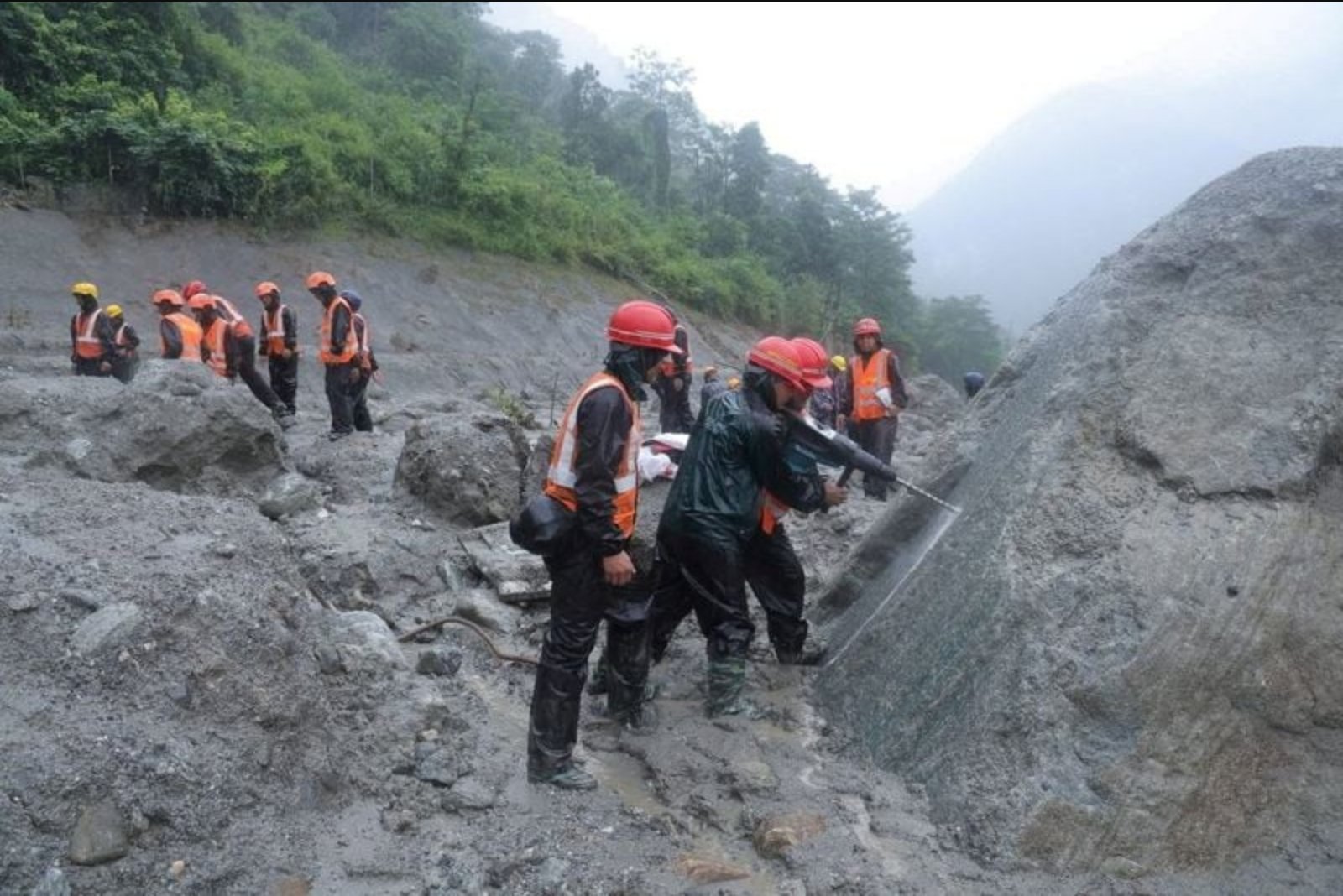
Nepal's armed forces on Sunday moved heavy construction equipment by helicopter to a high-altitude dam project as rescue teams contended with rising floodwaters and debris to try to reach workers reportedly trapped inside tunnels, four days after a catastrophic mountain-valley collapse.
The deluge of ice, rock and mud that descended from the China-Nepal border on Wednesday has killed more than 780 people and left in excess of 3,000 others missing, authorities say. The event also damaged several hydropower projects still under construction and removed about 10% of Nepal's power generation capacity.
Rescue operations and deployment
Rescue efforts are active at five hydropower sites, with a concentrated operation at the Upper Trishuli complex, where officials reported on Friday that information had been received indicating roughly 350 people might be trapped inside a tunnel. About 10,000 Nepali troops have been committed to tunnel rescue work, operating alongside specialist teams provided by China and India, according to Dharam Raj Uprety, chief of Nepal's national disaster management authority.
"It’s very tough because there’s a lot of debris and we cannot blast things to make our way through," Uprety said.
Prime Minister Balen Shah's office said a combined team of rescuers and soldiers worked through the night at Upper Trishuli. The office posted video on social media showing a helicopter delivering heavy machinery to the site and said, "Rescue efforts continued despite the severe flooding last night."
Upper Trishuli complex and tunnel access
The Upper Trishuli Hydropower 3A and 3B plants are linked facilities along the Trishuli river, spanning Nuwakot and Rasuwa districts, both of which were heavily affected by the floods. China and India each airlifted specialised tunnel rescue teams to assist Nepali authorities at the impacted hydropower projects, officials from those countries' foreign ministries said.
On Sunday rescuers reached the entrance of one tunnel and began removing the debris blocking access - the first tangible breakthrough in the effort to reach those feared to be trapped below ground. Once teams secure an entry, personnel carrying oxygen supplies and cameras will enter to assess the interior, search for survivors and provide the first images from inside the tunnel, officials said.
The Nepali army released a photograph of two men coated in mud after being pulled from the mouth of one of the tunnels.
Estimates of those trapped and next steps
At Tunnel 3A, rescue workers widened the passage face after locating it on Sunday. An estimated 35 to 40 people could be inside that tunnel, Nishesh Shrestha, an aide to lawmaker Sagar Dhakal who is at the site, said. "This figure is based on information gathered from people in nearby villages and has not been independently confirmed," Shrestha added.
Officials estimate that the main working area lies approximately 180 metres within the tunnel. Reaching that point could offer the first clear indication of the condition and location of any workers who remain underground.
Operational challenges
Rescuers face significant obstacles: extensive debris fields, the risk of further water ingress, and the inability to use explosives to clear obstructions for fear of endangering possible survivors. The scale of troop deployment and the involvement of international specialised teams reflect the difficulty and urgency of the effort to reach those trapped and to stabilise damaged hydropower infrastructure.