
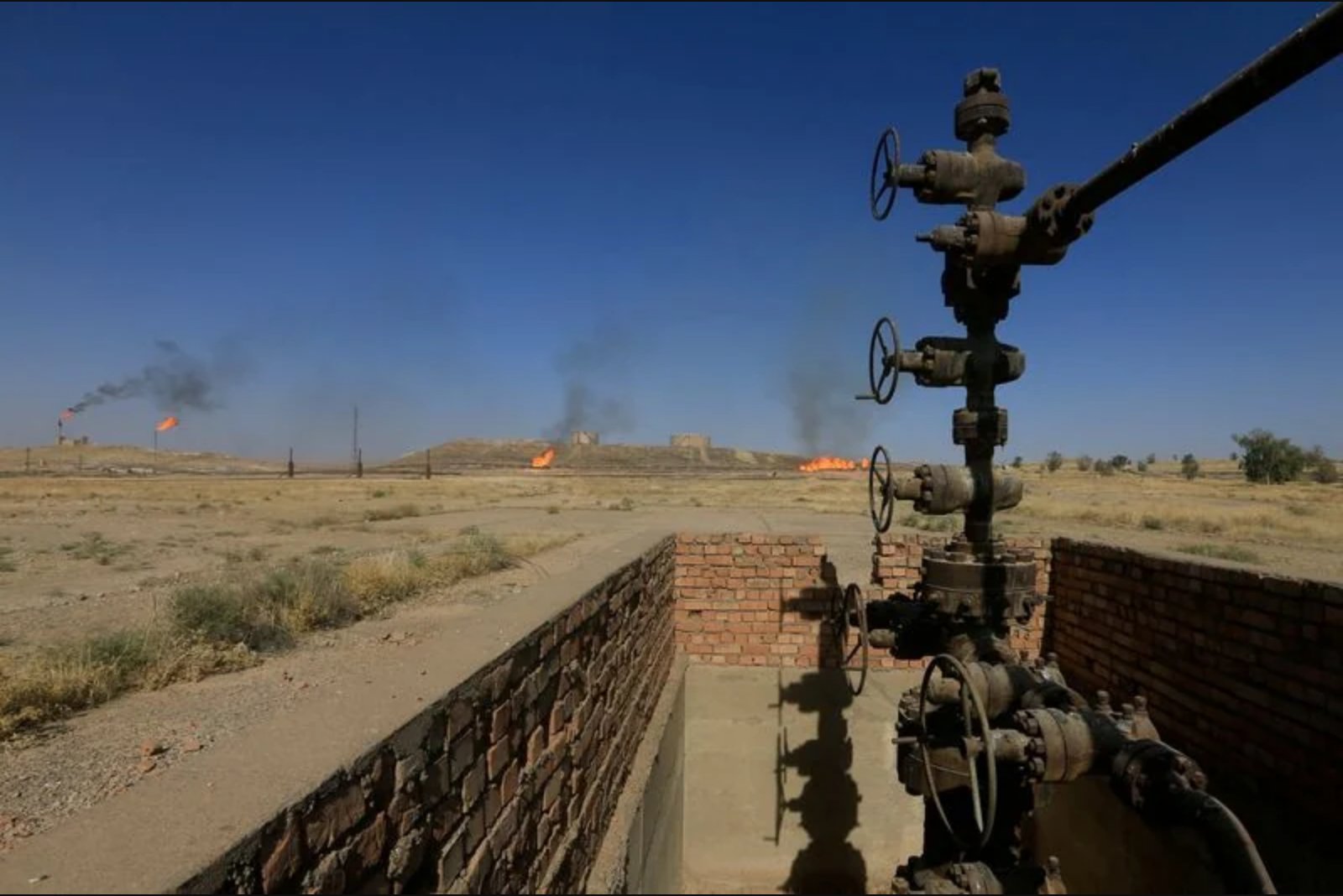
Baghdad - Iraq's prime minister has instructed the federal energy ministry to take over management of oilfields situated in areas under Kurdish security control, a move announced on Nov 24 that risks exacerbating tensions with the semi-autonomous Kurdistan region. The order comes amid a wider government push to crack down on alleged oil smuggling and to rein in Kataib Hezbollah, a powerful pro-Iranian militia accused, alongside senior officials, of running a smuggling operation that reportedly generated hundreds of millions of dollars from crude taken from Iraq's major producing regions.
The decision to place northern oilfields under federal management and the ongoing anti-smuggling campaign together position Prime Minister Ali al-Zaidi on a collision course with two entrenched power centers in Iraq - Iran-aligned militias and Kurdish political authorities - both of which have long operated with significant autonomy from Baghdad. The prime minister, a 41-year-old multimillionaire businessman, has taken steps that observers say directly challenge interests cultivated during decades of conflict and political fragmentation following the 2003 overthrow of Saddam Hussein.
When previous Iraqi leaders attempted similar measures targeting pro-Iranian militias, violent reprisals followed. Officials have said that a drone strike that struck a predecessor's home was an assassination attempt tied to such efforts. That history informs the heightened sensitivity around Zaidi's current campaign.
Official rationale and scope
Zaidi's office said the directive is grounded in a principle that "national sovereignty is indivisible and protecting Iraq's wealth is a battle for survival in which the state puts an end to all forms of smuggling." The order covers fields in Diyala, Kirkuk, Salahuddin and Nineveh provinces and follows a probe into smuggling at the state-run North Oil Company, which manages northern oil and gas assets.
Three people familiar with the matter indicated that Khormala, the principal oilfield currently under Kurdish security oversight, appeared to be included in the scope of the federal directive. Given the prolonged disputes between Baghdad and the Kurdistan Regional Government over resource control, one of those sources suggested Kurdish authorities would likely resist any federal attempt to assume management.
Baghdad-based political analyst Hamza Mustafa said the absence of an agreed oil and gas law could be used by the Kurdistan region as a pretext to refuse handing over wells, a prospect that would spark a political and constitutional debate over how Zaidi's decisions are to be implemented.
Crackdown on militias and alleged smuggling
Zaidi has also turned attention to Kataib Hezbollah, described in official statements and reporting as among dozens of pro-Iranian armed groups that exercise political influence and have been accused of operating with impunity in Iraq. The militia rejected the findings of a high-level investigation into the alleged smuggling network.
The prime minister's anti-smuggling drive has included personnel changes and temporary suspensions. He removed the head of the border crossings authority and suspended the director general of the North Oil Company and his deputies pending further investigation. In a separate directive, Zaidi ordered the national border authority to take control of all border crossings in the Kurdistan region, which shares frontiers with Turkey, Iran and Syria, and instructed the Kurdistan Regional Government to channel approvals for crude oil and petroleum product exports only through the federal oil ministry.
Kurdish response
Masrour Barzani, the prime minister of the Kurdistan region, publicly rejected Baghdad's decisions to centralize control over oil and border crossings, calling them baffling and "in no way acceptable." Barzani said discussions with Baghdad delegations had produced mixed messages and had given the impression there was an inclination to resolve outstanding matters within the framework of the constitution.
Analysts and Kurdish officials alike have signaled that the move touches on long-standing issues of autonomy and resource rights. The Kurdistan region has previously sold oil without Baghdad's prior approval, a practice that provoked a confrontation that culminated in Baghdad retaking control of strategic territory including Kirkuk after the region's 2017 independence referendum.
Domestic and regional fault lines
Zaidi's actions reflect a bid to reassert federal authority over two critical levers: security and oil revenue. Observers note that control of both has been central to the power and influence of militias and Kurdish leaders through years of instability. Renad Mansour, deputy director of the Middle East and North Africa Programme and director of the Iraq Initiative at Chatham House, described the government's campaign as an attempt to 'get our house in order' in the face of mounting risks and potential devastation seen elsewhere.
Those risks include entrenchment of parallel power structures and the potential for violent pushback from armed groups with local influence. At the same time, the removal of allied foreign forces from Iraq appears to have weakened some of the political leverage available to Kurdish authorities. The departure of the last US forces in September was noted by analysts as diminishing external support that had helped the Kurds resist Baghdad's moves in the past.
Critics of longstanding governance practices expressed approval of the timing of the crackdown but lamented its long delay. Retired government employee Nouri Ghani said, "These are good decisions, but unfortunately, they come late. Since the beginning of 2003 until now, oil smuggling is present - in the south, in the north, in the centre - with no oversight. Unfortunately, officials are smuggling oil. This is astonishing."
Economic and investor implications
Zaidi is a political novice who has made attracting large-scale investment to Iraq a stated priority. Analysts caution, however, that drawing in major investors will hinge on demonstrating political and economic stability that has frequently been absent since the fall of Saddam Hussein. The prime minister's moves to centralize oil management and to confront militias are framed by his office as necessary to protect national resources, but they also raise the prospect of protracted disputes and legal challenges that could slow investment timelines.
Observers point to past incidents where disagreements over Kurdish crude sales halted pipeline shipments to Turkey for more than two years before the sides reached an agreement in September 2025 to resume flows. That episode is an example of how unresolved jurisdictional and commercial disputes can interfere with exports and the predictable operation of energy infrastructure.
Strategic balance and external influence
The enduring ties between Iraqi political actors and militias have allowed Iran to deepen its influence within Iraq, complicating Baghdad's calculus as it takes steps to reassert federal authority. The country is described in official commentary as an ally of both Washington and Tehran, a delicate strategic posture that informs internal debates about security, sovereignty and the management of natural resources.
Outlook
Zaidi's directives aim to assert federal control over oil management and border administration while pursuing accountability for alleged smuggling. Those aims place him directly at odds with powerful domestic actors who have long resisted central oversight. How the Kurdistan Regional Government responds in practice - whether through legal challenge, political negotiation, or outright resistance - will determine whether the standoff remains a political struggle or escalates into a broader constitutional crisis.
For now, the government's actions have prompted firm rebuttals from Kurdish leadership and denials from militias implicated in the probe, leaving the situation unresolved and the path forward contingent on negotiations and enforcement choices that both sides may find difficult to reconcile.