
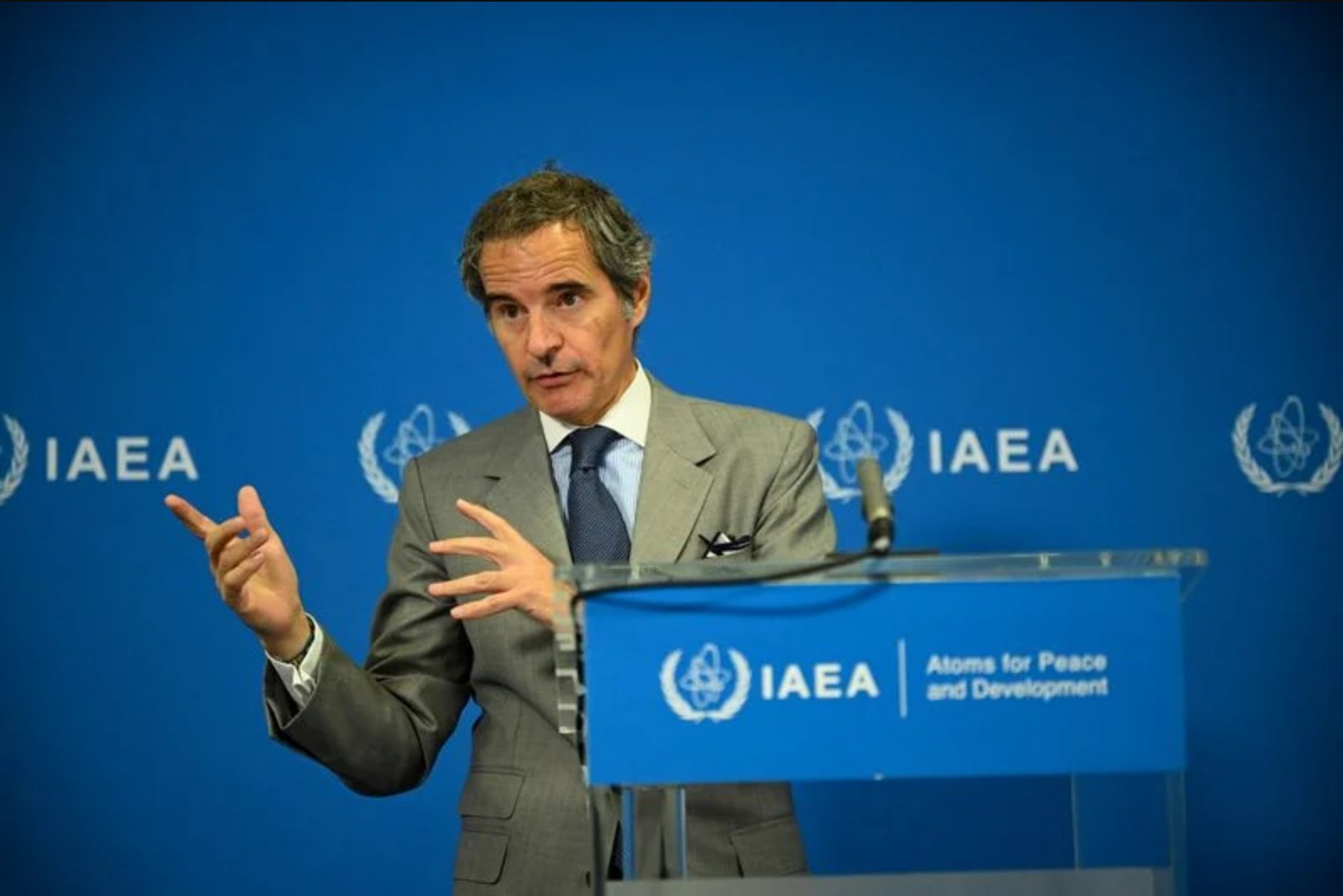
TOKYO, June 26 - The interim memorandum of understanding between the United States and Iran provides the International Atomic Energy Agency with the authority to carry out inspections inside Iran, the agency's director general said on Friday.
The accord, signed last week, creates a 60-day window for talks to tackle more complex matters tied to Iran's nuclear programme. Tehran had indicated that access to certain sensitive sites would not be granted until a final settlement with Washington had been reached and sanctions were lifted. Iran's deputy foreign minister, Kazem Gharibabadi, said on Wednesday there were no plans to open those sites to inspectors.
Rafael Grossi, the IAEA chief, countered that inspections were required under the interim agreement. "There is an agreement and to comply with that agreement, the IAEA will have to have access and inspect," he said at a press conference in Japan. "We hope to be there soon."
Grossi reported that IAEA inspectors have already conducted an initial technical exchange with Iranian officials to discuss procedural and technical issues ahead of any on-the-ground work. He described the first objective of a visit as a basic inventory and integrity check: to confirm whether IAEA seals on material previously inspected remain intact and to verify whether any material is missing.
"Intentions are not enough. We have to have a very strong verification system in place," Grossi added, underscoring the agency's emphasis on concrete, verifiable measures rather than diplomatic pledges alone.
The IAEA also faces uncertainty over the status and location of enriched uranium following recent attacks. Iran has not informed the watchdog how much of its enriched uranium survived attacks attributed to the United States and Israel or where remaining material is located. The agency estimated that, before the conflict began, Iran held 440.9 kg of uranium enriched to as much as 60% purity. The IAEA has noted that if that material were further enriched, it would represent enough fissile material, by the agency's yardstick, for roughly 10 nuclear weapons.
Next steps - The agency's stated priorities for any upcoming mission are limited to verifying seals and accounting for material already under its oversight, followed by establishing a robust verification regime consistent with the terms of the interim accord.