
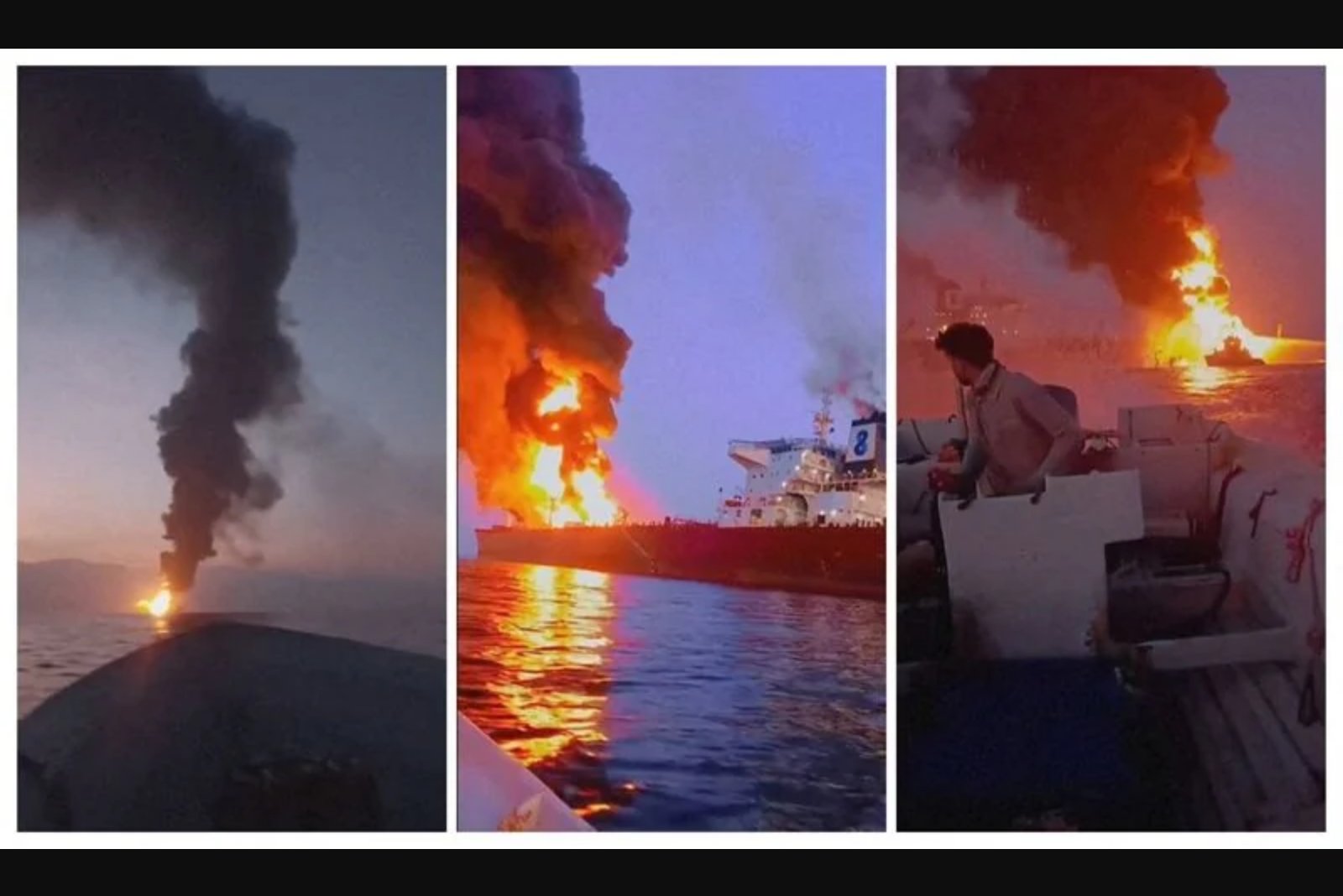
Fires continue to burn aboard tankers in the Strait of Hormuz, oil slicks have been observed reaching coastlines, and drones and missiles have struck regional infrastructure even as oil prices signaled expectations of de-escalation.
Maritime authorities reported a fresh incident involving a tanker in the Strait of Hormuz on Wednesday, and Iranian officials said an oil tanker ignited after striking a naval mine. The reports have not been independently verified.
Data compiled by the Washington Institute for Near East Policy show that at least 10 vessels were struck in the first 10 days of November, following 37 attacks in October - the highest monthly total recorded since the conflict began. Social media footage posted on Sunday and later verified showed a Navig8-operated tanker on fire near Omani waters. Iran said it had struck three tankers that same day, citing their use of "unauthorised routes" through the strait.
Satellite imagery from the European Union’s Copernicus Sentinel-2 satellite captured a dense plume of black smoke at the location where the tanker fire was recorded, corroborating the visual accounts of burning aboard a vessel close to Oman.
Navig8, which is majority owned by ADNOC Logistics & Services, did not respond to emailed requests for comment about the incident.
United States forces have continued maritime enforcement actions in the region. US Central Command reported that a US military aircraft fired upon and disabled a St Kitts-flagged cargo ship that attempted to depart regional waters after visiting an Iranian port on Saturday.
The attacks in the strait have produced tangible environmental damage. Video posted on social platforms and later verified showed oil reaching Omani shores, while satellite imagery has highlighted oil slicks off the coasts of Oman and the United Arab Emirates. The Omani government did not respond to a request for comment regarding the footage of oil on its shores.
Beyond the strait, energy infrastructure and civilian facilities across the region have been targeted. Iran-aligned Houthi forces claimed responsibility for strikes that included damage to offices belonging to Saudi Aramco. Video verified by available imagery showed visible damage to an Aramco office building in Riyadh following Houthi-claimed missile strikes on November 8.
The Saudi Energy Ministry said a building affiliated with Aramco in Riyadh had been the subject of an attempted attack. The ministry said debris inflicted limited damage to the structure and that there were no injuries or fatalities.
The International Maritime Organization has recorded 133 incidents in the region since the conflict began in late February, most of which it classifies as attacks. These incidents have resulted in at least 25 seafarer deaths.
While markets have shown signs of anticipating a reduction in tensions, the persistence of attacks on shipping and energy-related facilities underlines ongoing security challenges in the region. Numerous reported incidents remain to be independently confirmed, and the human and environmental toll from repeated strikes and damaged vessels continues to mount.