
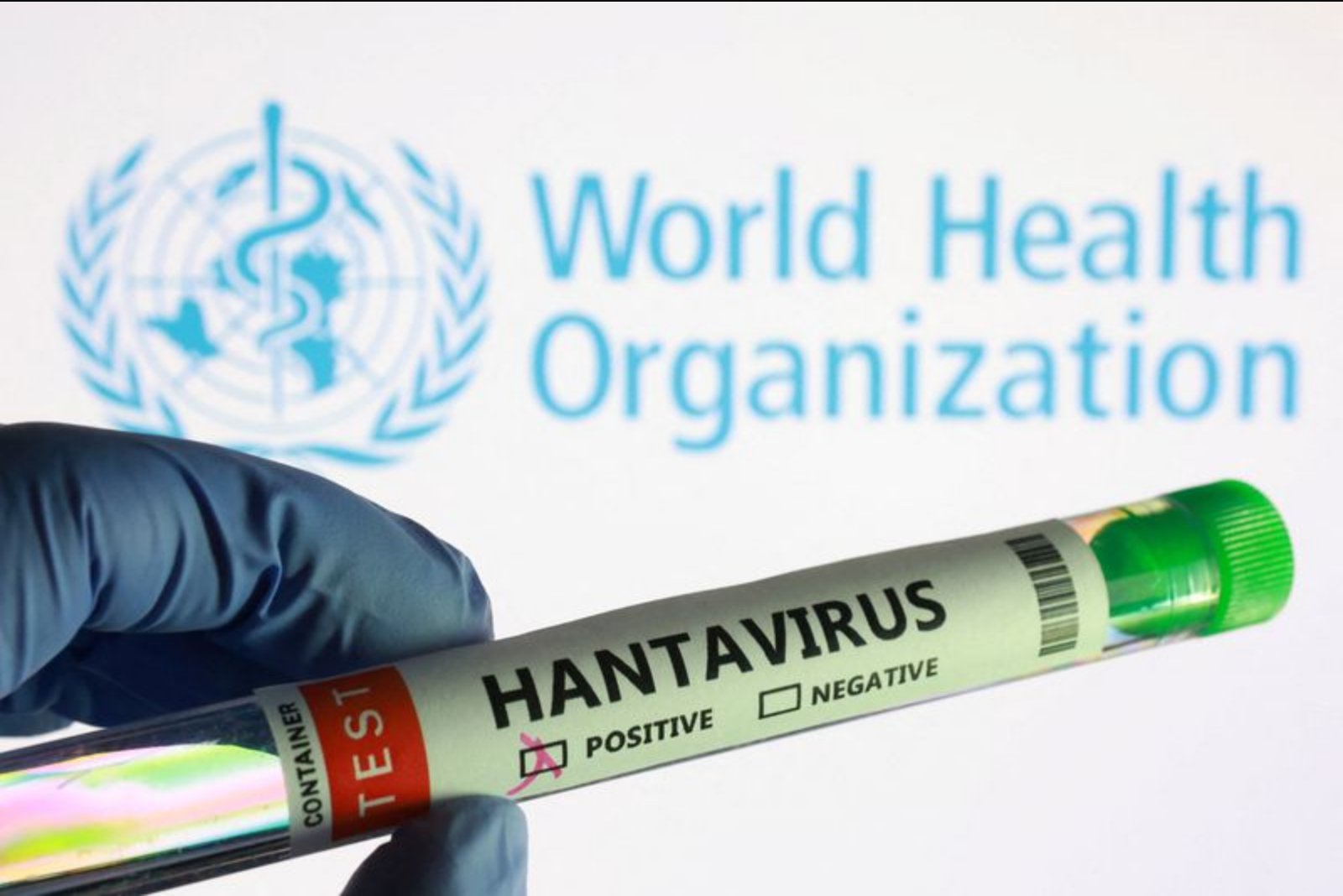
LONDON, May 8 - World Health Organization officials, together with hantavirus experts, are urgently preparing detailed operational guidance for the nearly 150 passengers aboard a cruise ship that is en route to Tenerife after an outbreak of the Andes hantavirus on board.
The outbreak has been linked to at least eight suspected or confirmed infections and three deaths, and it represents the first time the Andes hantavirus has been recorded on a cruise ship. Because of the novel setting, WHO staff and outside specialists are adapting routine public health measures to the shipboard environment and to national authorities' decisions on arrival.
Half-a-dozen current and former WHO officials and hantavirus experts told officials that the situation can likely be handled by tailoring standard responses - isolating symptomatic passengers, monitoring others who may have been exposed, and carrying out contact-tracing for anyone who has disembarked. The ship's operator has said that, at present, none of the passengers are showing symptoms.
WHO officials are seeking operational lessons from Argentina, where an outbreak of the same Andes virus strain was controlled in 2019. Abdi Rahman Mahamud, director of the WHO's alert and response coordination department, said the emphasis is on isolation of the sick and monitoring or quarantining others depending on national government decisions. "If we follow public health measures and the lessons we learned from Argentina ... we can break this chain of transmission. This does not need to be a large epidemic," he said.
WHO guidance being prepared will include categorizing passengers into high-risk and low-risk contacts based on their interactions with ill travellers, the agency said. Contact-tracing is being prioritized for any individuals who have already left the vessel.
Scientific understanding of the Andes hantavirus indicates that transmission between people requires close and prolonged contact and tends to occur chiefly when an infected person is already symptomatic. This conclusion derives largely from the documented human-to-human spread seen in Argentina in 2018-19, when 34 people were infected and 11 died.
Gustavo Palacios, a professor at the Icahn School of Medicine at Mount Sinai who is originally from Argentina and co-authored a key study of that outbreak, advised WHO on the current event beginning May 2. He said the Argentine experience showed the value of straightforward social-distancing measures. "We essentially learned that once you implement basic measures of social distancing, that are essentially very simple - stay home when you are not feeling well - that diminished the circulation and the outbreak burned out," he said. Palacios and other advisers have encouraged renewed attention to hantavirus risks, noting that hantaviruses can have fatality rates of up to 50 percent.
Some governments have already announced operational plans. The UK government said it will repatriate its citizens on a flight that will operate under strict infection control procedures. After repatriation, those passengers would be asked to isolate for 45 days with testing conducted as required.
Krutika Kuppalli, an associate professor of medicine at the University of Texas Southwestern Medical Center who previously worked on mpox protocols at WHO, said the response relies on established public health principles. "It’s the same principle as for measles, or Ebola. Contact tracing does not change," she said.
WHO said late on Thursday that it was still finalizing formal guidelines for how to manage disembarkation, quarantine, monitoring and testing once the ship docks in Tenerife on Sunday. Officials emphasized that national authorities will determine the specifics of isolation and quarantine measures for passengers once they reach land.
Context and next steps
Authorities face a narrow window to implement and operationalize the guidance WHO is drafting, including systems for classifying contact risk, isolating symptomatic individuals, and tracing contacts who have already left the vessel. The focus remains on preventing onward spread through measures that proved effective in the prior Argentine outbreak.