
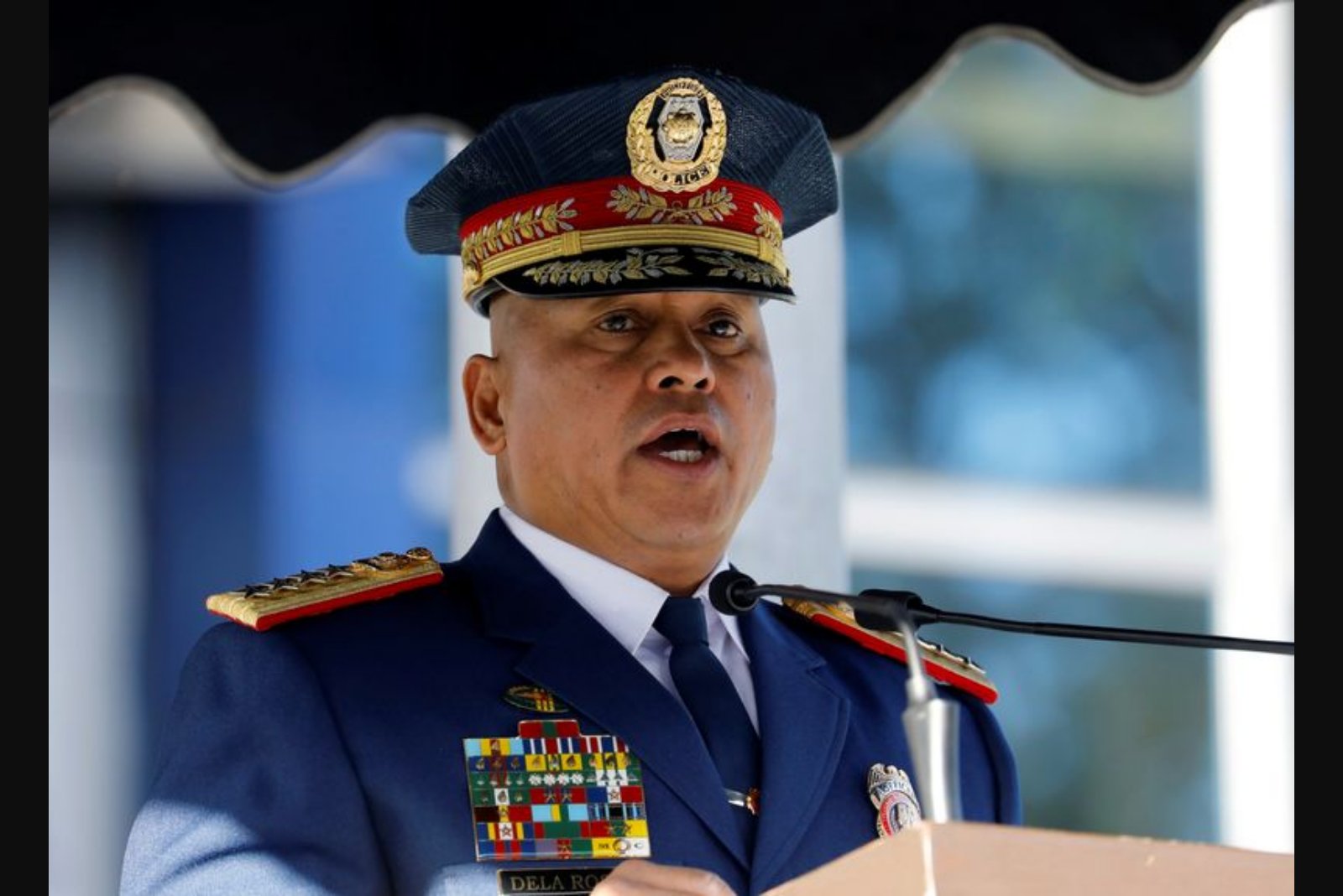
Senator Ronald dela Rosa, who led the Philippine National Police during the height of the country's controversial anti-drug campaign, locked himself inside his Senate office on Monday after agents from national law enforcement approached the Senate building in what one former senator described as an attempt to serve an International Criminal Court arrest warrant.
The ICC confirmed on Monday that a warrant of arrest had been issued for dela Rosa on suspicion of crimes against humanity, a development that unfolded amid a brief confrontation between law enforcement officers and Senate personnel. In the hours prior to the ICC confirmation, allies inside the Senate moved to place dela Rosa under protective custody.
Video shown during a Senate session captured moments of the incident - dela Rosa was filmed running from agents and tripping on a flight of stairs before reaching the security of his office. Known by the nickname Bato, which means "rock" in Filipino, dela Rosa had attended the Senate that day for the first time since his disappearance from public view in November.
Authorities have not provided a formal explanation for why officials from the National Bureau of Investigation were present at the Senate building. Former senator Antonio Trillanes, who has led inquiries into the anti-drug campaign and long advocated for Duterte to face proceedings at the ICC, told reporters that the NBI agents were there to serve the arrest warrant.
The arrest warrant relates to allegations stemming from the anti-drug operations that occurred while Rodrigo Duterte was president from 2016 to 2022. ICC judges have said those killings were part of a "widespread and systematic" campaign targeting suspected criminals, particularly during anti-drug operations. The judges noted that at least 32 people were killed in incidents reviewed between 2016 and 2018.
The warrant, issued in November, names dela Rosa as a suspected co-conspirator and alleges that in his capacity as police chief he helped carry out a broader plan to "neutralise" suspects, taking steps to enable and encourage such operations. Dela Rosa has previously denied any involvement in illegal killings.
In a video posted to Facebook, dela Rosa said he was prepared to confront the warrant as long as proper procedures were followed. "I will face it, as long as they follow the proper process. If there is a legitimate warrant of arrest, they should bring it before the local court, let’s discuss it, and we will face it," he said in the recording.
There is a procedural complication in how an ICC arrest could be carried out because the Philippines withdrew from the court in 2019. Interior Minister Jonvic Remulla said that any arrest would need to be processed through the International Criminal Police Organization - Interpol - reflecting the constraints created by the country's departure from the ICC.
The wider legal backdrop includes the earlier arrest of former President Duterte by Philippine police in March 2025 and his subsequent transfer to the ICC in The Hague. Judges in The Hague confirmed charges of murder as a crime against humanity against Duterte last month, a step that paved the way for a trial.
Within the Senate, the response was swift. Alan Peter Cayetano, an ally of dela Rosa who was installed as Senate president on Monday, said the chamber would extend both legal and institutional protection to the senator. "Senator Bato will enjoy the protection of the law and the protection of the Senate in accordance with our rules and Philippine laws," Cayetano said.
Shortly before the Senate voted to place him under its protection, dela Rosa’s lawyers petitioned the Supreme Court seeking to block "any arrest, detention, transfer, or rendition" of the senator to any foreign tribunal. That petition cited reports that an ICC warrant might have been issued and sought to prevent his transfer to a foreign court.
Dela Rosa has long been a central figure in public debate over the anti-drug campaign that defined Duterte’s presidency. Duterte’s own rhetoric - including public promises to kill thousands of alleged criminals - has been cited by his defence as a law-and-order posture intended to instill fear and respect for the law, while he maintains his innocence. Dela Rosa continues to deny involvement in illegal killings.
The episode in the Senate highlights the practical and legal frictions that can arise when international criminal proceedings intersect with national institutions and political allegiances. It also underlines unresolved procedural questions about how ICC measures can be executed against nationals of a country that has formally withdrawn from the court.