
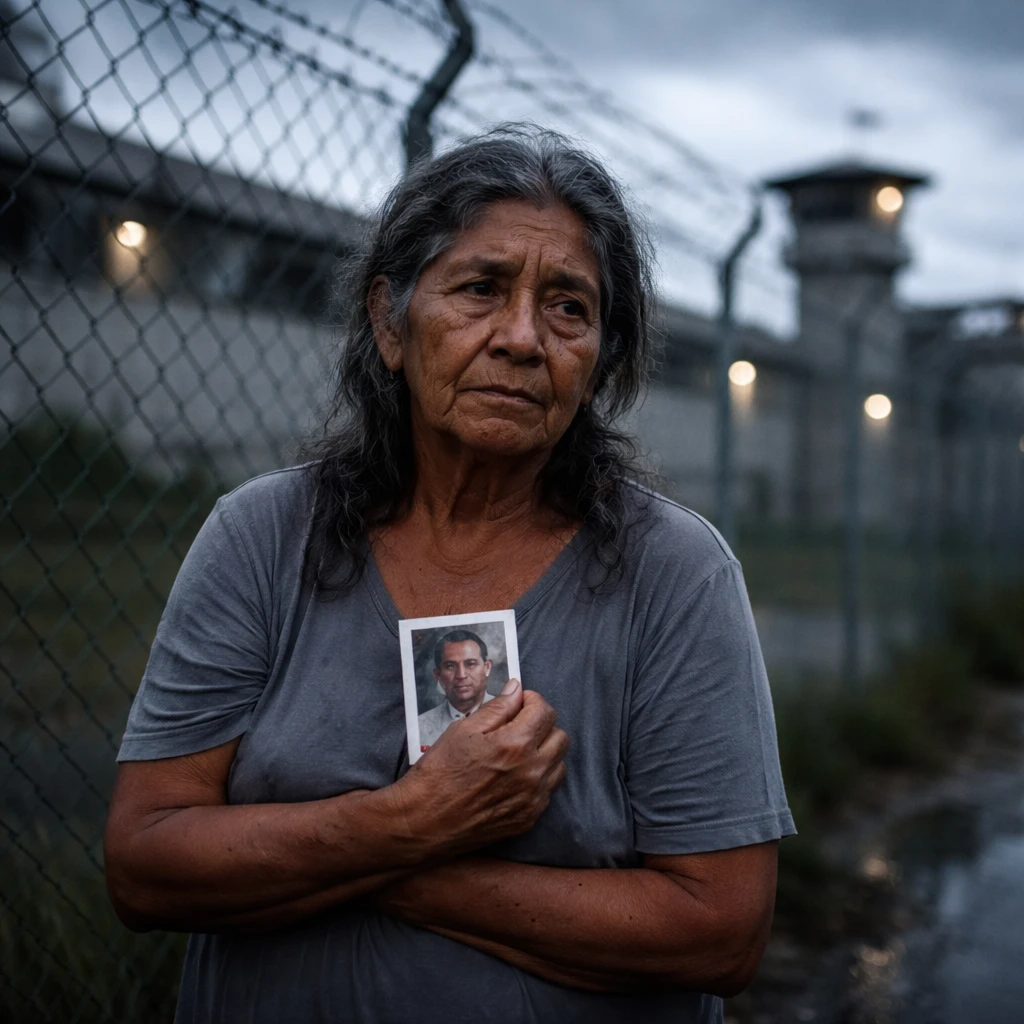
Venezuela's government announced on Thursday that Victor Quero, a 50-year-old man whose 82-year-old mother had been searching for him for more than a year, died in July 2025. The statement, released nearly 10 months after the date of death, cited a death certificate that listed "acute respiratory failure resulting from pulmonary thromboembolism" - a blockage in the pulmonary arteries - as the cause.
According to the government notice, Quero had been imprisoned at Rodeo I, a facility that has drawn intense scrutiny, since the start of last year. Officials did not provide details about the reasons for Quero's detention when asked, and the government did not answer additional requests for comment on the case.
This week a court rejected an amnesty petition for Quero. Moises Gutierrez, a lawyer with the NGO Coalition for Human Rights and Democracy, said the court ruled that the crimes attributed to Quero did not satisfy the legal criteria required for the amnesty. The government statement confirming Quero's death followed that judicial decision.
The case attracted public attention because Quero's mother, Carmen Navas, had taken an active role on social and news media platforms seeking information and advocating for his release. Navas reported that prison officials repeatedly declined to tell her where her son was being held. Alfredo Romero, head of Foro Penal, an organization that monitors detainees in Venezuela, said officials at Rodeo I told Quero's mother on multiple occasions that they did not know his whereabouts.
Vente Venezuela, a Venezuelan opposition group, said Quero's death was the ninth recorded death in state custody since July 2024. In a statement, Vente described the death as "not a common death" and called it "a murder caused by the repressive bodies of Rodeo I, a torture center where so many cruel and inhumane acts are committed, and where dozens of Venezuelan and foreign prisoners remain political prisoners."
Rights organizations and lawyers have highlighted the pattern of limited transparency in cases like Quero's. The government previously enacted an amnesty law earlier this year - an action the statement linked to developments described as occurring after the U.S. attacked Caracas and captured President Nicolas Maduro and his wife - that was intended to free hundreds of people whom rights groups consider political prisoners. Venezuelan authorities have consistently rejected the characterization that they hold political prisoners, saying those detained have committed legitimate crimes.
The government's confirmation of Quero's death, provided almost ten months after the recorded date of death and following a court decision denying amnesty, leaves outstanding questions about detention practices, information access for family members, and oversight of conditions in facilities such as Rodeo I.
Key points
- Victor Quero died in July 2025; the government cited a death certificate naming acute respiratory failure from pulmonary thromboembolism as the cause. (Sectors potentially affected: political risk assessment, sovereign credit)
- A court this week denied an amnesty request for Quero on the grounds that the crimes ascribed to him did not meet legal requirements. (Sectors potentially affected: legal services, human rights advocacy funding)
- Quero's mother had repeatedly sought information about his whereabouts; rights groups say this case is among a number of deaths in state custody since July 2024. (Sectors potentially affected: international relations, humanitarian assistance)
Risks and uncertainties
- Limited transparency - Authorities did not disclose the reasons for Quero's detention and did not respond to follow-up inquiries, creating uncertainty about case facts and oversight. (Impacts: governance assessments, investor confidence)
- Judicial and administrative ambiguity - The court's rejection of amnesty for Quero on technical legal grounds leaves unclear boundaries for similar petitions and for the status of those whom rights groups label political prisoners. (Impacts: legal risk for detainees, NGO operations)
- Allegations of abuse and multiple in-custody deaths - Groups report several deaths in state custody since July 2024, which raises questions about conditions and accountability in prisons such as Rodeo I. (Impacts: human rights monitoring and potential diplomatic pressures)