
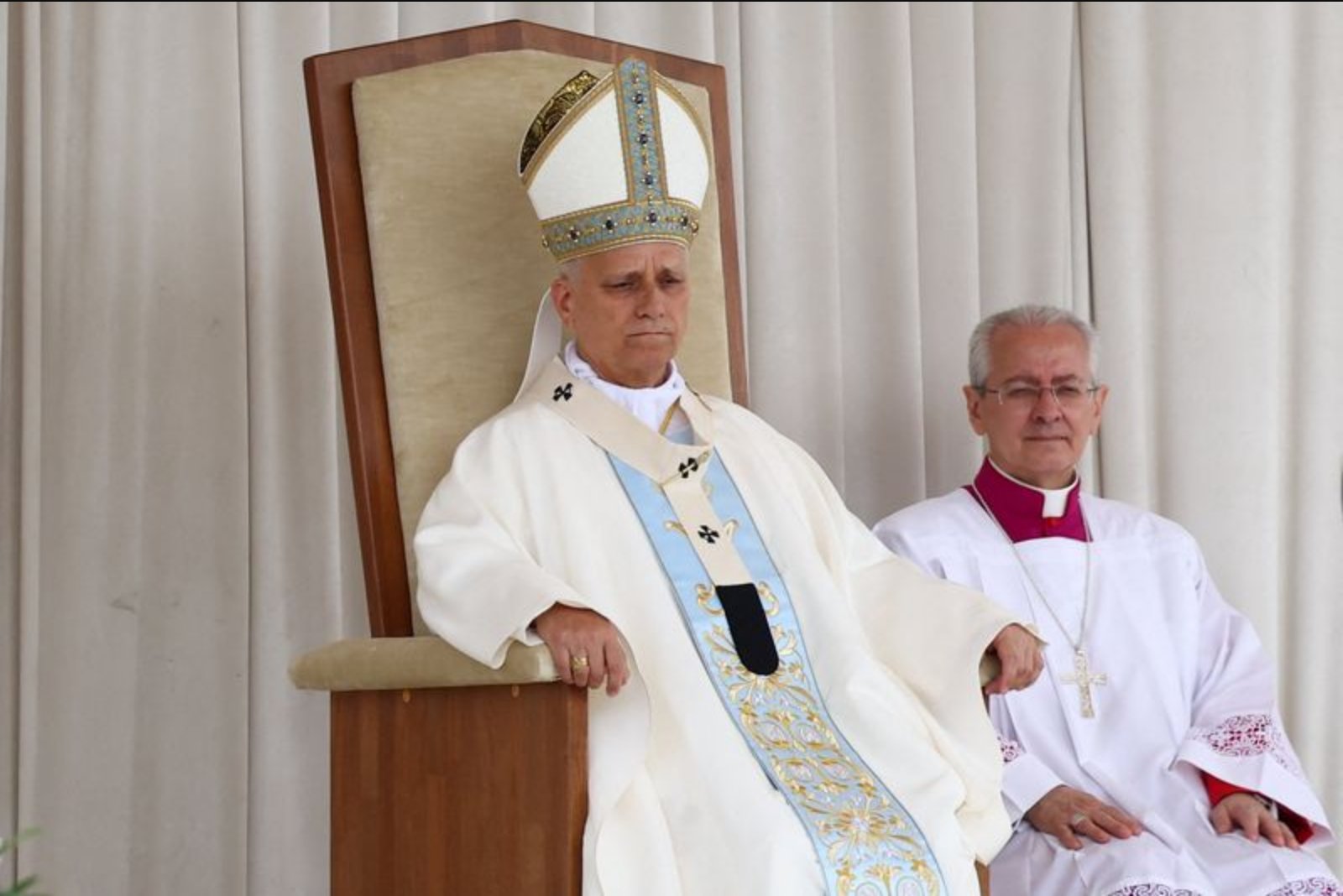
The Vatican's concise press release following a Thursday meeting between Pope Leo and U.S. Secretary of State Marco Rubio has been read by seasoned diplomats and Vatican observers as an implicit admission that relations between the Holy See and the United States are strained.
The encounter, which lasted about 45 minutes and was the first meeting in nearly a year between the pope and a member of the Trump cabinet, prompted a Vatican statement saying the two men had "renewed the shared commitment to fostering good bilateral relations." That restrained wording - and what it did not say - drew comment from those familiar with Vatican diplomatic practice.
Peter Martin, a former diplomat at the U.S. Embassy to the Holy See who served under both Democratic and Republican administrations, told Reuters: "(The) statement makes it clear that, at present, there is work to do." Martin emphasized that in Vatican diplomacy "every word matters."
Observers noted a contrast with typical Vatican releases. After a separate meeting on the same day between the pope and Polish Prime Minister Donald Tusk, the Vatican said its diplomats had "expressed satisfaction for the good relations" between Poland and the Holy See. Martin pointed out that when President Donald Trump visited the Vatican in 2017 with the late Pope Francis, the Vatican's release similarly "expressed satisfaction for the good relations" between the United States and the Holy See, using language not present in the statement about the Rubio meeting.
Austen Ivereigh, a Vatican specialist who co-authored a book with the late Pope Francis, said the emphasis in the Vatican's wording on the need to build bilateral relations suggests "that they are at the moment not good." Ivereigh added that the Vatican likely felt compelled to issue a statement because of intense media interest and "in anticipation of any White House spin."
Rubio and U.S. diplomatic accounts framed the meeting somewhat differently. The U.S. embassy to the Holy See posted on X that Leo and Rubio had discussed "topics of mutual interest in the Western Hemisphere." Rubio himself wrote on X that "The United States and Holy See partnership in advancing religious freedom is strong," referencing his subsequent meetings at the Vatican with senior Vatican officials.
But the Vatican's text, which covered both the papal encounter and Rubio's later meetings with Vatican officials, made no mention of the Western Hemisphere or religious freedom. It said there had been an "exchange of views" on the world situation but identified no specific areas of common agreement beyond the aspiration to strengthen bilateral ties.
Kenneth Hackett, who led the U.S. Catholic Church's foreign relief agency for 18 years and later served as Ambassador to the Holy See under former President Barack Obama, observed that the Vatican statement indicated "there were no substantive agreements."
It was also notable to observers that the Vatican disclosed content tied to the papal meeting itself. Typically, Vatican releases are narrowly framed to report topics discussed in meetings with senior Vatican diplomats and avoid attributing content to a pope's private audience. A rare exception came last September after Leo's meeting with Israeli President Isaac Herzog, when a Vatican release said the pope had raised the "tragic situation in Gaza" with Herzog.
Diplomats and Vatican-watchers pointed to the broader public context for the meeting. Leo has drawn public criticism from President Donald Trump after expressing opposition to the U.S.-Israeli war on Iran and for taking positions at odds with the administration's hardline immigration policies. Trump has openly criticized the pontiff in recent weeks, prompting reactions from Christian leaders across the political spectrum. Trump and Leo, who became pope a year ago, have never met.
That backdrop - public attacks from the U.S. president and divergent stances on key global issues - framed the unusually cautious language the Vatican chose to make public. The statement's careful phrasing, and the fact it did not enumerate areas of agreement, led several former diplomats and Vatican specialists to conclude the release was a signal of unresolved tensions rather than a report of substantive progress.
Summary
The Vatican's measured press release after Pope Leo's meeting with U.S. Secretary of State Marco Rubio emphasized a shared commitment to rebuilding bilateral relations but omitted specifics on policy alignment. Diplomats and Vatican observers interpreted the language as an acknowledgment that current ties are not in a good state, a conclusion reinforced by contrasting language used in releases for other visiting officials and by public tensions between the pope and President Donald Trump.
Key points
- The Vatican said Pope Leo and Marco Rubio had "renewed the shared commitment to fostering good bilateral relations," language read as indicating relations need work.
- The Vatican omitted mention of topics cited by U.S. accounts - the Western Hemisphere and religious freedom - and reported only an "exchange of views" on the world situation.
- Observers highlighted the rarity of the Vatican revealing details about a papal encounter, and contrasted the phrasing with statements issued after other meetings that expressed satisfaction with bilateral ties.
Risks and uncertainties
- Unspecified policy differences between the Holy See and the U.S. administration could leave diplomatic relations unsettled - affecting bilateral cooperation on global humanitarian and religious issues.
- Public criticisms by President Donald Trump of the pope may complicate high-level engagement and reduce opportunities for substantive agreements during future meetings.
- The divergence in public messaging between U.S. officials and the Vatican increases the risk of mixed signals in diplomatic communications and could hinder coordinated action on international matters.