
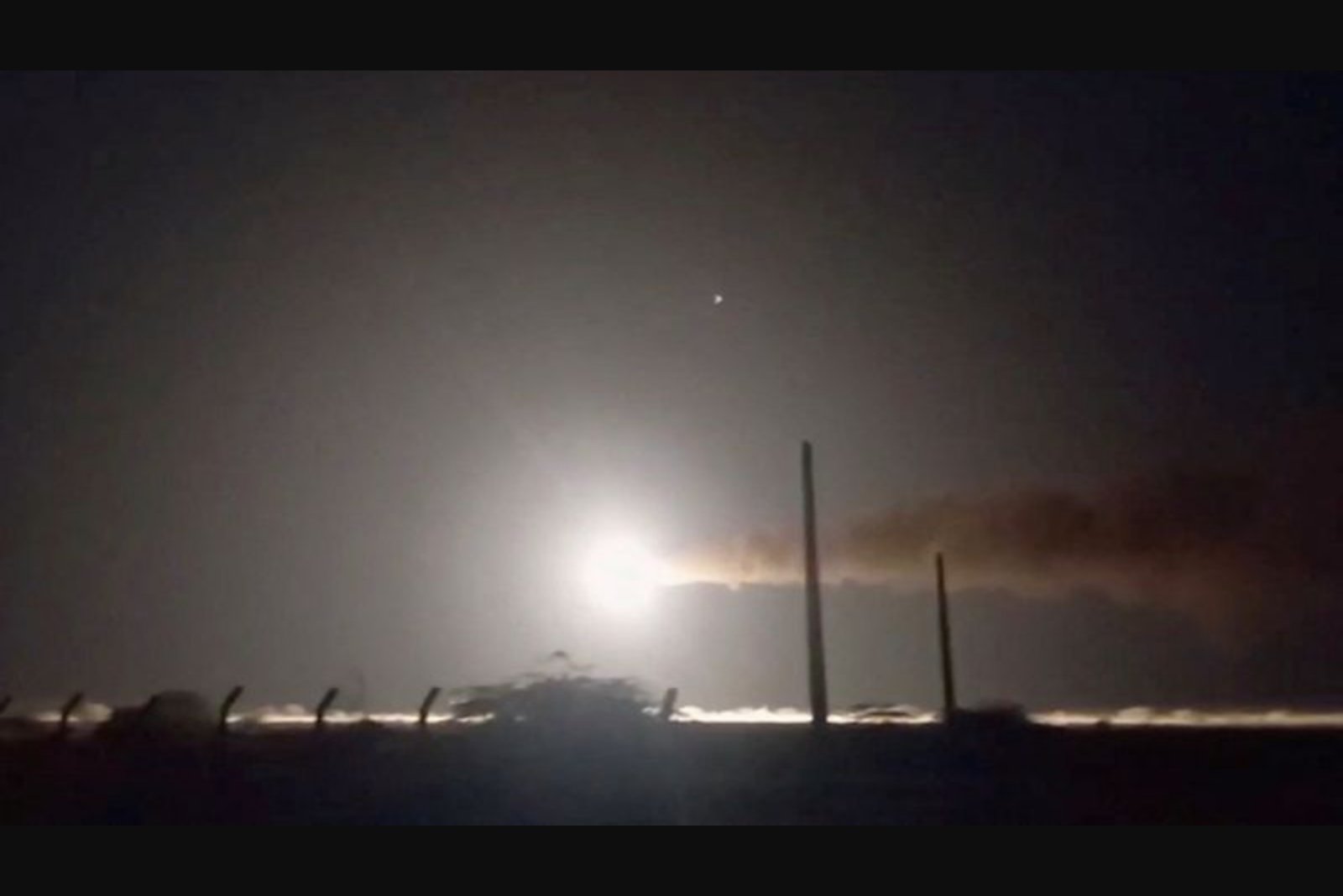
Summary: The United Arab Emirates reported that its air defence systems were active early on May 8, engaging missile and drone threats originating from Iran, in what officials described as a further breach in a tenuous ceasefire that has been in place for roughly a month between Tehran and Washington. The reported incident arrived a day after U.S. and Iranian forces exchanged fire around the strategically vital Strait of Hormuz, and while U.S. officials say they are awaiting Tehran's response to a recently presented proposal to formally end the conflict.
Details about the latest assault on the UAE were limited at first. The event came after an intense day of hostilities around the Strait of Hormuz, a maritime chokepoint that the article notes carries about a fifth of the world’s oil and liquefied natural gas flows and that Iran has effectively closed since hostilities began. The UAE and other Gulf states that host U.S. bases have been targeted by Iran repeatedly since the war began on February 28, according to the account provided.
On the previous day, President Donald Trump said three U.S. Navy destroyers were attacked while transiting the strait. The president posted on Truth Social: "Three World Class American Destroyers just transited, very successfully, out of the Strait of Hormuz, under fire. There was no damage done to the three Destroyers, but great damage done to the Iranian attackers." He later told reporters the ceasefire remained in effect and sought to minimize the exchange, saying in Washington, "They trifled with us today. We blew them away."
Tehran's military leadership presented a contrasting version of events. Iran’s top joint military command accused U.S. forces of violating the ceasefire by striking an Iranian oil tanker and another vessel, and of conducting air attacks on civilian-populated locations on Qeshm Island in the Strait of Hormuz as well as on nearby coastal areas of Bandar Khamir and Sirik on the mainland. In response, the Iranian military said it attacked U.S. military vessels located east of the strait and south of the port of Chabahar.
A spokesperson for Iran’s Khatam al-Anbiya Central Headquarters asserted that the Iranian strikes caused "significant damage." U.S. Central Command, however, maintained that none of its assets were damaged in the exchanges. Iran’s state broadcaster, Press TV, later reported that after several hours of firing "the situation on Iranian islands and coastal cities by the Strait of Hormuz is back to normal now."
The article notes that exchanges of gunfire have occurred intermittently since a ceasefire took effect on April 7, with Iran striking targets in Gulf countries including the UAE on multiple occasions during that period. The most recent clashes contributed to a rise in oil benchmarks in early Asian trading on the day in question, with Brent crude moving above $100 a barrel following the incidents.
President Trump said negotiations with Tehran were continuing despite the day's hostilities, telling reporters, "We’re negotiating with the Iranians." Prior to the latest round of strikes, the United States had circulated a proposal intended to formally end the conflict. That proposal, however, did not incorporate key U.S. demands that Iran suspend its nuclear work and reopen the Strait of Hormuz. Tehran indicated it had not yet made a decision on the emerging plan.
Even so, Trump said that Tehran had acknowledged a U.S. demand that Iran be prevented from ever obtaining a nuclear weapon, a restriction he said was included in the U.S. proposal. He was quoted as saying, "There’s zero chance. And they know that, and they’ve agreed to that. Let’s see if they are willing to sign it." When asked about the timing of any potential agreement, Trump added, "It might not happen, but it could happen any day. I believe they want to deal more than I do."
The broader conflict has put pressure on the U.S. president’s standing with parts of his political base, the article observes, noting that he had campaigned on limiting U.S. involvement in foreign wars and on lowering fuel prices. Since late February, U.S. average gasoline prices have risen by more than 40%, an increase of roughly $1.20 per gallon to above $4, according to figures cited from the American Automobile Association. The rise in retail fuel costs is attributed in the article to disruptions in crude oil shipments through the Strait of Hormuz that have pushed global crude prices higher.
Contextual note: The account is based strictly on the statements and reports described above. Where competing claims exist between the parties — including on the extent of damage inflicted and assets hit — each side's assertions are reported as made.