
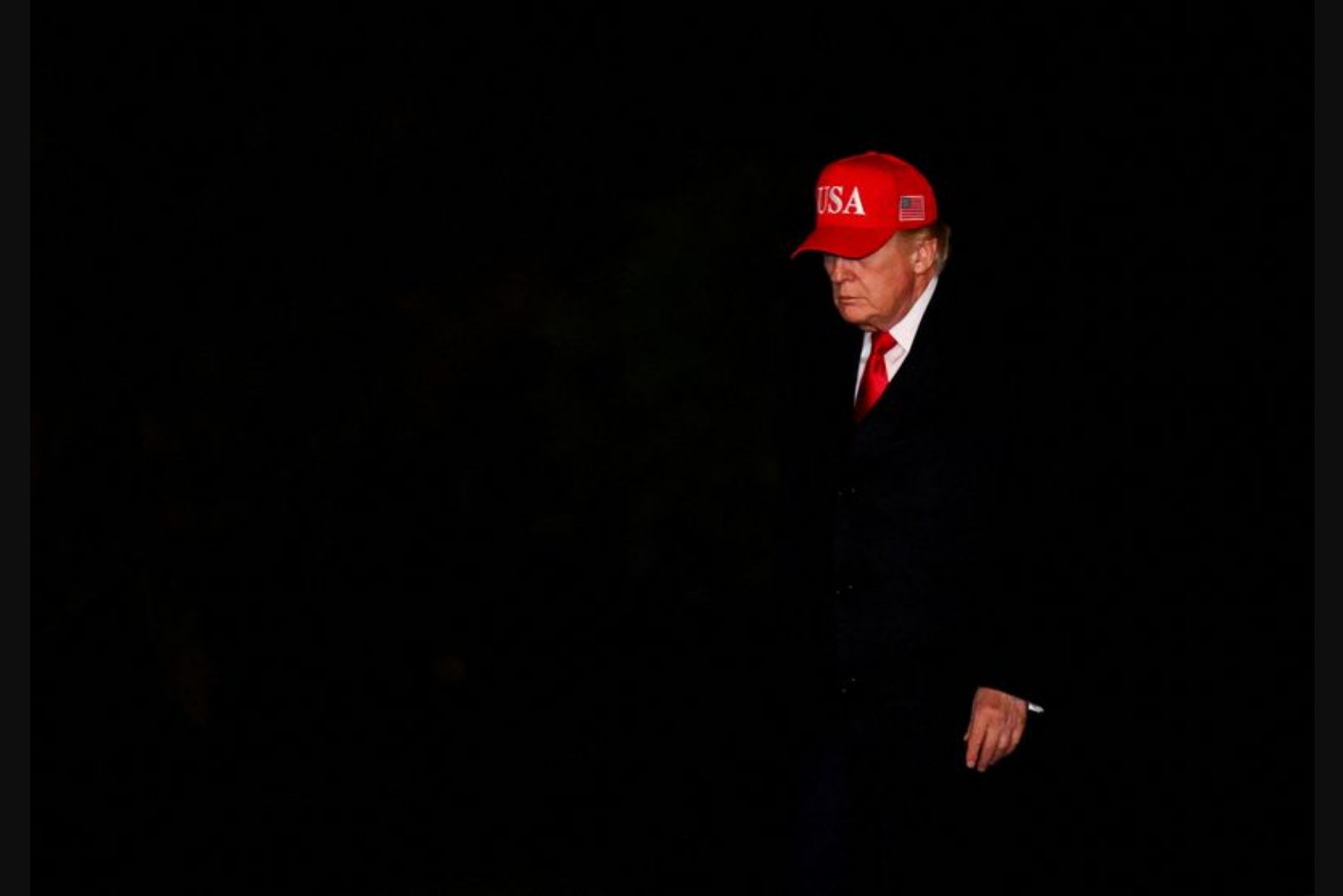
President Donald Trump's recent decisions - from ordering the withdrawal of a portion of U.S. forces stationed in Germany to signaling possible cuts in Italy and Spain, and downplaying Iranian strikes on a major Gulf partner - are fueling concerns that the fallout from his 10-week conflict with Iran may leave a lasting scar on relations with long-standing allies. Those allies, spanning Europe, the Middle East and the Indo-Pacific, are increasingly uncertain about Washington's reliability in future crises and are starting to alter behavior in ways that could produce long-term strategic consequences.
Even as U.S. and Iranian officials appear to be inching toward a potential off-ramp from a conflict now in its tenth week, the president's public statements and policy choices have revived fears among many of Washington's partners that the United States may not be a dependable security guarantor. That perception is prompting hedging behavior by some traditional allies and creating potential opportunities for adversaries, notably China and Russia, to exploit shifting dynamics.
Europe and NATO: Friction over war policy and troop posture
Tensions between the White House and European capitals have risen markedly since the United States and Israel carried out strikes on Iran on February 28 - an action the president defended by asserting Tehran had been close to developing a nuclear weapon, a claim he presented without evidence. Iran's subsequent closure of the Strait of Hormuz created a severe global energy shock that left many European economies among the biggest economic losers from a war they had not sought.
Those developments came on top of earlier frictions during Trump's time in office - broad tariffs, a public suggestion that the United States might try to acquire Greenland, and cuts to military aid for Ukraine - all of which had already strained transatlantic ties. The rift widened this week when the president announced he would withdraw 5,000 of the roughly 36,400 U.S. troops stationed in Germany after Chancellor Friedrich Merz publicly suggested that Iran had humiliated the United States, a remark that angered the president. The Pentagon also canceled a planned deployment of Tomahawk cruise missiles to Germany.
White House officials have framed the moves as responses to allies' perceived failures to back U.S. actions in the Iran war. The president has suggested that allies' reluctance to support certain requests could undermine Washington's willingness to uphold mutual defense commitments under NATO's Article 5 - a comment that has unnerved partners.
“Trump’s recklessness with respect to Iran is resulting in some dramatic shifts,” said Brett Bruen, a former adviser in the Obama administration who now leads the Situation Room strategic consultancy. “U.S. credibility is at stake.”
In a statement, White House spokeswoman Anna Kelly said the president had made his dissatisfaction with NATO and other allies clear, and noted that some requests to use military bases in Europe for operations related to the Iran campaign had been denied by host governments. She argued that the president had restored America's standing and strengthened relationships abroad, while asserting he would not allow the United States to be treated unfairly by so-called "allies."
Beyond the specific troop adjustments, officials in the Pentagon have discussed possible punitive measures directed at NATO members viewed as insufficiently supportive of U.S. operations against Iran. Those suggestions have included suspending Spain's NATO membership and reviewing U.S. recognition of Britain's claim to the Falkland Islands.
European responses: Steps toward autonomy but limited options
European governments are reacting by trying to deepen intra-European defense cooperation, increase national defense spending and develop joint weapons systems to reduce dependence on the United States. Diplomats and analysts describe this as a gradual pivot toward greater self-reliance that will be both costly and time-consuming.
One European diplomat said Trump's recent threats sent a clear signal for Europe to invest more in its own security, though leaders are resigned to managing the present disruptions. Analysts caution that as "middle powers," European states have constrained choices, especially as many still depend on the U.S. nuclear deterrent to guard against the risk of Russian aggression. Transitioning to greater strategic autonomy, they say, will take years.
At the same time, European leaders have quietly pointed to the fact that a number of countries are permitting U.S. forces to use their bases and airspace in the ongoing campaign. But some who had once used conciliation and flattery to diffuse tensions with the president are becoming more assertive, increasingly unwilling to hide critical assessments of U.S. policy.
Jeff Rathke, president of the American-German Institute at Johns Hopkins University, observed that while Chancellor Merz had earlier appeared to charm the president in private meetings, he now voices a blunt critique of U.S. choices. Other European officials are mindful that the president, barred by law from running again, could feel unrestrained to pursue policies he prefers before he leaves office in January 2029.
As debate continues over NATO's cohesion, Polish Foreign Minister Radoslaw Sikorski urged calm at a conference in Warsaw, saying there was no need to panic so long as European states fulfill pledges for higher military spending - a point the president has long demanded.
Gulf partners: Unease over U.S. posture and the human cost of strikes
The strains extend to the Gulf, where Iran's missile and drone strikes against the United Arab Emirates - a close U.S. partner - prompted alarm. The president and his aides appeared to take a muted stance after a strike set fire to the Fujairah oil port, led to school closures, and provoked further strikes later in the same week. The president described a Monday strike as minor, and despite additional attacks he maintained that a month-old ceasefire was holding.
Gulf Arab states are already enduring significant economic pain from disruptions tied to the conflict, and some are anxious that the president could negotiate a settlement that leaves them exposed to a still-dangerous Iran. The war began against the advice of some Gulf partners; although many lined up in solidarity soon after hostilities started, doubts about the durability of U.S. backing have grown.
Asia’s concerns: Energy vulnerability and alliance doubts
Asian partners, particularly those heavily dependent on energy flows through the Strait of Hormuz, have been unsettled by the administration's actions. Countries like Japan and South Korea have historic concerns stemming from the president's earlier trade actions and criticism of traditional alliances. Officials and former ministers worry that the domestic political sensitivity in the United States to higher gasoline prices could reduce Washington's willingness to bear costs that would be associated with support in a future conflict in the Indo-Pacific, such as a contingency involving Taiwan.
“What worries us most is that trust in, respect for, and expectations toward the United States - the core partner in the alliance Japan values most - have been shrinking,” said Takeshi Iwaya, who served as Japan's foreign minister at the start of the president's second term. “It could cast a long shadow over the entire region.”
Yasutoshi Nishimura, a former Japanese trade minister, said Tokyo is paying close attention to the shifting global balance and is working to deepen ties with "like-minded middle powers" such as Britain, Canada, Australia and European nations.
Rivals watch and possible opportunities for China and Russia
Russia and China, both long-standing friends of Iran, have largely kept a low profile since the conflict began, but analysts caution they are closely observing developments for openings. Russia has been a net beneficiary of higher oil and gas prices caused in part by the Iran war and the resulting global energy market disruptions, and it has also profited from the U.S. and Europe being distracted from the war in Ukraine.
China faces energy constraints made worse by the conflict, yet some analysts say Beijing may take away lessons from U.S. force movements - notably the shift of assets from the Indo-Pacific to the Middle East - and from the challenges U.S. forces encountered against asymmetric tactics such as relatively inexpensive drones. In that context, China has looked for ways to portray itself as a more predictable partner than the unpredictability attributed to the U.S. president, who is due to visit Beijing next week.
“They haven't exactly been a strong partner to their ally Iran throughout all this,” said Victoria Coates, the president's deputy national security adviser in his first term and now a vice president at the Heritage Foundation, reflecting on whether Beijing can credibly use the conflict to depict the United States as a uniquely destabilizing force.
Experts warn that the president's choice to employ substantial force in a war of choice against Iran, coming just weeks after a U.S. raid in Caracas that captured Venezuela's president, could embolden both China and Russia to press more coercive actions against their neighbors. Such behavior, the analysts say, would seek to exploit perceived limits in U.S. responsiveness and attention.
Strategic consequences and an uncertain long-term turning point
It remains uncertain whether the present conflict will constitute a permanent inflection point in U.S. global relationships. Many analysts in Washington and abroad argue that the president's often unpredictable approach since returning to office - and his repeated willingness to challenge the norms of the rules-based international order - is likely to further erode allied trust, particularly with NATO, which has resisted some of his wartime demands.
In response to growing unease, some U.S. partners are quietly moving to reduce vulnerability by bolstering their own defense capabilities and nurturing alternate partnerships. Others are taking a more transactional approach in the short term, allowing continued U.S. basing and logistical access while signaling discomfort with perceived American unilateralism.
For the United States, the stakes are framed in terms of credibility: whether Washington can operate as a dependable partner in crises, deter adversaries, and sustain the complex web of security relationships that has underpinned global stability for decades. Allies' steps toward self-reliance and hedging strategies carry implications for defense industries, energy markets and broader geopolitical competition.
Analysts and diplomats emphasize that any transition toward greater European strategic autonomy or deeper regional cooperation in Asia will be slow, expensive and politically fraught. Yet, they warn that if allies increasingly believe that U.S. commitments might not hold in future crises, the long-term architecture of alliances could shift in ways that are difficult to reverse.
In the immediate term, the path ahead includes a mix of diplomacy, deterrence postures and domestic political calculations in the United States that together will determine whether the current tensions simply represent a cyclical disruption or a more durable realignment in international relations.