
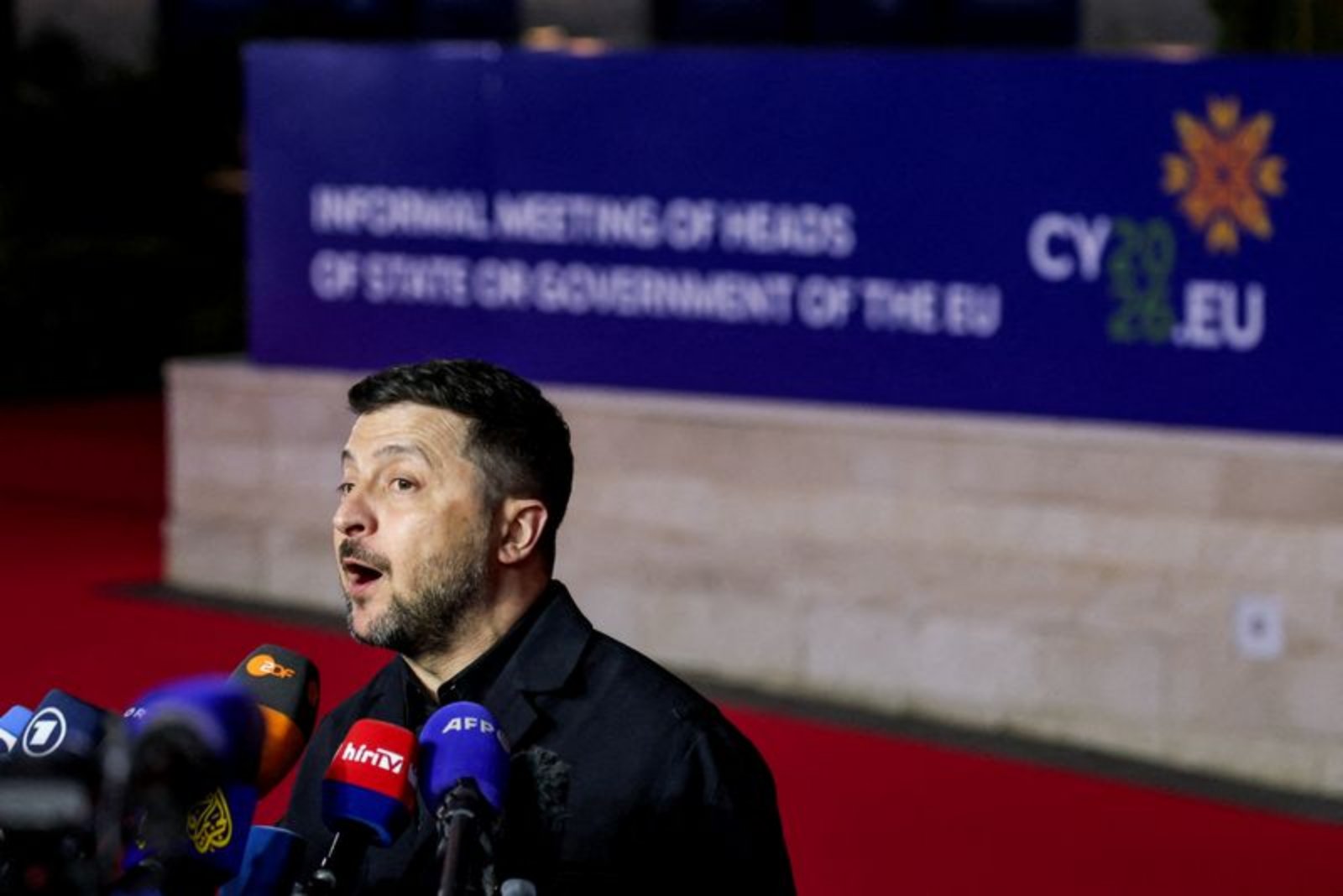
Ukrainian civilians greeted the start of a three-day cessation of fighting with cautious relief on Saturday, following an announcement that Moscow and Kyiv had agreed to a temporary halt in combat and a reciprocal prisoner swap. The truce, announced by U.S. President Donald Trump on Friday and scheduled to run from May 9 to May 11, also included an agreed exchange of 1,000 prisoners of war from each side, though no date was given for when the handover would take place.
The pause was welcomed by residents who have endured repeated strikes and blackouts since Russia launched a large-scale assault in February 2022. Ukrainian authorities reported that while some drones were detected along the frontline stretching more than 1,000 km (600 miles) across southeastern Ukraine on Saturday morning, there were no overnight air alerts for missiles across the country into Saturday.
Kateryna Kizev, 22, who fled the frontline city of Kherson and now lives in Cherkasy in central Ukraine, told Reuters during a visit to Kyiv’s Independence Square that the temporary suspension of hostilities offered immediate, tangible relief. "On the one hand, this is very good because, honestly, the sleepless nights have gotten a bit tiresome," she said. "At least for a few days we will be able to sleep in peace and without the attacks."
Despite the pause in fighting, the Kremlin said a negotiated settlement remained distant and complicated. Kremlin spokesman Dmitry Peskov told state television that while it was understandable the American side was pressing for progress, "the issue of a Ukrainian settlement is far too complex, and reaching a peace agreement is a very long way with complex details."
In Moscow, a reduced Victory Day parade marking the end of World War Two proceeded without incident on Saturday. Russian authorities had warned earlier of a potential Ukrainian attack that, they said, would lead to a massive retaliatory strike on Kyiv - a scenario that did not materialize during the parade. Kremlin aide Yury Ushakov said of the day: "There were no strikes on the Red Square. Obviously, there was no massive retaliatory missile strike on Kyiv from us."
Both sides had previously announced short ceasefires that quickly broke down - Ukraine and Russia each declared temporary halts to hostilities starting on different days in the run-up to the current truce - and then accused the other side of violations. This history of fragile pauses underscored the contingency many civilians feel even as they welcome the silence.
The war has included systematic strikes by Russia on Ukrainian power plants and other critical infrastructure using missiles and drones, while Kyiv has targeted Russian oil and gas production and export facilities, according to accounts of the conflict. Humanitarian concerns factored heavily in Kyiv’s approach to the pause. Ukrainian President Volodymyr Zelenskiy characterised the truce as the result of U.S. negotiating efforts and stressed that humanitarian issues remained a priority for his government.
For residents of cities that have borne the brunt of the fighting, even a brief interruption of hostilities means an opportunity to address basic needs, mourn losses, and consider the prospects for future talks. "This ceasefire - for a day, or two or three - these are temporary measures. We need peace. It is the fifth year already. It is enough," said Oleksandr Boiko in Kharkiv. He added that the conflict has cost him everything.
Another Kharkiv resident, Ramaz Tsytsyashvili, expressed the hope that the ceasefire could open space for renewed diplomacy. "And perhaps there will be a miracle and this temporary silence, this ceasefire, will hold up a bit and continue, and then step by step it will move to negotiations, and affairs will be solved in offices, not on the battlefield," he said.
Operationally, the truce was framed as a full suspension of all "kinetic activity" for its duration and was linked to the planned prisoner exchange. No timeline for the swap had been confirmed as the ceasefire took hold, leaving uncertainty about whether the humanitarian step would proceed in tandem with the pause in fighting.
On the ground, the absence of overnight missile alerts and the detection of only some drones along the long frontline provided a temporary easing of pressure on Ukraine’s civilian population and infrastructure systems. Nevertheless, official statements from Moscow emphasised that a comprehensive settlement would require protracted and complex negotiations, signalling that any longer-term resolution is not imminent.
For now, Ukrainians and officials in both capitals appear to be treating the truce as a short, fragile window - one that could reduce immediate harm and create a limited opportunity to advance humanitarian measures, while leaving unresolved the deeper political and territorial disputes that have kept the conflict alive for years.