
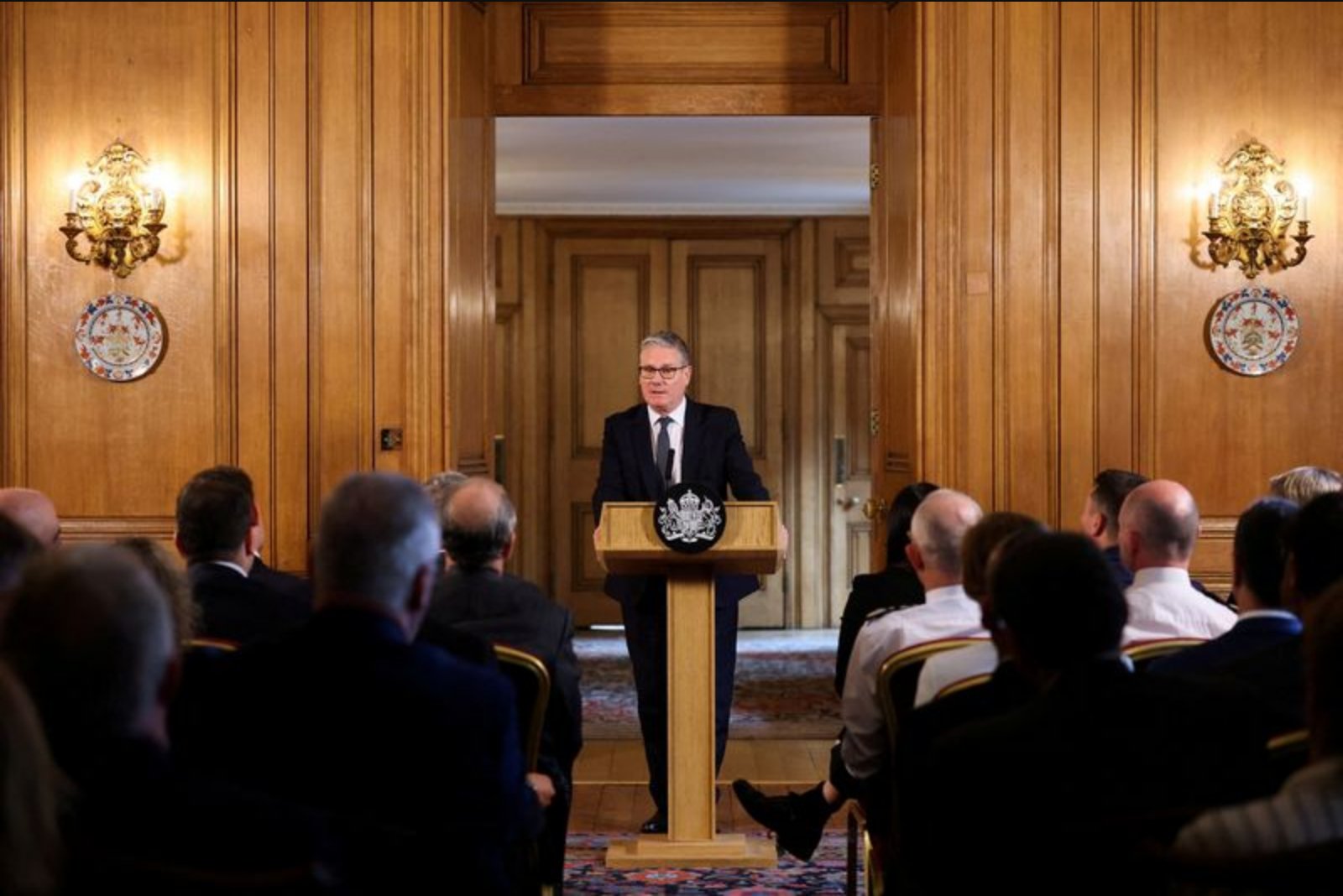
British Prime Minister Keir Starmer is preparing a political counteroffensive that places renewed relations with Europe at the centre of his administration's agenda, according to extracts of a speech his office circulated ahead of a Monday address. The speech is intended to set out a government reset after Labour suffered heavy defeats in recent local elections and faced growing internal pressure for more radical change.
The setbacks in the local contests, described as the worst for a governing party in more than three decades, have provoked calls from within Labour for the prime minister to step down or to announce a clear timetable for leaving office. More than 30 Labour lawmakers have either urged him to quit or demanded he specify when he would go, raising the immediate stakes around the speech.
In the excerpts issued by his office, Starmer is quoted as saying that "incremental change won’t cut it" and that he had come to recognise the scale of reform required to revive the economy, rebuild Britain’s military, and strengthen energy security was greater than he had realised. The extracts also indicate no new policy measures will be unveiled in the speech itself, but that the government aims to reorient its foreign and economic posture.
Most notably, the speech will make a public pledge to "rebuild our relationship and by putting Britain at the heart of Europe" - a signal of intent to deepen ties with the European Union nearly a decade after the country voted to leave the bloc. According to the released text, the government wants this rebuilding of relations to define its next phase.
Labour lawmakers and many younger voters are expected to welcome a stronger European orientation; polls referenced in the extracts suggest around 60% of Britons now view leaving the EU as a mistake. Nevertheless, the proposed pivot raises complex trade-offs and questions for government policy. The extracts acknowledge that efforts to repair ties would force difficult decisions, including the trade-off of allowing greater movement of people from Europe in exchange for improved access to EU markets. Such a shift is likely to encounter opposition from right-wing Eurosceptic parties and some segments of the British media.
Starmer’s political trajectory since winning a large parliamentary majority in 2024 has been uneven. Elected on promises to expand the economy, reduce illegal immigration, and shorten waiting lists in the state-run health service, his government has been undermined by policy reversals, perceptions among some colleagues that he is reluctant to make hard choices, and a string of political controversies. Those factors have contributed to notably low approval ratings for the prime minister.
The speech seeks to confront that reality head-on. As the excerpts state, Starmer will tell the public that "people need hope" and that he is prepared to "face up to the big challenges" confronting Britain. The tone signals an attempt to rebuild political momentum without announcing immediate new measures.
Pressure intensified over the weekend from high-profile figures inside the party. A former deputy prime minister warned that Labour may be confronting its "last chance" to change course. Meanwhile, a backbench MP who previously served as a junior minister publicly urged cabinet colleagues to remove the prime minister and said she would attempt to initiate a leadership contest if she found the Monday speech unsatisfactory.
Removing a Labour prime minister, however, would be unprecedented in the party’s history. Party rules require 20% of the parliamentary party - equal to 81 lawmakers - to nominate a single challenger before a leadership contest can be triggered. To date, none of the politicians widely viewed as potential alternatives have launched a formal move against the prime minister. One frequently mentioned figure, the mayor of Greater Manchester, is not a member of parliament and therefore is not eligible to stand in a parliamentary challenge.
The episode highlights the broader governance challenges Britain faces. If Starmer were to be removed in the coming weeks, it would mark Britain’s seventh prime minister in the past decade, continuing a rapid turnover of leaders not seen for almost two centuries. Analysts cited in the speech extracts attribute part of this instability to a combination of relatively weak economic growth since the global financial crisis of 2007 to 2009, strained public finances exacerbated by substantial borrowing during the COVID-19 pandemic, and heightened political polarisation following the decision to leave the European Union.
Conclusion
The Monday speech is framed as a defining moment for Starmer’s government: an effort to reassert a policy direction centred on closer ties with Europe while attempting to respond to mounting criticism at home. Whether that repositioning will satisfy internal critics and reverse electoral fortunes remains uncertain, but the speech underscores the government’s intention to treat European relations as central to its long-term strategy.