
World May 8, 2026 02:47 AM

South Korea's Parliament Pauses Vote on Constitutional Change Targeting Martial Law

Planned amendment to require parliamentary approval for martial law stalls after opposition filibuster and boycott

By Nina Shah

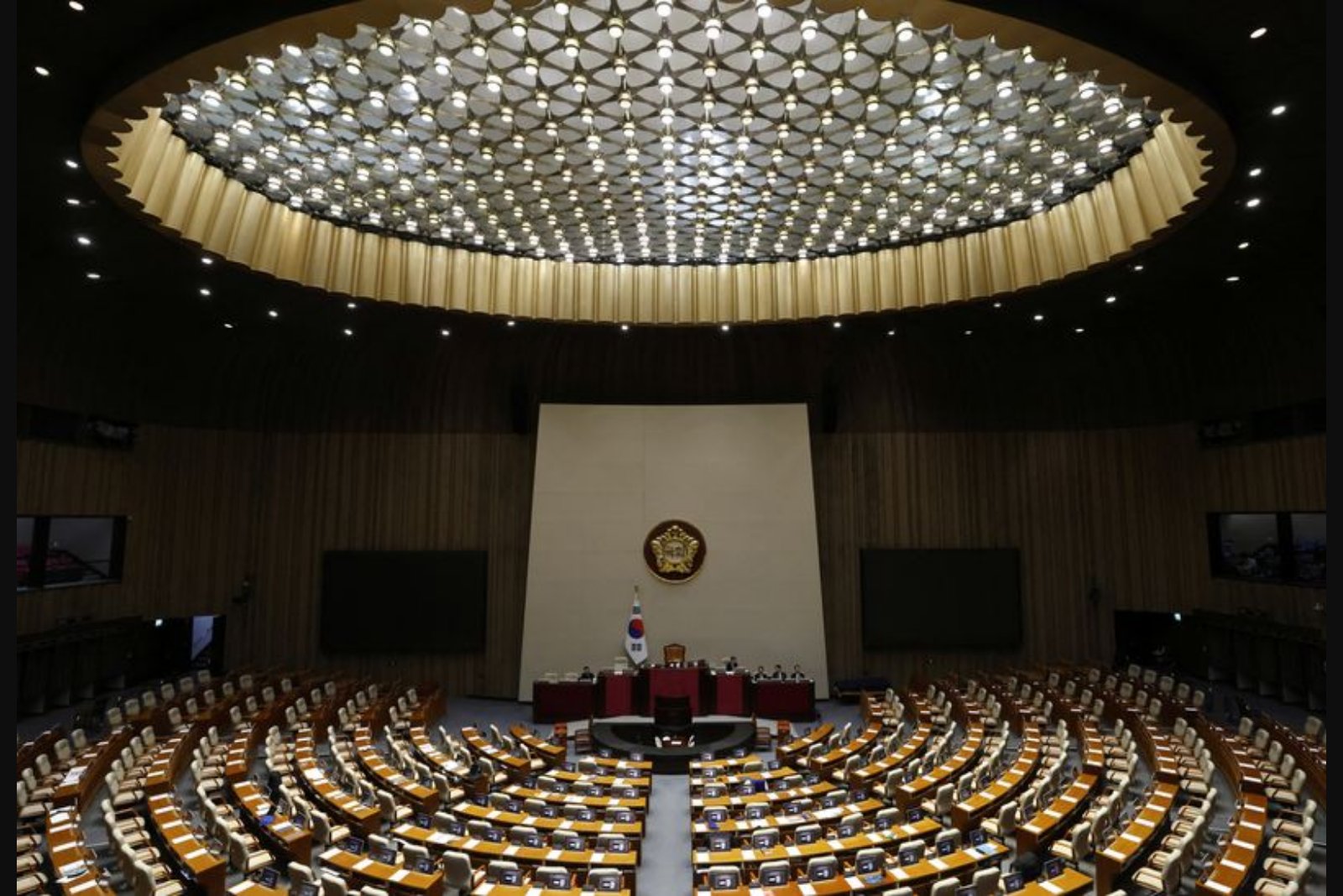
South Korea's planned constitutional amendment to limit unilateral presidential authority to declare martial law will not move to a full parliamentary vote after opposition tactics blocked progress. The draft, put forward by six parties including the ruling party, would obligate the president to obtain the National Assembly's approval and would nullify a unilateral declaration if lawmakers reject it or do not act within 48 hours. The proposal also seeks to add a reference to the Gwangju uprising in the constitution's preamble. Lawmakers must secure at least 191 votes in the 286-seat assembly to amend the constitution; earlier attempts failed amid a boycott by the main opposition.

South Korea's Parliament Pauses Vote on Constitutional Change Targeting Martial Law

Key Points

  • Speaker Woo Won-shik said the constitutional amendment bill to limit unilateral presidential martial law declarations will not go to a plenary vote after an opposition filibuster.
  • Six parties, including the ruling Democratic Party, authored a draft that would require presidential submission to the National Assembly and would nullify a unilateral declaration if parliament rejects it or fails to approve within 48 hours.
  • The draft also proposes adding a reference to the Gwangju uprising to the constitution's preamble; amending the constitution requires at least 191 votes in the 286-member assembly.

South Korea's parliamentary speaker, Woo Won-shik, announced on May 8 that a bill seeking to change the constitution to tighten controls on martial law will not be submitted for a plenary vote after sustained opposition tactics. The conservative People Power Party (PPP) mounted a filibuster that, combined with an earlier boycott, prevented the amendment from reaching the floor.

The draft amendment, posted on the National Assembly's website, was sponsored by six political parties, among them the ruling Democratic Party. Under the proposed text, the president would be required to obtain the National Assembly's approval before declaring martial law.

According to the draft, a unilateral declaration of martial law by the president would be rendered ineffective immediately if the legislature either votes against the imposition or fails to approve it within 48 hours. The measure would therefore create a strict, time-bound parliamentary check on executive action in such circumstances.

The proposal arrives in the wake of a recent episode in which conservative former President Yoon Suk Yeol briefly imposed martial law in late 2024. That episode is referenced in the draft as context for tightening the constitutional rules governing martial law declarations.

In addition to procedural changes, the bill would alter the constitution's preamble to include an explicit reference to the Gwangju uprising. The draft notes that hundreds, and possibly thousands, are believed to have been killed when citizens rose up against military leader Chun Doo-hwan on May 18, 1980.

Amending the constitution requires the backing of at least 191 lawmakers in the 286-member assembly, Woo said. An earlier attempt to bring the amendment to a vote failed on Thursday when the PPP boycotted the session, leaving the chamber without the necessary quorum.

South Korea's presidential office issued a statement expressing regret that the constitutional amendment effort stalled because of the PPP's opposition and called on parliament to resume discussions on constitutional revision in the second half of its term. No further timeline for renewed deliberations was provided in the statements cited.

The parliamentary impasse leaves the proposed safeguards on martial law and the proposed preamble change unresolved. Lawmakers face the constitutional threshold of 191 affirmative votes in a process that requires broad legislative consensus, a condition that the recent boycott and filibuster demonstrated is not currently met.


Note on coverage: The account above reflects the draft text posted by the National Assembly and statements made by parliamentary and presidential offices; it does not add events or details beyond those set out in the draft and the officials' statements.

Risks

  • Failure to secure the 191-lawmaker threshold leaves the proposed checks on martial law authority unimplemented - this affects the legal and constitutional framework governing executive powers.
  • Persistent parliamentary opposition, demonstrated by the PPP's filibuster and boycott, introduces uncertainty about if and when constitutional revision efforts will advance - this affects political institutions and legislative processes.
  • The stalled amendment process may prolong public and institutional debate over martial law rules and the constitutional preamble reference to Gwangju, leaving the issue unresolved for the remainder of the term.

More from World

Kyrgyz Authorities Charge Former Security Chief and Seven Others Over Alleged Coup Plot May 12, 2026 Trump Says Cuba Has Requested Help, Offers No Details on U.S. Plans May 12, 2026 Saudi Air Force Carried Out Covert Retaliatory Strikes on Iranian Soil, Sources Say May 12, 2026 Senator Ronald dela Rosa Seeks Shelter in Senate as ICC Arrest Warrant Is Unsealed May 12, 2026 UNICEF: 70 Children Killed in West Bank and East Jerusalem Since Early 2025 May 12, 2026