
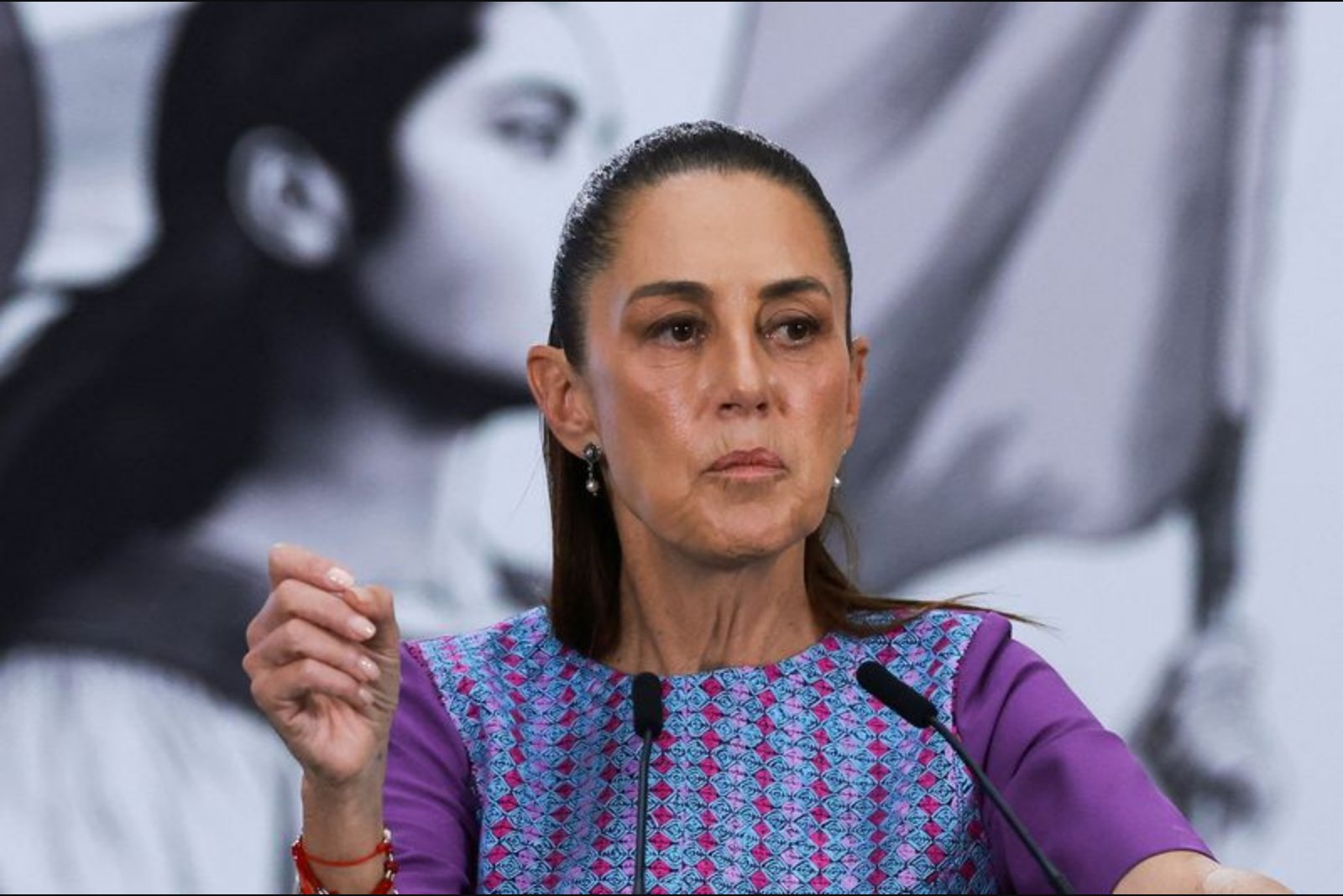
Mexico’s President Claudia Sheinbaum on Friday signaled that a recent announcement by the education minister to bring forward summer holidays is not definitive, after parents’ groups expressed strong opposition.
At her regular morning press briefing, Sheinbaum said the measure had been proposed to accommodate the World Cup and the country’s high temperatures, but added that the plan is not set in stone because children’s school days must be considered.
"Many Mexicans love soccer, we’re looking forward to the World Cup, so this proposal was made to bring the holidays forward, but we also have to take into account the children’s school days," Sheinbaum told reporters, also noting that "there isn’t a set timeline yet" for the suggested shortening of the academic calendar.
The announcement was posted on X by Secretary of Education Mario Delgado, who said the National Council of Educational Authorities had made the "modification" in response to a heat wave affecting parts of the country as well as Mexico hosting the World Cup.
Delgado wrote that "It will be ensured that all provisions of the curriculum are met and that the academic progress of all students is maintained," but his post did not include details on how those assurances would be implemented.
Under the schedule outlined by the education minister, the current academic year would end on June 5 instead of July 15. The new school year would begin on August 31, which is one day earlier than the start date planned for 2025.
Parents’ groups have reacted strongly. "Using the FIFA World Cup as an argument to shorten the school calendar is unacceptable. Our children’s education cannot be sacrificed for a sporting event that will take place in just three of the country’s 2,500 municipalities," the National Union of Parent Associations said in a statement, adding that high temperatures are not a new occurrence.
Mexico City, Monterrey and Guadalajara are set to host a combined total of 13 World Cup matches in June and July. Authorities have suggested that closing schools could reduce traffic and congestion in those cities as hundreds of thousands of tourists arrive.
Separately, Mexico’s powerful teachers’ union last week threatened to strike during the World Cup’s opening match. The union has long pushed for higher pay and revisions to the law governing teachers’ pensions.
Official data indicate about 90% of students in Mexico attend public schools, while roughly 10% are in private institutions; the private schools would not be subject to the calendar change announced by the education minister.
The country is currently experiencing a severe heat wave, with temperatures in some areas reaching 45 degrees Celsius. The government and critics note that such temperatures are not unprecedented and typically start to ease in June with the onset of the rainy season.
The president’s comments leave the proposed reduction in the academic calendar uncertain as public debate continues over how to balance heat-related risks, the logistics of hosting World Cup matches, and the preservation of instructional time for students.