
World May 9, 2026 05:13 PM

Secret Israeli Outpost in Iraqi Desert Supported Air Campaign on Iran, Sources Say

Installation housed special forces, logistics and rescue teams and was defended by airstrikes when Iraqi forces approached, according to people familiar with the matter

By Derek Hwang

Sources familiar with the matter say Israel established a covert military base in the Iraqi desert to aid operations against Iran. The installation reportedly hosted special forces, served as a logistical hub for the Israeli air force, and included search-and-rescue teams for downed pilots. When Iraqi troops came close to discovering the site in early March, airstrikes were used to keep them away. Conflicting attributions of the strikes have been made to foreign forces, and officials say the reporting could not be independently verified.

Secret Israeli Outpost in Iraqi Desert Supported Air Campaign on Iran, Sources Say

Key Points

  • Israel established a covert military outpost in the Iraqi desert that hosted special forces, served as a logistical hub for its air force, and included search-and-rescue teams for pilots.
  • In early March, Iraqi troops were sent to investigate reported unusual activity and were kept away from the site by airstrikes, preventing its discovery.
  • Claims about responsibility for the March airstrikes conflict - Iraq filed a complaint to the United Nations attributing the attack to a foreign force and naming the United States, while another source said the United States was not involved. Sectors likely affected include defense and aviation services.

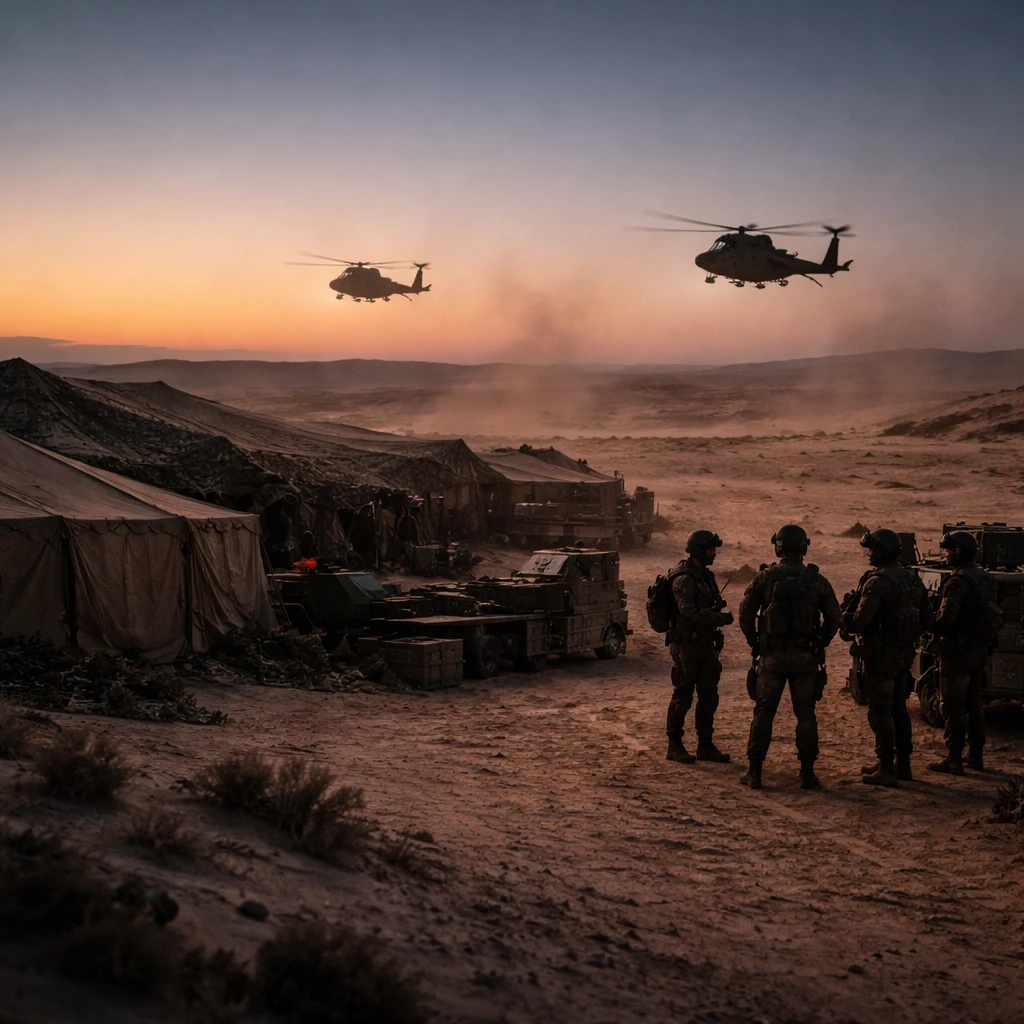
According to people familiar with the situation, Israel constructed and operated a clandestine military installation in the Iraqi desert to support an air campaign directed at Iran. The site, which reportedly housed special forces personnel, functioned as a logistical hub for the Israeli air force and included search-and-rescue teams positioned to assist any pilots who might be downed during operations.

Those sources say the base was established with the knowledge of the United States shortly before the onset of the U.S.-Israeli campaign targeting Iran. Details about the facility emerged after an episode in early March that nearly exposed its location.

Iraqi state media said a local shepherd observed unusual military activity, including helicopter movements, prompting Iraqi security forces to send troops to the area to investigate. When those Iraqi troops approached, forces tied to the clandestine installation used airstrikes to hold them at a distance and prevent the site from being discovered, according to one of the people familiar with the matter.

Later in March, Iraq filed a complaint with the United Nations describing an attack that involved foreign forces and airstrikes and attributing the action to the United States. Another person familiar with the situation said the United States was not involved in that particular strike.

There was no immediate response from the Israeli prime minister's office to a request for comment. The reporting that formed the basis of these accounts could not be independently verified.


Context and implications

The account describes a multilayered operation in which a forward base in Iraqi territory was used to support air operations, provide logistical sustainment and stage search-and-rescue capabilities. The near-discovery episode in March illustrates the operational risks associated with maintaining covert facilities in proximity to local armed forces and civilian populations.

Attribution for the March airstrikes is disputed in official communications, with Iraq attributing responsibility to a foreign actor and another source saying the United States was not involved. These conflicting claims underscore uncertainties about who carried out the strikes and about how the incident will be addressed diplomatically.

Risks

  • Operational exposure - the installation was nearly discovered by local Iraqi forces in March, demonstrating the vulnerability of clandestine sites and the risk to personnel and missions. This risk affects military planning and defense logistics.
  • Attribution and diplomatic fallout - Iraq attributed the March attack to a foreign force and to the United States, while other sources denied U.S. involvement, creating uncertainty that could complicate diplomatic relations and international responses. This may impact defense and international relations sectors.
  • Verification uncertainty - the account could not be independently verified, leaving open questions about the full facts and constraining policymakers and markets from forming definitive conclusions. This uncertainty affects risk assessment across defense and geopolitical intelligence sectors.

More from World

Kyrgyz Authorities Charge Former Security Chief and Seven Others Over Alleged Coup Plot May 12, 2026 Trump Says Cuba Has Requested Help, Offers No Details on U.S. Plans May 12, 2026 Saudi Air Force Carried Out Covert Retaliatory Strikes on Iranian Soil, Sources Say May 12, 2026 Senator Ronald dela Rosa Seeks Shelter in Senate as ICC Arrest Warrant Is Unsealed May 12, 2026 UNICEF: 70 Children Killed in West Bank and East Jerusalem Since Early 2025 May 12, 2026