
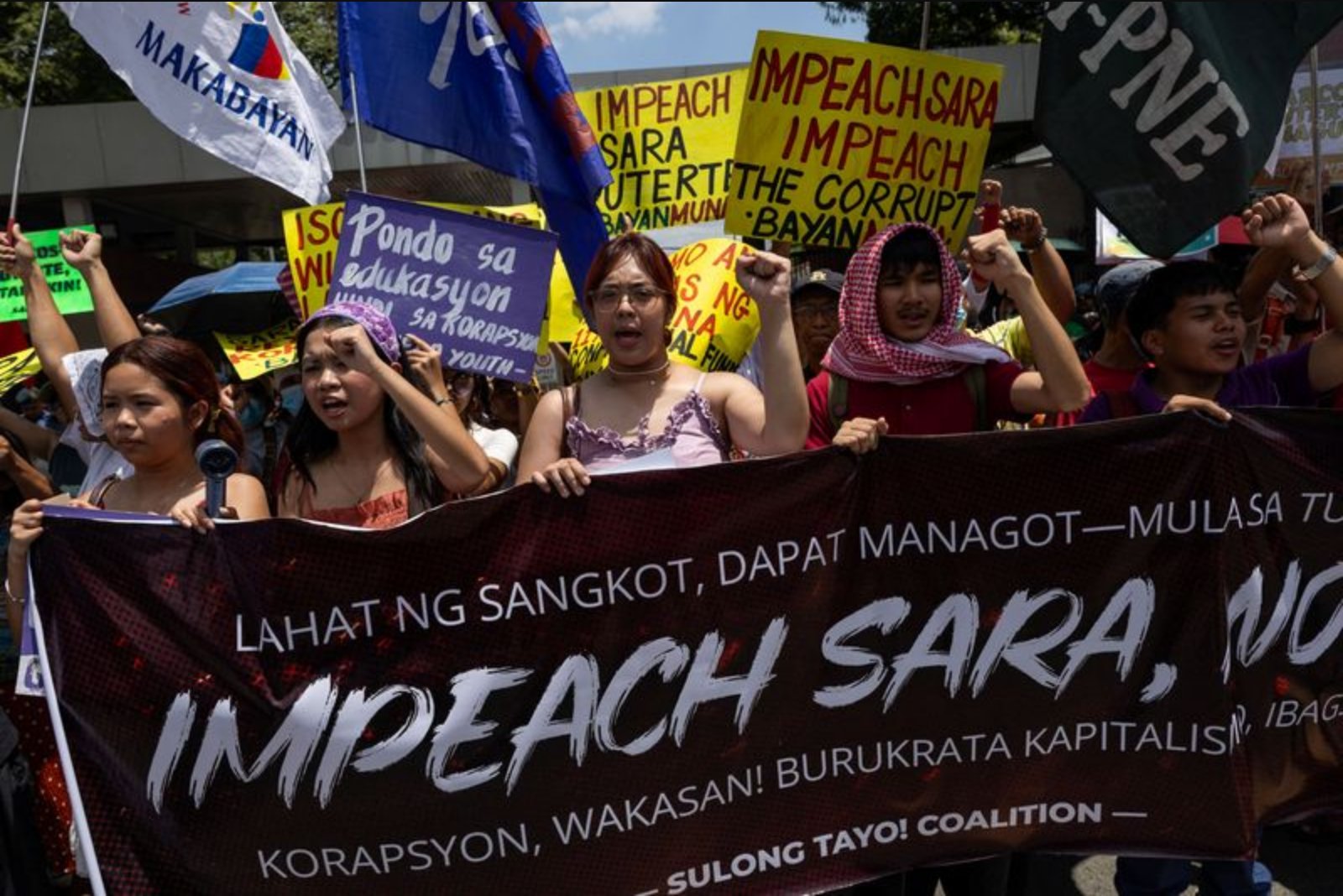
MANILA - The Philippine House of Representatives delivered an overwhelming vote on Monday to impeach Vice President Sara Duterte, forwarding a complaint to the Senate that alleges she misused public funds, amassed unexplained wealth and issued threats against President Ferdinand Marcos Jr, his wife and a former House speaker. Duterte denies the accusations.
The impeachment complaint, filed by a coalition of activists, religious organizations and lawyers, secured the backing of 255 lawmakers in the lower chamber. Twenty-six representatives voted against moving the article of impeachment forward and nine lawmakers abstained. The tally exceeded the one-third threshold of house seats required to transmit the case to the Senate.
Under the constitutional process, the Senate must convene as an impeachment court, with senators acting as jurors. If the Senate convicts, the vice president faces removal from office and a prohibition from holding public office in the future. Duterte's legal team issued a statement saying: "We are fully prepared to defend the Vice President before the Senate sitting as an impeachment court, where it is incumbent upon the prosecution to discharge the burden of proof," signaling their intention to contest the charges vigorously.
Political context and family pressure
The impeachment represents another major political test for the influential Duterte family. Tensions between the vice president and President Marcos have escalated into a high-profile feud that intensified political scrutiny of Sara Duterte. At the same time, her father, former President Rodrigo Duterte, remains under international scrutiny as he awaits trial at the International Criminal Court related to his administration's 2016-2022 war on drugs, which resulted in thousands of deaths, according to the complaint referenced in the House proceedings.
The lower house had previously approved articles of impeachment against the vice president last year, but the Supreme Court later voided that action due to a procedural defect. That prior episode did not prevent a renewed effort that culminated in Monday's decisive vote.
Senate leadership shift and trial logistics
On the day the House voted, a separate and dramatic development occurred in the Senate. Lawmakers passed a motion to remove the Senate president and install Alan Peter Cayetano in his place. Cayetano is described in the House debate as a staunch loyalist of the Duterte family and is a former running mate of Sara Duterte's father. As Senate president, Cayetano would serve as the presiding judge should the chamber convene to hear the impeachment case.
If the Senate proceeds to trial, the chamber's members will act as jurors. Conviction requires meeting the constitutional standards for impeachment, and a guilty verdict would carry both ouster and a ban from future public office. Sara Duterte will thus be the highest-ranking official to face impeachment in the Philippines since former President Joseph Estrada in 2000.
Historical parallels and precedents
Her impeachment places Sara Duterte in rare company. The only prior impeachment of a sitting president resulted in a chaotic trial in 2000 that collapsed after prosecutors walked out; President Estrada resigned a few days after the proceedings ended in disorder. Other high-ranking officials have been impeached in the past, including an ombudsman and the head of the election commission, both of whom resigned before their trials concluded. Former Supreme Court chief justice Renato Corona remains the sole public official convicted in an impeachment trial.
Public reaction and statements from lawmakers
Dozens of demonstrators assembled outside Congress on Monday, chanting and carrying banners urging impeachment. The banners were visible at the scene but contained no detailed slogans in the official record.
Bienvenido Abante, one of the lawmakers who supported moving the complaint forward, framed the vote as a matter of moral duty. He said the process was about conscience, duty and the nation's future, and called for a trial that would be fair, impartial and based on the rule of law. After the vote, left-leaning lawmaker Jose Manuel Diokno told the House that evidence against the vice president was sufficient to warrant accountability, declaring: "We have seen the smoking gun," during the debate.
Next steps and uncertainties
The next procedural step is for the Senate to organize an impeachment trial. The leadership change in the Senate makes it likely that a Cayetano-led chamber will oversee the proceedings, which could influence how the trial is managed. President Marcos, who faced his own impeachment attempt in February that was dismissed by congressional allies, has publicly distanced himself from the case against his estranged vice president.
Until the Senate begins and completes a trial, the ultimate outcome remains uncertain. The legal process will determine whether the allegations meet the burden of proof required for conviction and whether the vice president's political future, including any prospective presidential bid, is irreparably affected.