
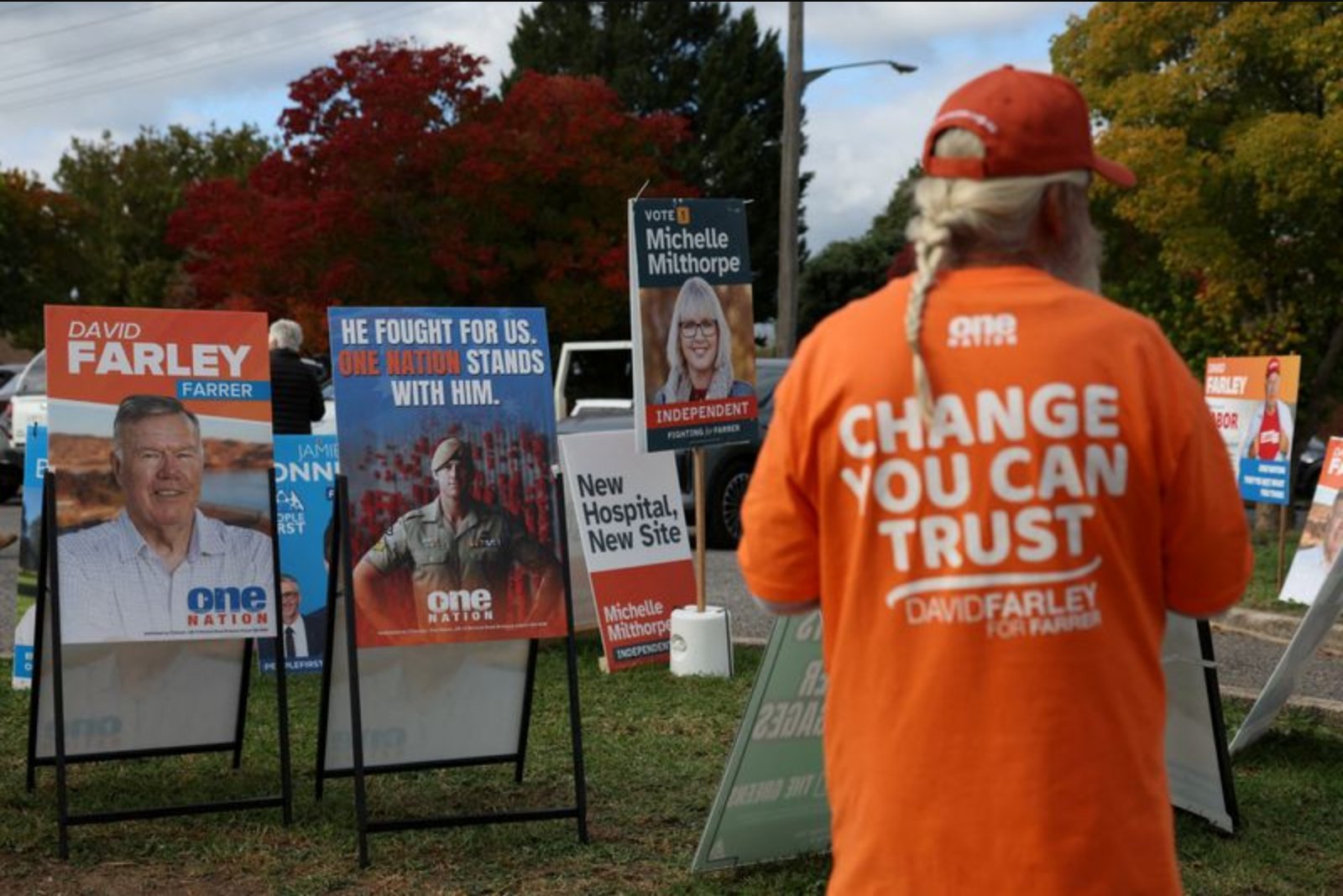
Summary: One Nation, a right-wing populist party that has advocated for policies modelled on U.S. President Donald Trump’s aggressive deportations, has secured its first seat in Australia’s lower house following a by-election in the rural electorate of Farrer. The result does not change the parliamentary majority held by Prime Minister Anthony Albanese’s centre-left government, but it marks a notable advance for a party that already holds four Senate seats and is rising in opinion polls.
SYDNEY, May 10 - The rural Farrer electorate, located about 550 km (340 miles) south of Sydney, was won by farmer David Farley in Saturday’s by-election. The seat had previously been held by a member of the Liberal Party, the largest conservative grouping, and the outcome therefore does not diminish the Albanese government’s parliamentary majority.
Still, the result is a milestone for One Nation. The party now has representation in the lower house for the first time and continues to hold four seats in the Senate. Opinion surveys this year have placed One Nation second in national polling, behind Albanese’s Labor Party and ahead of the mainstream conservative coalition.
One Nation’s leader, Senator Pauline Hanson, enjoys higher approval ratings than both Prime Minister Albanese and the leader of the Liberal Party, according to the same polling referenced in reports. Hanson used the party’s social media account on Saturday night to frame the victory as a pledge to voters.
"The people of Australia will not be forgotten. One Nation will fight for you on the floor of Parliament," Hanson posted on X. "We will fight to lower cost of living, end net-zero and stop mass migration."
Immigration has become a more prominent political issue in Australia, where about half of the population of 27 million were either born overseas or have a parent who was. The topic has mobilised citizens: thousands attended anti-immigration rallies in major Australian cities last year.
The Liberal Party is taking the result as a caution. Shadow treasurer Tim Wilson said One Nation’s success "showed there’s a lot of work we’ve got to do." In televised remarks on Sunday he added:
"We need to outline very clearly a bold and confident vision for the country about where we want to take it."
Labor has historically never held the Farrer seat and did not field a candidate in the by-election. The party has criticised One Nation, saying its platform damages Australia’s social fabric.
The Farrer outcome highlights shifting dynamics in Australian politics, with a right-wing populist party translating Senate presence and rising poll numbers into lower house representation. While the single-seat change does not alter parliamentary arithmetic, it raises questions about how immigration, cost-of-living concerns and climate policy debates will feature in upcoming political discourse.
Context limitations: The article reports the by-election result, party positions, polling placement, approval comparisons and public reactions as described above. It does not include additional polling data, historical comparisons, or projected legislative effects beyond the facts presented.