
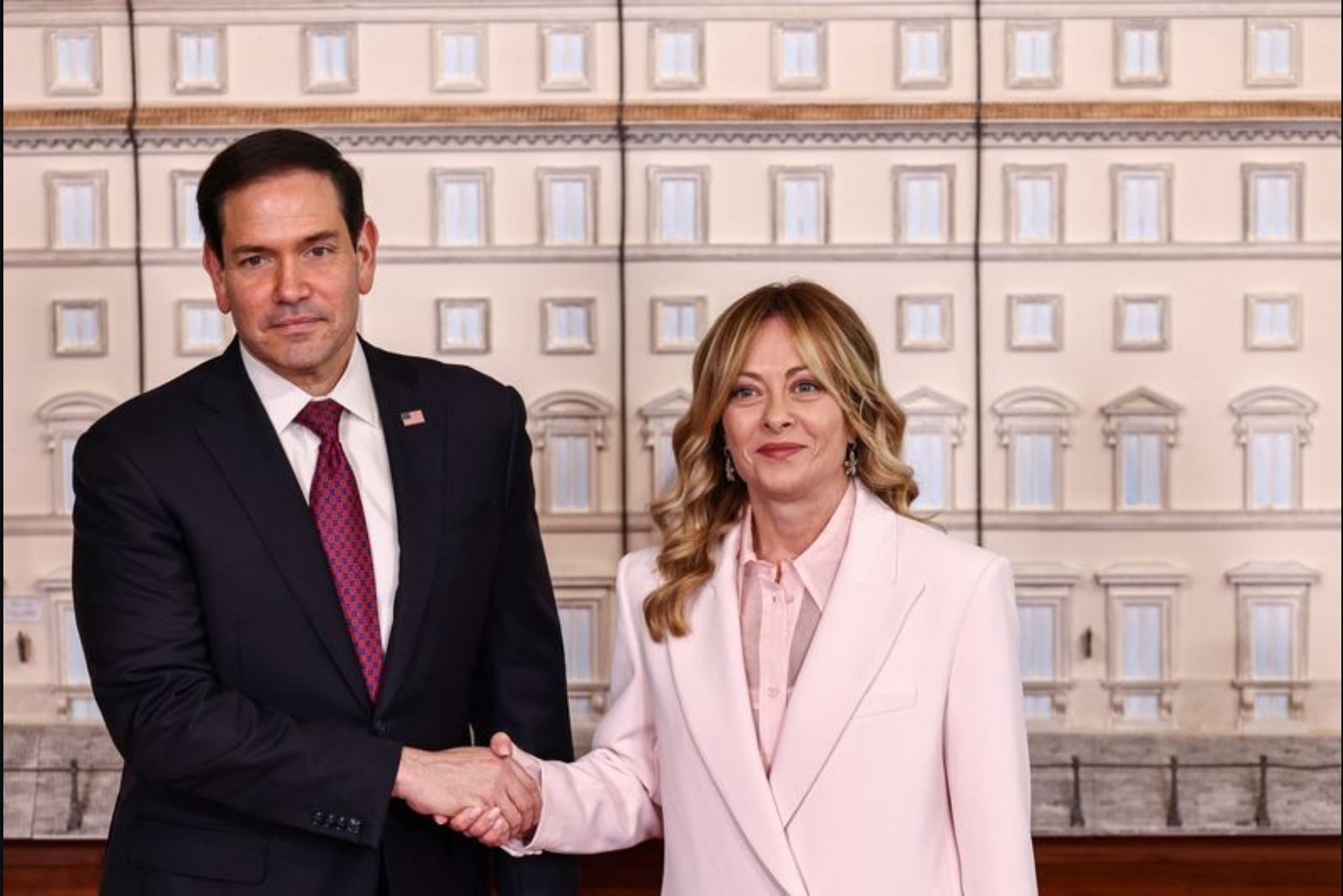
Italian Prime Minister Giorgia Meloni met with U.S. Secretary of State Marco Rubio on Friday amid mounting tensions between her government and President Donald Trump’s administration, tensions that have been sharpened by the ongoing war with Iran.
Rubio arrived in Italy for a two-day visit that officials say is intended to help mend relations with Pope Leo after what the U.S. side described as unprecedented attacks on the pontiff by Trump. At the same time, Rubio is confronting Washington's disquiet over Rome's refusal to support the U.S.-Israeli military campaign against Iran.
Meloni has previously been counted among Trump’s most steadfast European backers, cultivating a close rapport with the U.S. leader and positioning herself as a potential conduit between Washington and European governments without a natural political affinity with Trump. That rapport, however, has been tested in recent months as the Iran war has forced her administration to weigh continued alignment with the United States against strong public hostility in Italy toward the conflict and the conflict’s mounting economic toll.
Prior to his meeting at the prime minister’s office, Rubio held talks with Italy’s foreign minister, Antonio Tajani, who described the discussions as constructive. "I am convinced that Europe needs America, Italy needs America, but the United States also needs Europe and Italy," Tajani told reporters.
According to officials, Meloni and Rubio were set to cover a range of topics including the situation in the Gulf, Russia’s war on Ukraine, U.S. tariffs on European goods and the diplomatic and economic outlook for Cuba, which Washington is seeking to isolate. The Vatican meetings form another key strand of Rubio’s agenda in Rome, given the sensitivity in Italy of recent U.S.-Vatican tensions.
Trump’s recent public attacks on Pope Leo have struck a particularly sensitive chord in Italy, an overwhelmingly Catholic country. Meloni publicly described those attacks as "unacceptable." Her rebuke prompted a strong response from Trump, who said she lacked courage and had let Washington down, and later threatened to withdraw U.S. troops from Italy. Meloni has said she would not support such a withdrawal but acknowledged the decision "doesn’t depend on me."
Relations were further tested last month when Italy declined to permit U.S. aircraft to use the Sigonella air base in Sicily for combat operations linked to the Iran conflict. Italian officials said Washington had not requested prior authorization from Rome for use of the site.
Defence Minister Guido Crosetto, a close Meloni ally, warned publicly that the Iran war risked undermining U.S. global leadership and expressed concern about the "madness" of potential nuclear escalation. Polling data cited by analysts indicate that Meloni’s closeness to Trump could be a liability for her party ahead of national elections scheduled for next year.
The meetings in Rome reflect a broader diplomatic balancing act for Meloni’s government: maintaining strategic ties with the United States while responding to domestic unease about the Iran conflict and its economic implications. For Washington, the trip represents an effort to reassure allies at the Vatican and to press Italy on policy alignments from security cooperation to trade.